
'Because it is the only public sector company in this sector, currently.'
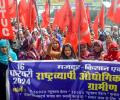
Over 25 crore workers across India are set to strike against new labour codes and privatisation, potentially disrupting banking, postal, and other essential services.

Congress leader Rahul Gandhi has said the 'wholesale attack on the democratic system' currently underway in India is the single biggest risk the country is facing, and asserted that allowing different traditions to thrive is very important as 'we cannot do what China does, which is to run an authoritarian system'. IMAGE: Kindly note that this image has been posted for representational purposes only. Photograph: / Rediff.com Speaking at a seminar titled 'The Future is Today' at the EIA University in Medellin, Colombia, Gandhi also alleged that there are 'huge amounts of corruption at a centralised level' in India now. "In India, we have huge amounts of corruption now at a very centralised level. So, three or four businesses taking over the whole economy, having a direct relationship with the prime minister, is rampant in India," the Leader of Opposition in Lok Sabha said. "But I believe decentralising power, making things more transparent, bringing people into conversations, and bringing people into processes is the best way forward," Gandhi said while addressing the seminar on Wednesday. Hitting back at the Congress leader for his remarks, the Bharatiya Janata Party on Thursday accused Gandhi of insulting and degrading India on foreign soil. Posting a video clip of Gandhi's speech on X, BJP national spokesperson Gaurav Bhatia said, 'Rahul Gandhi does it again, degrades India on foreign soil. From defaming our democracy in London, to mocking our institutions in the US, now in Colombia he spares no chance to insult Bharat globally.' 'This isn't dissent. It's disgrace to the fake Gandhi. Criticising BJP may be your right but dare you malign Mother India for your cheap and petty politics,' Bhatia said. Speaking at the seminar, Gandhi said India has a much more complex system as compared to China and its strengths are very different from that of the neighbouring country. India also has a very old spiritual tradition and a thought system with profound ideas that are useful in today's world, he said, adding that there is a lot that the country can offer in terms of tradition and way of thinking. "I am very optimistic about India, but at the same time, there are fault lines within the Indian structure. There are risks that India has to overcome. The single-biggest risk is the attack on democracy that is taking place in India," the Leader of Opposition said. "India has multiple religions, traditions and languages. India is actually a conversation between all its people. Different ideas, religions and traditions require space. The best method for creating that space is the democratic system," he said. "Currently, there is a wholesale attack on the democratic system in India, so that is a risk. The other big risk is different conceptions -- some 16-17 different languages, different religions... So, allowing these different traditions to thrive, and giving them space to express themselves is very important for a country like India.

'We need to make sure we invest in the right spaces to play Test cricket where it means something and has jeopardy.'

With general elections on the horizon, the government's privatisation bandwagon has almost but stalled as a government wary of being accused of selling family silver opts for minority stake sales on stock exchanges over outright privatisation. The result -- the divestment target for current fiscal year is again likely to be missed. Big ticket privatisation plans such as that of Bharat Petroleum Corporation Ltd (BPCL), Shipping Corporation of India (SCI) and CONCOR are already on the backburner and analysts feel meaningful privatisation can happen only after April/May general elections.

'These Marathas are farmers and they only do farming. They have no other business other than farming. Now, they want reservations because farming is no longer a profitable business.'In this interview, veteran farmers' rights advocate and founding member of the Shetkari Sanghatna, Vijay Jawandhia, with Syed Firdaus Ashraf/Rediff unpacks the historical and structural roots of the agitation.

Mrs Gandhi's power ebbed and peaked with the times. Mr Modi's has almost been constant, barring the few months of hard dip after the 240 seats of 2024, points out Shekhar Gupta.
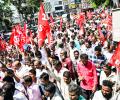
A nationwide strike called by trade unions to protest against the central government's labor policies had a mixed impact across India. While normal life remained largely unaffected in most parts of the country, some sectors like banking, transport, and insurance experienced disruptions. Sporadic incidents of violence were reported in West Bengal.

Exuding confidence in sustaining the tempo of credit growth, public sector bankers said on Wednesday that consolidation in the public sector bank (PSB) space has given them a robust base to scale. The privatisation of PSBs can be done through divestment of government stake to a wider base of investors without haste. There is nothing to worry about at this point (high credit offtake) as underwriting standards and risk management are much better.

Sections in the US State Department and Pentagon have always felt more comfortable dealing with all powerful Pakistani generals instead of elected civilians, points out Rana Banerji, who headed the Pakistan desk at RA&W.
To those who ask, "Is all this really worth it? Why can't domestic demand fill the gap?", it is important to remind them that only 13 economies since the Second World War have grown at 7 per cent or more for 25 years -- like India needs to. They all had one thing in common: Strong export growth underpinned by strong global engagement, explains Sajjid Z Chinoy.

'Accordingly, no proprietary rights or exclusivity can be claimed over such a generic phrase, and any attempt to do so is legally unsustainable and contrary to the basic principles of trademark law.' According to the opposition, Mahendra Singh Dhoni's star power alone does not entitle him to monopolise a phrase that has historically described several athletes across generations.

More than 25 crore workers engaged in sectors ranging from banking, insurance, postal to coal mining, highway and construction are expected to go on a nationwide general strike on Wednesday, potentially disrupting services across the country. A forum of 10 central trade unions and their associates has called for a general strike or 'Bharat Bandh' to "oppose the anti-worker, anti-farmer and anti-national pro-corporate policies of the government".

The crash has dealt a blow to the conglomerate's efforts to turn around Air India, especially following its merger with Vistara in 2024.

It was touted as a game changer but big-ticket privatisation has been a mixed bag as the government faces unanticipated challenges of lukewarm investor response, employee union agitation and legal hurdles. Prime Minister Narendra Modi's often-repeated statement 'the government has no business to be in business' guided the drawing up of an ambitious privatisation pipeline. While Air India sale succeeded, Bharat Petroleum Corporation Ltd (BPCL) divestment failed.

Corporate India is embarking on an ambitious investment drive, with capital expenditure (capex) expected to double to $850 billion over the next five years, according to a report by S&P Global Ratings. Indian power & transmission, airlines, and green hydrogen sectors would spearhead the spending, the report said.

State-run Hindustan Aeronautics Limited has won a bid under which it will receive technology from the Indian Space Research Organisation for the end-to-end commercial production of the Small Satellite Launch Vehicle (SSLV), a first for the industry as India seeks to become a global hub for small satellite manufacturing and launches.

Former RBI governor D Subbarao has suggested that the government should come up with a 10-year road map for privatisation of all Public Sector Banks (PSBs) as it would provide much needed predictability to stakeholders. Subbarao further said that the big bang approach to privatisation of state-owned banks is not desirable but at the same time the issue should not be put on the back burner. "Ideally, we should have a road map, maybe over a 10 year timeframe, to privatise all PSBs. "That will give much needed predictability to all stakeholders," he told PTI.

Seasoned bureaucrat and a stickler for rules Finance Secretary Tuhin Kanta Pandey will be at the helm of capital market regulator, Securities and Exchange Board of India (SEBI), for three years. The 1987-batch Odisha-cadre Indian Administrative Service (IAS) officer, Pandey, would replace Madhabi Puri Buch, whose three-year term ends on Friday.

'About $8.5 billion in free cash, about $3 billion as annual debt refinancing, and $3 billion-4 billion in fresh borrowing. An additional $1.6 billion-1.8 billion will come from development profits in 2025-26.'

Consider this: despite a traffic of over 130 million passengers flying international-to-international (I2I) routes per annum over India, only one-sixth of the long-haul traffic (26 million) emanates from the country.
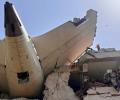
The DGCA has issued multiple fines and warnings to Air India over the past three years, flagging serious concerns in flight operations, cockpit discipline, and internal accountability.
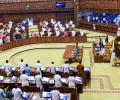
The Kerala Assembly passed a bill allowing for the establishment of private universities in the state. This marks a significant policy shift for the CPI(M)-led government, which had previously opposed privatization of education. The bill was passed by voice vote following discussions on Monday and Tuesday. The opposition raised concerns about the potential impact of private universities on public institutions and questioned the practicality of the requirements for starting a private university. However, the government defended the bill, stating it was a necessary step to improve higher education in Kerala and elevate public universities to global standards.

The government is set to initiate consultations with the Reserve Bank of India (RBI) to devise a new security clearance framework for screening potential bidders of public sector banks (PSBs) as it kick-starts the privatisation process, beginning with the strategic divestment of IDBI Bank. As the government is moving ahead with strategic divestment of IDBI Bank and is looking to privatise two PSBs, the Department of Investment and Public Asset Management (DIPAM) is looking to put in place an appropriate framework as the potential buyers will have to meet the RBI's fit and proper criteria, said an official. The process of bank privatisation would be different from the sale of any other public sector undertaking (PSU), and more restrictions and measures will have to be put in place, the official said.

During his visit to the Bastar district headquarters in the poll-bound state, the prime minister is scheduled to address a Bharatiya Janata Party rally.

His remarks came after the Kerala assembly on Tuesday passed the Kerala State Private Universities (Establishment and Regulation) Bill, 2025, which marks a break from the Communist Party of India Marxist-led government's long-standing opposition to the privatisation of education.
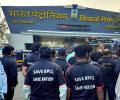
Oil Minister Hardeep Singh Puri on Thursday indicated that the much-delayed privatisation of oil major BPCL may not happen in the near future, saying there is "no proposal whatsoever" on his table for now. As part of its asset monetisation plan, the government had in November 2019 put Bharat Petroleum Corporation (BPCL) on the block and said it would completely sell its 52.98 per cent stake in the country's second largest state-run oil refiner and marketer. Though it had received three tentative bids, it got only one financial bid from Vedanta group, forcing it in May 2022 to shelve the plan pending a "comprehensive review".

The Indian government has appointed Finance Secretary Tuhin Kanta Pandey as the new chairman of the Securities and Exchange Board of India (SEBI). Pandey, a 1987-batch IAS officer, will replace Madhabi Puri Buch, whose three-year tenure ends on February 28. Pandey's appointment comes at a time when the markets are experiencing bear pressure due to withdrawals by foreign institutional investors (FIIs). Pandey has extensive experience in the finance ministry, having served as the longest-serving secretary in the Department of Investment and Public Asset Management (DIPAM) and the Department of Public Enterprises (DPE). He also played a key role in the framing of the 2025-26 Budget and the drafting of the new Income Tax Bill. Pandey's appointment is for an initial period of three years.

India needs another shot of difficult reform, of the kind only possible at gunpoint. Mr Trump holds that gun to our heads now. A drastic reduction in tariff protection, other elements of sarkari wet-nursing will force entrepreneurial India to become competitive again, argues Shekhar Gupta.

Air India sale will give a boost to India's privatisation drive, the Economic Survey said on Monday, as it suggested redefining the public sector role in business enterprises to encourage private participation in all sectors. The government earlier this month handed over ownership rights in national carrier Air India to Tata Group for Rs 18,000 crore. The amount includes the takeover of the debt burden of Rs 15,300 crore and another Rs 2,700 crore in cash.

As the Centre pushes reforms in the power sector, especially for the beleaguered electricity distribution segment, several states, especially those ruled by Opposition parties, are clamouring against it. Maharashtra, West Bengal, Tamil Nadu, and Kerela have voiced their reservations against the proposed amendments to the Electricity Act, 2003. The irony is the states opposing the amendments on the ground of threat of privatisation already have private partnerships in power supply. The proposed Bill was slated to be placed on the floor of Parliament in the Monsoon session. But it still awaits Cabinet approval amid several states complaining that they have been not consulted on the issue.

The political and ideological differences between the Congress and Shashi Tharoor is no longer a matter of whispers.

The policy was part of the Aatmanirbhar Bharat package announced by Sitharaman in May 2020 as a coherent policy where all sectors would be opened for private sector participation.

A gradual approach to privatise public sector banks (PSBs) is more ideal than taking a big-bang approach, a study by Reserve Bank of India (RBI) staff has concluded. It has backed the government's idea to privatise two PSBs initially. Such a gradual approach would ensure that large-scale privatisation does not create a void in fulfilling important social objectives of financial inclusion and monetary transmission, the study has argued.
Privatisation of BPCL, which was dubbed India's biggest ever, has been stalled with just one bidder left in the fray after two others walked out over issues such as lack of clarity in fuel pricing, a top source said. The government had planned to sell its entire 52.98 per cent stake in Bharat Petroleum Corporation Ltd (BPCL) and invited Expression of Interest from bidders in March 2020. At least three bids came in by November 2020 but only one remains now after the others withdrew from the race.
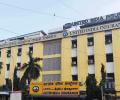
The NITI Aayog has recommended privatisation of state-owned insurer United India Insurance Company as the government aims to move ahead with its new public sector enterprise (PSE) policy for Atmanirbhar Bharat. The policy think tank has suggested that the public sector insurer be considered for privatisation in the banking, insurance and financial services sector, which has been classified as 'strategic' in the PSE policy, said an official. The policy proposes the "bare minimum" presence of government-owned companies in strategic sectors, and privatisation, merger or closure of remaining public sector undertakings (PSUs).
Changing tracks helps. But, not taking the beaten path isn't always helpful. This is the story of two of India's biggest privatisations - Air India and Bharat Petroleum (BPCL). Nearly two decades after the last privatisation, a landmark divestment concluded this year when the loss-making national carrier Air India was sold to the Tatas.
Air India has covered a lot of ground since privatisation and its global coverage will further increase in the years ahead, the airline's chief Campbell Wilson said on Wednesday. He also said the interior refit of the single-aisle fleet, serving domestic and short-haul international destinations, is underway, and will be completed by mid-2025.

The Union Cabinet has approved amendments to the General Insurance Business (Nationalisation) Act, paving the way for privatisation of government-owned insurers. The amendments, approved by Cabinet, will remove the clause for the Centre to hold at least 51 per cent in public sector insurance companies at any given time. It will also have an enabling provision for the transfer of management control from the government to the potential buyer of the public sector insurance company. The finance ministry will move amendments to the insurance Act in the ongoing Parliament session.

The Centre should privatise all public sector banks (PSBs), except the State Bank of India (SBI). This is because private banks have emerged as a credible alternative to PSBs with substantial market share. Also, government ownership hinders the ability of the Reserve Bank of India (RBI) to regulate the sector, according to a report by the National Council of Applied Economic Research (NCAER).
