
The SP's bid to dent the BJP's formidable social equation is playing out in a big way in the Poorvanchal or eastern region of Uttar Pradesh as the ruling party is working overtime to keep its caste equation unharmed.

The Congress has decided to hold its public rally against inflation in Jaipur on December 12 after the Delhi Police denied it permission to host the rally in the national capital.
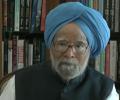
Singh said he had worked as prime minister for 10 years and had always preferred that his work should speak for itself.
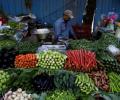
Subdued prices of food items like vegetables pulled down retail inflation for the third month in a row to 5.3 per cent in August, within the RBI's comfort zone. While the Consumer Price Index (CPI)-based retail inflation declined to 5.3 per cent in August from 6.69 per cent in the same month a year ago, food inflation dipped at a much faster pace to 3.11 per cent from 9.05 per cent in August 2020. The food inflation was also lower than 3.96 per cent in preceding month of July.

The rate of price rise in the food basket contracted by 0.86 per cent in October compared to 0.51 per cent rise in September

The BJP calling the Congress a "torn old party" moving towards a stage where its relevance and necessity will be completely lost.

Notably, BJP leader Devendra Fadnavis last week said incidents of 'love jihad were taking place in the country and therefore, laws to curb the practice were justified.
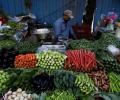
Retail inflation fell to a five-month low of 4.35 per cent in September from 7.27 per cent in the year-ago period as prices of vegetables and other items declined, according to government data released on Tuesday. The moderation in Consumer Price Index-based inflation is in line with the assessment of Reserve Bank Governor Shaktikanta Das who recently projected substantial softening of retail inflation. The CPI inflation was at 5.3 per cent in August and at 7.27 per cent in September 2020.

The wholesale price-based inflation rose to an eight-month high of 1.48 per cent in October, as manufactured products turned costlier. The WPI inflation was 1.32 per cent in September and zero per cent in October last year. This is the highest level of wholesale price index-based (WPI) inflation since February when it was 2.26 per cent.
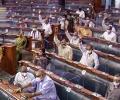
Lok Sabha on Thursday passed two bills before the proceedings were adjourned for the day amid continuous protests by opposition members over the Pegasus spying row and farmers' issue.

There is disquiet and discomfort in the citizenry that can be touched and felt. No one is talking, but then, the Indian voter has not talked much -- with the conviction that all that goes up has to come down, observes N Sathiya Moorthy.

Congress president Sonia Gandhi on Friday urged top opposition leaders to rise above political compulsions to take on the BJP in the interest of the nation and start planning "systematically" to realise the "ultimate goal" of winning the 2024 Lok Sabha polls

The BJP is beating the development drum this time more loudly to overcome many other hurdles besides anti-incumbency. While the party is claiming it is looking for a much bigger victory than in 2017, BJP observers are not too sure about it, reports Shishir Prashant.
Retail inflation slowed to 4.29 per cent in April from 5.52 per cent in March, mainly due to easing food prices, government data showed on Wednesday. The Reserve Bank mainly factors in the retail inflation based on Consumer Price Index (CPI) while arriving at its monetary policy. As per the data released by Ministry of Statistics and Programme Implementation, inflation in the food basket was 2.02 per cent in April, down from 4.87 per cent in the preceding month.

For manufactured products, the wholesale inflation was at (-)0.84 per cent in October 2019.

Mahatma Gandhi was a Hindu and Godse was Hindutvadi, the Congress leader said.
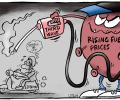
Petrol price on Thursday was hiked by 35 paise per litre and diesel by 15 paise, pushing rates to a new high across the country. Petrol in Delhi now costs Rs 101.54 a litre and diesel Rs 89.87 per litre, according to a price notification of state-owned fuel retailers. The increase comes after rates stayed mute for three days. Petrol price was last hiked on July 12, on a day when diesel rates had seen its first reduction in almost three months. The increase on Thursday neutralised the 16 paise price cut in diesel on July 12.
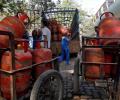
Finance Minister Nirmala Sitharaman cut fuel subsidies while slapping additional fuel taxes on unblended transport fuels in the latest Union Budget. The former will hit the rural poor, households that secured a subsidised LPG connection under the Pradhan Mantri Ujjwala Yojana (PMUY), a programme that was partly instrumental in helping the Bharatiya Janata Party (BJP) win the 2019 general elections. The latter will pretty much hurt the entire population after it kicks in from October. That's what it looks like. Or, perhaps, it's not as it appears to be, at least on the subsidy front.
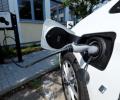
While traditional automakers in India are reeling under a global shortage of semiconductors, the country's electric vehicle (EV) makers, too, are now facing a shortage of lithium-ion batteries, a key raw material. The soaring prices of metals like lithium, nickel and cobalt, which are the primary constituents of the cell, as well as supply chain bottlenecks, are also pushing up the cost of batteries. Battery manufacturers say that prices have been increasing every quarter since the beginning of 2021.
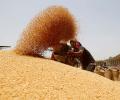
'All imaginary figures are pushed by government bureaucrats.' 'They never showed that the production of wheat was less this time.'

Campaigning came to an end on Saturday for the single-day election in Uttarakhand and Goa, two states known for political volatility where the Bharatiya Janata Party is attempting to retain power, and for the second phase of assembly polls in Uttar Pradesh on February 14.
The rate of price rise in the protein rich items like eggs, milk and other products too moderated in March as against the previous month.

We have our own problems for sure and they are not trivial, but for now, our economy is in not too bad a shape, our politics is as personality-driven and authoritarian as that of most countries in the world. We must make the best of what we have and not be excessively unhappy looking at the grass on the other side of the septic tank which may not be greener after all!, observes Shreekant Sambrani.

Leaders of several opposition parties took out a protest march in Delhi against the government on several issues, including Pegasus and alleged manhandling of their MPs in Rajya Sabha

"The Congress in a way is in the grip of urban Naxals. That is why its thought has become negative," Modi alleged in his 90-minute speech.

She also called upon the partymen to continue to put pressure on the union government to ensure that the daily rate of vaccination trebles so that 75% of the population gets fully vaccinated by end of this year.

Check out some of the stocks that will react on the basis of their numbers in the near term.
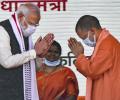
SP leader Akhilesh Yadav reacted quickly to the allegation, tweeting that the red caps are a 'red alert' for the Bharatiya Janata Party itself as they will oust that party from power.

The adverse impact on the margins of auto, consumer staples and consumer durables sectors will be counterbalanced by an earnings uptick in the metals, cement and oil & gas sectors.

It will benefit about 48.34 lakh central government employees and 65.26 lakh pensioners.
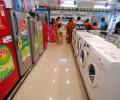
The industry is expecting double-digit growth on a year-on-year basis, helped by a possible price correction after softening of raw material inputs and factors such as positive sentiments, pent up demand and improving economic conditions. Besides, a shift in consumer behaviour from price consciousness towards technologically advanced premium products with quality, value proposition and safety aspects leading to a rise in demand for home automation products is making the industry upbeat. With the government's production linked incentive (PLI) scheme for white goods, which has witnessed a committed investment of Rs 4,614 crore, in place, many manufacturers are gearing up to make the most out of the opportunity as well as take steps towards reducing their dependency on imports and make products more affordable.
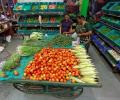
The rate of price rise for consumer foods eased to 4.7 per cent in January, from 4.96 per cent in December.
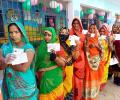
'Economic issues do not matter during elections; it is the emotional connect that helps swing votes.'
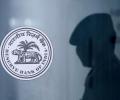
The Reserve Bank will go for a "dovish pause" at Wednesday's policy review announcement amid developments such as a rise in inflation, government maintaining the inflation target band and a likely impact on growth due to local lockdowns on rising COVID-19 infections, analysts said on Monday. Economists at American brokerage Bofa Securities said price stability, growth and financial stability will become the prime focus areas for the central bank going forward. "The RBI MPC (Monetary Policy Committee) should deliver another dovish pause on Wednesday," it said. The policy announcement, the first for the fiscal, will come days after the government maintained the RBI's target to ensure inflation to be within 2-6 per cent band for five more years.

Addressing the Delhi assembly, the chief minister also alleged the laws have been made for "electoral funding of the Bharatiya Janata Party and not the farmers".
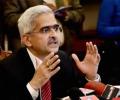
All members of the Monetary Policy Committee (MPC) -- Shashanka Bhide, Ashima Goyal, Jayanth R Varma, Mridul K Saggar, Michael Debabrata Patra and Shaktikanta Das -- had unanimously voted to keep the policy repo rate unchanged at 4 per cent after the three-day meet of the panel earlier this month. Further, except Varma, other members voted to continue with the accommodative stance as long as necessary to revive and sustain growth on a durable basis and continue to mitigate the impact of COVID-19 on the economy, while ensuring that inflation remains within the target going forward. Varma expressed reservations on this part of the MPC resolution, according to the minutes.

'In the medium to long term mid-caps tend to generate higher returns, albeit with increased volatility.'

Ugly scenes were witnessed in the Rajya Sabha on Tuesday as opposition MPs climbed on the officials' table, waved black cloth and threw files when the House began a discussion on farmers' protest against new reform laws.

The rates of price rise in many services used by the common man, including hospital and nursing, cook, domestic help and bus (fare), among others, have also touched double digits during the last four years, putting a burden on disposable income.
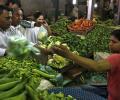
Declining vegetable prices brought down the retail inflation to a 15-month low of 4.59 per cent in December and within the comfort zone of the Reserve Bank, government data showed on Tuesday. It is for the first time during the current fiscal that the Consumer Price Index (CPI) based inflation print is below 6 per cent or in the RBI's target range of 2 to 6 per cent. The central bank factors in the CPI-based inflation while arriving at its monetary policy. The inflation in December 2020 came down from 6.93 per cent in November, mainly on account of 10.41 per cent decline in vegetable prices over the year-ago period.
 © 2026 Rediff.com - Investor Information - Advertise with us - Disclaimer - Privacy Policy - Sitemap - Feedback - About us - Terms of use - Grievances