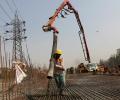
The key demand drivers -- such as low home loan rates and income tax sops, particularly for affordable housing -- that supported the recovery in H2 FY2021, remain in place and will spur recovery again, feel experts.

Consultants who help lease these properties say this is the steepest decline at least in a decade.

The RBI's financial stability report has on Wednesday highlighted the disconnect between the real economy and equity market yet again. The central bank observed that Indian equities were trading at rich valuations, with several metrics such as price to earnings multiples, price to book ratio, market cap to GDP and the cyclically adjusted P/E ratio, or Shiller P/E, at above historical averages. For instance, as on December 13, the one-year forward P/E ratio for India was 35.1 per cent, above its 10-year average, and one of the highest in the world.

'Internet, healthcare and life insurance are a few sectors which offer solid long-term decadal potential.'

After contracting for six months in a row, the country's exports grew by 5.27 per cent to $27.4 billion in September, Commerce and Industry Minister Piyush Goyal said on Thursday.

Private equity investments in Indian companies grew 38 per cent to $62.2 billion last year, with inflows into Reliance Industries' telecom and retail ventures contributing nearly 40 per cent of the total value of the deals, a report said on Wednesday. Barring investments into Jio Platforms and Reliance Retail, the total deal value was down by 20 per cent over 2019 as the volume of large deals of more than $100 million dipped by a fourth, as per the report by Bain & Company and India Venture Capital Association. Overall investment activity remained muted from March to May last year due to COVID-led uncertainties and investor confidence recovered strongly in the second half to pre-COVID levels with late-stage and buyout deals witnessing increased traction, it said.
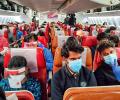
With a surge in domestic air passenger traffic, the airfares have risen by 30 per cent to 100 per cent of the pre-pandemic levels amid the festive season, a top Thomas Cook executive has said. The domestic air passenger traffic increased around 67 per cent year-on-year in October. Thomas Cook, however, expects the airfares to be levelled off going forward, as the domestic carriers operate with 100 per cent capacity.
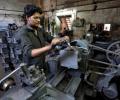
Industrial production grew 11.9 per cent in August mainly due to a low-base effect and good performance by manufacturing, mining and power sectors that surpassed the pre-COVID level. The manufacturing sector, which constitutes 77.63 per cent of the Index of Industrial Production (IIP), grew 9.7 per cent in August, according to the data released by the National Statistical Office (NSO) on Tuesday. The mining sector output rose 23.6 per cent in August, while power generation increased 16 per cent.
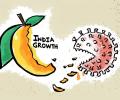
The Reserve Bank on Wednesday retained the GDP growth forecast at 9.5 per cent for the current fiscal but cautioned that the economic recovery is not yet strong enough to be self-sustaining and durable.

Expect a more modest out-turn of around 5 per cent (if not less) because of the longer-term scarring effects of the Covid shock, the sharply slowing growth in the pre-Covid years and some scepticism about the growth-efficacy of some of recent official policy initiatives, explains Shankar Acharya, former chief economic advisor to the government.

The substantially increased economic dualism may exert lasting negative influences which could include a reduced potential for economic growth; the persistence of a very weak employment and poverty situation; rising social and political discord; and heightened vulnerability to geopolitical challenges, cautions Shankar Acharya, former chief economic adviser to the Government of India.

Housing sales have jumped over two-fold during July-September period at 62,800 units across seven major cities on better demand driven by low mortgage rates and hiring in IT/ITeS sector, according to property consultant Anarock. Sales of residential properties stood at 29,520 units in the year-ago period and 24,560 units in the previous quarter. The seven cities tracked by Anarock are Delhi-NCR, Mumbai Metropolitan Region (MMR), Chennai, Kolkata, Bengaluru, Hyderabad and Pune.
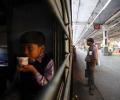
Due to onset of the COVID-19 pandemic and the consequent unprecedented lockdown, e-catering services were suspended on March 22, 2020.

The Centre had on Thursday asked all states and union territories to conduct rigorous screening and testing of all international travellers coming from or transiting through South Africa, Hong Kong and Botswana, where the B.1.1.529 variant has been detected.

A good agricultural harvest and a timely arrival of monsoon, besides a slew of government schemes, have also come as a bounty.

A weak margin outlook in the near term and lack of fresh triggers may keep the Godrej Consumer Products (GCPL) stock under pressure. The stock, after tepid September quarter (Q2) results and marginal downward revision in earnings estimates, declined 3.5 per cent in trade on Friday. Though consolidated sales of the company, which owns the Goodknight and Cinthol brands, grew 8.5 per cent year-on-year (YoY), its operating profit declined because of the sharp contraction in margins.
It said the recovery is constrained by ongoing human and economic cost of Covid-19 pandemic and negative impact of food price inflation on private consumption. The report said India, which experienced a contraction of 7 per cent in 2020, showed a strong quarterly growth of 1.9 per cent growth in the first quarter 2021 on the back of the momentum of the second half of 2020 and supported by government spending in goods and services.

India's economy, estimated to contract by 6.9 per cent in 2020 due to the coronavirus pandemic, is forecast to record a "stronger recovery" in 2021 and grow by 5 per cent, according to a UN report which said the country's current fiscal year budget points to a shift towards demand-side stimulus, with an uptick in public investment. The report, 'Out of the frying pan ...Into the fire?' published Thursday as an update to the Trade and Development Report 2020 by UN Conference on Trade and Development (UNCTAD) said the global economy is set to grow by 4.7 per cent this year, faster than the 4.3 per cent predicted in September 2020, thanks in part to a stronger recovery in the US, where progress in distributing vaccines and a fresh fiscal stimulus of $1.9 trillion are expected to boost consumer spending.

Ahmedabad is home to the strangest of cuisines and is a city of contrasts, if you look beyond the tourist places.

Business activity has fallen by a fourth of the pre-COVID levels due to lockdowns imposed by states to contain the spread of the second wave of COVID-19, Japanese brokerage Nomura said on Tuesday. However, it said the falling activity levels will have a muted economic impact and maintained its growth estimates for the year, saying the lockdowns present "downside risks". As of April 25, the Nomura India Business Resumption Index (NIBRI) registered its steepest weekly fall in over a year of 8.5 percentage points to 75.9, which is 24 percentage points below pre-pandemic normal, the brokerage said in a statement.

After navigating the turbulent pandemic waves, the recovering Indian economy is now sailing through unchartered waters of rising coronavirus cases, spiralling commodity prices and spiking inflation though the lighthouse of sustainable growth remains visible. As 2022 begins, a raft of developments, ranging from Budgetary announcements to continuation of stimulus measures to monetary policy, will set the tone for the domestic economy, which is projected to grow more than 9 per cent in the current fiscal ending March 2022. The country's continuing massive vaccination drive and 'precaution' doses starting for select categories of people this month will provide a firewall against any steep spike in coronavirus cases amid the emergence of the Omicron variant.

While domestic market growth is important, the sales trajectory in the international markets, which account for 45 per cent of the revenues, will be a key rerating trigger, say analysts.

News viewership was the biggest gainer during the first full week of lockdown, growing 298 per cent versus the pre-COVID period between January 11 and 31. Ramayana, whose rerun has begun on Doordarshan, was the top-rated show on Saturday and Sunday.

Backed by the 'China Plus One' sentiment globally, India's textile exports is expected to grow by 81 per cent to $65 billion by 2026 from the pre-Covid level of around $36 billion in 2019, said a report by the Confederation of Indian Industry (CII) and global consulting firm Kearney. This jump is likely to generate 7.5-10 million new jobs. A large chunk of this targeted increase, or around $16 billion may come from the China Plus One sentiment due to India's relatively large strategic depth compared with Vietnam or Bangladesh, the report said.

'We should have calmed down the child. We will do an internal analysis on that.'

'It is far too early to celebrate the numbers.' 'They are still fairly weak compared to the pre-pandemic level.'

Since January 2021, the inflation rate in health has stood in the range of 6.08-8.44 per cent.

India's fuel sales fell in the first half of April as a record rise in prices in a short 16-day period dented demand, preliminary industry data showed on Saturday. Petrol sales fell almost 10 per cent in the first half of April when compared with the same period in the preceding month, while diesel demand slid 15.6 per cent. Even cooking gas LPG, which had consistently shown growth even during the pandemic period, saw a 1.7 per cent month-on-month fall in consumption during April 1-15.

Seven of Bollywood's big stars (Akshay Kumar, Ranveer Singh, Ajay Devgn, Varun Dhawan, Saif Ali Khan, John Abraham and Shahid Kapoor), who had 10 movies released with a collective budget of Rs 1,100 crore since December, could rustle up only around a third of that money at the box office.
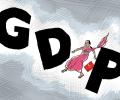
India's Gross Domestic Product (GDP) is expected to expand by 9.2 per cent in the current financial year, according to the Economic Survey 2021-22 tabled in the parliament on Monday. "Advance estimates suggest that the Indian economy is expected to witness real GDP expansion of 9.2 per cent in 2021-22 after contracting in 2020-21. "This implies that overall economic activity has recovered past the pre-pandemic levels," Economic Survey noted. Almost all indicators show that the economic impact of the "second wave" in Q1 was much smaller than that experienced during the full lockdown phase in 2020-21 even though the health impact was more severe, it said.

The output of eight core sectors grew by 16.8 per cent in May, mainly due to a low base effect and uptick in production of natural gas, refinery products, steel, cement and electricity, official data released on Wednesday showed. The eight infrastructure sectors of coal, crude oil, natural gas, refinery products, fertilisers, steel, cement and electricity had contracted by 21.4 per cent in May 2020 due to the lockdown restrictions imposed to control the spread of the COVID-19 infections. In March this year, these key sectors had recorded a growth of 11.4 per cent, and 60.9 per cent in April.

Although insurers feel loss ratios in the health segment may get impacted, and profitability will take a hit, capital erosion will not take place, at least for the large entities.

'The opening up of theatres is well-timed to coincide with the festival season and give a big push. We expect box office collections to reach 2019 levels when they stood at Rs 10,000 crore.' Surajeet Das Gupta reports.

'I don't think there will be a direct reaction to the fuel price hike on air ticket prices.'

Chief Economic Adviser (CEA) K V Subramanian on Tuesday exuded confidence that India would achieve double-digit growth in the current financial year on the back of policy initiatives and continuing reforms. He also said the country is well poised to meet the fiscal deficit target of 6.8 per cent of GDP. "At this stage, I can say confidently that we should be able to achieve that fiscal deficit number. "Any shortfalls that might happen on the disinvestment side will also be accompanied by positive surprises that have happened on tax revenue," he told reporters.

Goa, Kerala, Maldives and Dubai are among the popular destinations.
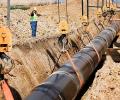
GAIL (India) Ltd has pre-poned the supply of gas from the US and is looking to contract more LNG next year as it doubles down efforts to secure affordable energy supplies to meet the needs of Asia's third-largest economy, chairman Manoj Jain said. India's No.1 gas transporting and marketing firm has long-term liquefied natural gas (LNG) supply contracts from the US to Australia and with Russia, supplementing domestic gas supplies. "In 3Q (October-December 2021) we preponed a couple of cargoes (LNG shiploads) from supplies that we were to receive next year and we did it again in the current quarter," Jain told PTI. This is because US LNG costs one-third of the price of gas available in the spot or current market.

Terming whistleblower allegations on loan evergreening as "grossly inaccurate and baseless", Indusind Bank on Saturday admitted to have disbursed 84,000 loans without customer consent in May owing to a "technical glitch". Lending without the consent was reported by the field staff in two days, and the glitch was also rectified expeditiously, the private sector lender said in a clarification. On Friday, there was a media report about anonymous whistleblowers writing to the bank management and the RBI about BFIL, the microlending-focused subsidiary of the bank, allegedly resorting to evergreening of loans, wherein existing borrowers unable to pay dues were given new loans to present the books as clean.

The domestic passenger traffic in July 2021 was 51 lakh, ICRA said in a release. Domestic passenger traffic on a year-on-year basis, however, spiked around 131 per cent over August 2020 traffic of 28.3 lakh, it said. The ratings agency said despite the continued recovery in the previous month, there is continued stress on demand, driven largely by the second wave of the pandemic, limiting travel to only necessary travel.

India's economic growth surged to 20.1 per cent in the April-June quarter of this fiscal, helped by a low base of the year-ago period, despite a devastating second wave of COVID-19. The gross domestic product (GDP) had contracted by 24.4 per cent in the corresponding April-June quarter of 2020-21, according to data released by the National Statistical Office (NSO) on Tuesday. The government had imposed a nationwide lockdown at the onset of the COVID-19 pandemic last year.
