
Recalling or relabelling medicines already in the supply chain before September 22 will not be mandatory, the finance ministry said on Tuesday, issuing a fresh set of frequently asked questions (FAQs) to address industry concerns following the announcement of goods and services tax (GST) revisions.
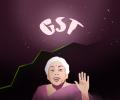
Lower rates effectively increase disposable income, strengthen purchasing capacity, and support broader consumption growth.

'What we need to watch is how Saudi Arabia's financial assistance will be used by Pakistan. If the funds go to build their military hardware and operations, it should worry us.'

From 12:01 am eastern daylight time on August 27, 2025, higher tariffs will apply to all products of India that are either entered for consumption in the United States or withdrawn from warehouses for consumption.

'While the President has been critical of India, he has gone out of his way to compliment PM Modi. They have an incredible relationship.'

Among Sensex shares, Adani Ports, Reliance Industries, Infosys, ICICI Bank, Eternal, BEL, HDFC Bank, Power Grid, ITC and Sun Pharmaceutical were the major laggards. However, Titan, Maruti, Trent, Bharti Airtel, Bajaj Finance, Tech Mahindra, State Bank of India, L&T, HCL Technologies and NTPC were among the gainers.

As many as 13 firms, including Urban Company, which provides app-based beauty and home services, and Imagine Marketing, the parent of wearables brand boAt, have secured Sebi's approval to launch initial public offerings (IPOs), according to the regulator's update on Tuesday.

Mumbai-based pharma major Wockhardt, which is gearing up to launch its promising antibiotic candidate Zaynich soon, on Friday announced a shift in its United States (US) operations. The Indian pharma giant revealed that it has decided to exit the generics pharmaceutical segment in the country.

US Secretary of State Marco Rubio claims President Donald Trump was instrumental in bringing about the cessation of hostilities between India and Pakistan, a claim India has consistently denied.

To shield against US President Donald Trump's tariff shock, analysts have been advising investors to focus on stocks of domestic-oriented companies, rather than export-centric ones, to minimise potential losses.

Prices for Indian consumers are expected to come down significantly from the current Rs 17,000-Rs 26,000 monthly.

Bolstered by an impressive performance in the global specialty business and outstanding results in the Indian market, Sun Pharmaceutical Industries, the largest pharmaceutical (pharma) company in the country, showcased a strong performance in the July-September quarter (second quarter, or Q2) of 2023-24 (FY24).

The Indian pharmaceutical industry is likely to benefit from a major wave of patent expiries in the US, as small-molecule drugs worth $63.7 billion are expected to go off-patent between 2025-29, a 65 per cent rise over the previous five years, according to a report by Antique stock broking limited.

Dismissing allegations that Indian phacosrmaceutical companies copy products of Swiss firms, Commerce and Industry Minister Piyush Goyal on Tuesday said it is a long-standing myth and India respects intellectual property rights and never steals technology from others. He said that Swiss pharmaceutical companies have not shown even a single instance that Indian companies have illegally copied any of their trademarks or patents or copyrighted technology.

Among the Sensex firms, Sun Pharmaceuticals, Tech Mahindra, HCL Technologies, Infosys, Bajaj Finance, Eternal, Tata Consultancy Services, UltraTech Cement, Bajaj Finserv, Tata Steel, ITC and L&T were the major laggards. Asian Paints, Mahindra & Mahindra, BEL, Adani Ports, State Bank of India, Trent, HDFC Bank were among the gainers.

US President Donald Trump's plan to sign an executive order to cut prescription drug prices by 30-80 per cent could lead to a global price adjustment with pharma firms pushing lower-cost countries like India to raise prices, according to the economic think tank GTRI. The US move could push prices in lower-cost countries like India as manufacturers would seek to recover losses and R&D costs from these nations.
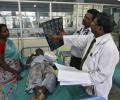
The rationalisation of goods and services tax (GST), announced on Wednesday, directly lowers the cost of everyday medical consumables, and also high-end therapies in oncology and rare diseases, helping reduce out-of-pocket patient expenditure and better adherence to medication.

Since items in the 12% category account for only about 5% of total GST, the additional boost to consumption may not be significant, points out M Govinda Rao.

India's goods exports rebounded in July after two months of contraction, with outbound shipments rising 7.3 per cent to $37.24 billion, led by a surge in exports to the United States before the country's reciprocal tariff kicked in and bolstered by a recovery in exports to other key markets.
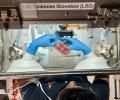
The $1.2 billion in-space manufacturing market is expected to grow and be worth more than $20 billion by 2033.
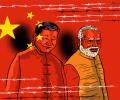
The bilateral trade between India and China has been growing at a healthy rate, but the trade gap remains sharply tilted in Beijing's favour. India has time and again flagged its concern over the ballooning trade deficit and the non-trade barriers faced by Indian goods in the Chinese market.

India's micro, small and medium enterprises (MSMEs) - which contribute over 45 per cent to outbound shipments - are facing a major disruption following the United States (US) decision to impose 50 per cent additional tariffs on the country's exports. MSME industry bodies have raised an alarm over the deep impact, seeking immediate government intervention.

Donald Trump's tariffs, meant as political punishment, have avoided the predicted chaos, lifting US growth, weakening rivals, and letting him claim victory in a resilient global economy, observes T T Ram Mohan.

New Delhi, while opting not to retaliate yet to the American tariffs, has in recent weeks sought to reinforce its friendship with Moscow, and recalibrate its ties with Beijing rather than surrender to Washington's diktats.
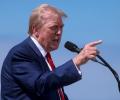
"I am telling you, these countries are calling us up, kissing my a***," Trump said during a speech at the National Republican Congressional Committee dinner on Tuesday.

The crisis may not be as visible this time, but the stakes are just as high, points out Rajeswari Sengupta.

If India caves in to US pressure as Trump hopes it will, he will further try to blackmail it into submission, points out Ramesh Menon.

The more things change, the more they remain the same for corporate India. In the April-June 2025 period (Q1FY26) - for the ninth consecutive quarter - listed companies witnessed only single-digit revenue growth, while their core earnings, excluding other income and one-time gains, contracted for the second time in four quarters. This comes as firms brace for the impact of 50 per cent US tariff on Indian goods.

At least 12 people died and 34 persons were injured in a pharma plant explosion in Sangareddy district of Telangana on Monday, State Minister Damodara Raja Narasimha said.

A Russian missile struck a warehouse belonging to an Indian pharmaceutical company, Kusum, in Ukraine, according to the Ukrainian embassy in India. The embassy alleged that Russia, despite claiming a "special friendship" with India, deliberately targeted Indian businesses in Ukraine. The strike reportedly destroyed medicines intended for children and the elderly. This incident follows a similar attack on a major pharmaceuticals warehouse in Kyiv, which was destroyed by Russian drones, as reported by the UK's ambassador to Ukraine. Kusum Healthcare, the company whose warehouse was hit, has a presence in 29 countries, including Ukraine. This attack comes amidst ongoing tensions in the region as Russia continues its offensive against Ukraine, despite US efforts to push for a ceasefire. Ukrainian Foreign Minister Andrii Sybiha accused Russia of being the sole obstacle to peace and claimed that Moscow rejected a US-brokered proposal for a ceasefire.

The United States action of levying 25 per cent additional tariff on Indian goods is 'unfair, unjustified and unreasonable', India said on Wednesday in a firm reaction, signalling increasing tensions between the two strategic partners over New Delhi's energy ties with Moscow.
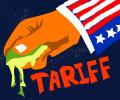
US President Donald Trump on Wednesday slapped an additional 25 per cent tariff on goods coming from India as penalty for New Delhi's continued buying of Russian oil.

The Congress party has accused the Modi government of a 'deny, distract, lie, and justify' (DDLJ) policy regarding China, alleging territorial setbacks and misplaced economic priorities.

If pharmaceutical exports from India to the US come under a 25 per cent tariff bracket, the impact on earnings before interest, tax, depreciation and amortisation (Ebitda) could be around 5 per cent, felt analysts. This is after assuming that about 75 per cent of the tariff would be passed on.
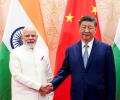
'What's currently underway is not a 'reset'.' 'What needs to be arrived at is a new balance.'
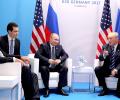
The trade relationship between India and the United States has been strained by the imposition of 25% tariff by the US on Indian goods.

The 25 per cent US tariffs, plus a penalty for Russian imports, could dent India's GDP growth by 30 basis points in the current fiscal, but the higher duty is unlikely to significantly affect India's domestic demand-driven economy, Barclays said on Thursday. If the 25 per cent tariff, announced by US President Donald Trump on Wednesday, is implemented from August 1, the effective average US import tariff on Indian goods will rise to 20.6 per cent in trade-weighted terms, as per Barclays estimates.

Indian drugmakers supply 47 per cent of the generic medicine requirements in the US, and tariffs would have increased prices in the US domestic market for patients, who are already dealing with drug shortages.

More than half of all new project announcements in the June 2025 quarter came from the manufacturing sector. Manufacturing projects worth around Rs 2.3 trillion were announced in the three-month period, accounting for 54 per cent of total new projects, according to data from the Centre for Monitoring Indian Economy (CMIE).

The death toll from the explosion at the Sigachi Industries' pharma plant in Pashamylaram has risen to 35, police said on Tuesday.
