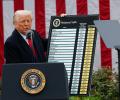
The official said there are both challenges and opportunities for India as many of its competitor countries in exports, such as China Vietnam, Bangladesh, Cambodia and Thailand, face higher duties.

Oil marketing companies (OMCs), paint manufacturers, tyre producers, and aviation stocks witnessed significant gains as Brent crude oil prices slipped below $70 per barrel. The price drop came after a double blow: The US imposed tariffs on Canada and Mexico, including energy imports, and OPEC+ - the group of major oil-producing nations including Russia - announced an output increase of 138,000 barrels per day, the first such hike since 2022.
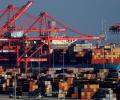
Senior officials of India and the US will begin three-day talks on the proposed bilateral trade agreement in New Delhi on Wednesday amid threats of reciprocal tariffs from the Trump-administration, an official said. To formally start the negotiations on the pact, Assistant US Trade Representative for South and Central Asia Brendan Lynch, along with a team of officials, is in New Delhi.

'The universe of PSU stocks is huge and diverse.' 'Investors should bet on specific sectors and stocks from the basket as most of them may continue to consolidate after years of outperformance.'
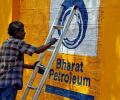
After HPCL, the government headhunter struggled to find a suitable candidate for the top job at Bharat Petroleum, as most applicants were narrow specialists lacking multidisciplinary experience needed to run a large organisation. The Public Enterprise Selection Board (PESB) last month interviewed a dozen candidates including BPCL director (finance) Vetsa Ramakrishna Gupta and its director (refineries) S Khanna but found none suitable for the job of chairman and managing director of Bharat Petroleum Corporation Ltd (BPCL), according to a PESB order.

India and the visiting US officials have decided to hold a wrap-up session on Saturday morning to conclude the three-day talks on the proposed bilateral trade agreement, government sources said. They said the discussions are at a "very" early stage.

Shares of Oil marketing companies (OMCs) extended their gains for the fourth consecutive session on Thursday after crude oil prices plunged to six-month lows in the international markets, which boosted investor sentiments. Traders said the OMC stocks gained with crude oil prices hovering below $70 per barrel after OPEC-plus decision to increase output from April, a move which is expected to favour Indian refiners with added marketing margins on retail fuel.
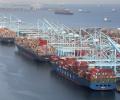
India and the US have decided to hold sector-specific talks in the coming weeks to finalise the structure of the proposed bilateral trade agreement (BTA), the government said on Saturday. The engagement between the two countries came in the backdrop of the USA's threat to impose reciprocal tariffs on its key trading partners, including India, on April 2.

Here is a list of Q & As to explain these issues and implications of the US move.

Dividends paid by central public-sector enterprises (CPSEs) in 2024-25 are set to be the highest ever, with the government receiving 69,873 crore so far. A government official said he was hopeful the receipts would touch 70,000 crore in the last week of the financial year.

India's exports grew marginally by 0.7 per cent to $41.97 billion in March, while the trade deficit stood at $21.54 billion in the month, the latest government data showed on Tuesday.
'The US is strongly placed to expand its crude supplies to India.'

Leading oil companies dedicated the second day of India Energy Week (IEW) 2025 to announcing strategic deals and business agreements across the supply chain - from sourcing more crude oil supply to deploying more domestic ships and building gas distribution capacity.

'CORSIA has set impossible targets. It tries to limit countries to the emission levels of the number of aircraft that they had in 2020. That has to be opposed.'

The Delhi government will stop providing petrol to vehicles older than 15 years at fuel stations across the city after March 31, Environment Minister Manjinder Singh Sirsa announced. The decision is part of the government's efforts to combat air pollution in the national capital. The meeting focused on key policy decisions, including restrictions on older vehicles, mandatory anti-smog measures, and the transition to electric public transport. The government will install gadgets at petrol pumps to identify vehicles older than 15 years, and no fuel will be provided to them.

The government has slapped a $2.81 billion (about Rs 24,500 crore) demand notice on Reliance Industries and its partners, including BP Plc for gains made from producing and selling natural gas that may have migrated from neighbouring block of state-owned ONGC. This follows the Delhi high court's decision on February 14, overturning an international arbitration tribunal ruling that held the duo not responsible for paying any compensation for the gas they produced and sold which had allegedly migrated from adjoining fields.

'The signal is crude oil prices will rise, I am cutting my subsidy. Be prepared, prices will rise.'

Driven by smartphone, electronics exports have reached $22.5 billion in value in the first eight months of the current financial year (FY25), a near 28 per cent growth over the $17.66 billion electronics exports during the corresponding period of FY24.

The private corporate sector showed improvements across various segments in the third quarter of the current financial year (Q3FY25), with the operating profit margin of listed non-financial companies increasing sequentially by 50 basis points (bps) to 16.2 per cent, according to the Reserve Bank of India (RBI) data released on Monday. Sales of listed private non-financial companies increased by 8.0 per cent during Q3FY25, compared to 5.5 per cent in the corresponding quarter a year ago. It was, however, 5.4 per cent in Q2FY25.

The changes will take effect on March 28, with portfolio adjustments expected before the market closes on March 27.

Three men in Aligarh, Uttar Pradesh, received income tax notices demanding crores of rupees despite earning meager salaries, highlighting the growing issue of identity theft in India. The victims, who earn between Rs 8,500 and Rs 15,000 per month, were shocked to receive notices for Rs 33.88 crore, Rs 3.87 crore, and Rs 7.79 crore respectively. The authorities believe that businesses have been conducting large-scale transactions using forged Aadhaar and PAN cards in the names of these individuals.
Brokerages expect a further slowdown in Indian firms' revenue and earnings growth in Q4FY25, following low single-digit growth in the preceding three quarters, as factors like weak consumer demand and credit growth linger on.

US shale oil would act as an alternative to India's heavy dependency on Russian crude, which is currently facing sanctions.
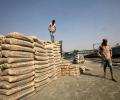
The 31st meeting of the Goods and Services Tax (GST) Council, held in December 2018, deferred a decision to reduce the GST rate for cement from 28 per cent to 18 per cent. This was despite recognising that cement - along with automobile parts - remained among the few mass-consumption items still taxed at the highest slab, which was originally meant for luxury and sin goods.

India's merchandise exports dipped by about one per cent to $38.01 billion in December 2024 against $38.39 billion a year ago, according to government data released on Wednesday. Imports increased by 4.8 per cent to $59.95 billion in December 2024 compared to $57.15 billion in the year-ago month.
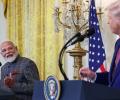
Of Trump's reciprocal tariffs and trade deals

Sourav Kothari outclassed Pankaj Advani 4-2 in the final of the National Billiards and Snooker Championship in Indore on Saturday.

Nine Indian universities and institutions have secured a place among the world's top 50 in the QS subject-wise rankings, with the Indian School of Mines (ISM) Dhanbad claiming the highest position at 20th globally for Engineering-Mineral and Mining. Despite the success, some top institutions, including three IITs, two IIMs and JNU, have experienced a drop in their rankings. The QS World University Rankings by Subject, in its 15th edition, highlight India's growing higher education ecosystem in terms of both size and quality.

India and the United States will finalize the contours, schedule of negotiations, and terms of reference for a proposed bilateral trade agreement (BTA) during a three-day meeting beginning Tuesday. The agreement is expected to be finalized in two tranches, with the first phase focusing on goods trade. The US team, led by Assistant US Trade Representative for South and Central Asia Brendan Lynch, will be in India from March 25-29 to discuss the agreement. Both countries are aiming to conclude the first phase of the agreement by fall 2025.

The gold loan portfolio of banks continued to show strong off-take with 76 per cent year-on-year (Y-o-Y) growth in January 2025 amid moderation in retail credit - especially in the unsecured credit segment - following increase in risk weights in November 2023. The gold loan pool had grown 17.4 per cent Y-o-Y in January 2024.
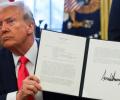
The sweeping tariffs proposed across sectors by US President Donald Trump are scheduled to be imposed starting April 2, with most analysts worried about their impact on companies, and in turn the financial markets. Recently, the US administration signaled that it will impose sectoral tariffs on energy, pharmaceuticals, semiconductors, agriculture, copper, and lumber.

India is preoccupied with analysing the US sanctions, which may cut off India's access to discounted Russian crude and force it to buy at market prices.
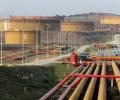
In a significant change to regulations, oil and gas regulator PNGRB has proposed a new policy of how tariffs for pipelines carrying gas to users will be determined, and proposed charging city gas entities selling CNG and piped cooking gas to households at the lowest rates.

Start with your strongest subject. This will give you an edge. Don't risk negative marking with blind guesses, advises rediffGURU Nayagam PP.
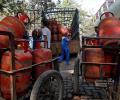
The government is likely to provide a subsidy of Rs 35,000 crore to state-owned Indian Oil Corporation Ltd (IOC), Bharat Petroleum Corporation Ltd (BPCL), and Hindustan Petroleum Corporation Ltd (HPCL) to make up for losses they incurred on selling the fuel this fiscal, sources said.

However, copious oil supplies amid growing global output and slowing Chinese oil consumption will put India in a better bargaining position with Gulf suppliers.

Union Minister of State for Petroleum and Natural Gas Suresh Gopi has stirred controversy by suggesting that members of the "upper castes" should handle the tribal affairs portfolio. Gopi, an actor-turned-politician, argued that true progress in tribal welfare would only be achieved under the leadership of individuals from "upper castes." His comments have been met with widespread criticism, including from CPI state secretary Benoy Viswam and prominent tribal leader C K Janu.

Cooking gas or Liquified Petroleum Gas (LPG) price has been raised by Rs 50 per cylinder by distribution companies, Union Oil Minister Hardeep Singh Puri said on Monday.
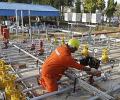
Ongoing strategic investment into assets abroad, alongside gas purchases being made by India, will soon allow the country to access as much gas as it needs, Petroleum and Natural Gas Minister Hardeep Singh Puri said on the sidelines of India Energy Week (IEW 2025).
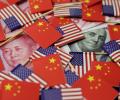
The trade war between the US and China is expected to benefit Indian exporters in increasing their shipments to the American market, sources said. They said the country was the fourth-largest gainer when the US imposed higher duties on Chinese goods during US President Donald Trump's first tenure.
