
What do we need more of: Leaders who dominate global institutions or local leaders with a 'Make-in- India' mindset?

FMCG giant Unilever CEO Paul Polman and technology major Intel President Renee James on Tuesday met Prime Minister Narendra Modi as a slew of global corporatehonchos continue to line up to express their intention to invest in India.

Functional since May, the centre employs 1,400. Unilever's chief executive, Paul Polman, formally inaugurated it on Thursday.

Development issues of vital interest to India are expected to receive focused attention at the G20 Summit beginning in Cannes on Wednesday, a Ficci Paper on the B20 Working Group on Development said.

Company plans to tap 75 per cent of revenues from emerging markets, from the current 53 per cent.

Move comes at a time when the $50-billion Unilever is looking to double its turnover in 10 years.

HUL global CEO, Paul Polman, on his third visit to India in little over a year, said his company's 170,000 employees across the globe and he were fast learning "how to climb mountains, as the market place was no longer a smooth surface".

Alberto Culver has operations in nine countries, including the US, Canada, Argentina, Mexico, the UK, South Africa and Australasia.
For Polman, 52, the first 'outsider' to the firm to take charge at Unilever in almost a century, it was his first interaction with the Indian media after becoming the CEO. The Dutchman is putting that courage to good use in Unilever. "Recession can't be an excuse for business to go down. Rather, the crisis gives me an opportunity to set the bar higher." Polman added that he expected the tough economic environment to continue for at least 18-24 months.

Delaying action on climate change will hurt growth: Global CEOs.

He is a member of the Board of Directors of Whirlpool Corporation, Pearson and Qualcomm Incorporated.

Almost every country in the world just signed on to the #ParisAgreement on climate change

Unilever said it was "working actively" to find a solution to a long-pending dispute on ecology contamination by its unit at Kodaikanal.

Anglo-Dutch parent's stake in Indian subsidiary rises from 52.5% to 67.3%.
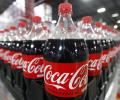
The company has done a lot to promote 'Open Happiness'.

Successors work hard, and many of them succeed and stay for many years. 'But when they don't it is best to be civil and part ways than seek confrontation which might prove acrimonious and futile.'

HUL is keen to redefine the way in which brands tell their stories to consumers.
To tackle the resultant inflation, the Indira Gandhi government had imposed price controls on manufactured products, including soaps and vanaspati, in 1973.
 © 2026 Rediff.com - Investor Information - Advertise with us - Disclaimer - Privacy Policy - Sitemap - Feedback - About us - Terms of use - Grievances