
We very much hope that wisdom dawns on the Chinese side, Jaishankar said in Bangkok.

'The military advantage the Indian Army had gained by the Special Frontier Force occupying the heights of the Rezang La-Rechin La ridge on the Kailash Range is lost without the PLA withdrawing to east of the Khurnak Fort line.'
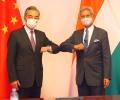
Jaishankar said full restoration and maintenance of peace and tranquillity in border areas was essential for the development of the bilateral ties.

The disengagement of troops of the Indian Army and China's People's Liberation Army from the Line of Actual Control was reached after sustained negotiations at the military and diplomatic level, said the ministry of external affairs last week.
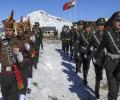
The major general-level meeting discussed ways to implement the disengagement of troops from Galwan Valley as agreed during high-level military talks between the two sides on June 6. The Indian delegation at the talks was led by Leh-based 3 Infantry Division commander Major General Abhijit Bapat. The two sides held Major General-level talks on Tuesday as well.
"On the border issue, China always maintains that we should follow through on treaties and agreements we signed and we jointly uphold peace and tranquility at the border region," Foreign Ministry spokesman Wang Wenbin said while responding to Jaishankar's remarks.

The Indian side is expected to seek disengagement as soon as possible in the remaining friction points besides pressing for resolution of issues in Depsang Bulge and Demchok.

Wang began a two-day trip to Pakistan on Tuesday primarily to attend a meeting of the Council of Foreign Ministers of the Organisation Islamic Cooperation (OIC) as a special guest.

The Indian side is expected to seek disengagement as soon as possible in the remaining friction points besides pressing for resolution of issues in Depsang Bulge and Demchok.

The sources said the situation in eastern Ladakh remained 'tense' and that around 30-40 soldiers of China's People's Liberation Army (PLA) are holding up at a position close to an Indian post in the Rezang-La ridgeline in eastern Ladakh.

The use of firearms along the LAC marks a serious escalation in border tensions as the previous instance of shots being fired at the de-facto border was in 1975.

India on Wednesday delivered a strong message to China that the 'unprecedented' incident in the Galwan Valley will have a 'serious impact' on the bilateral relationship and held the 'pre-meditated' action by Chinese army directly responsible for the violence that left 20 Indian Army personnel dead.
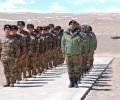
The fresh round of Corps Commander talks are scheduled to start at 10:30 AM at Moldo border point on the Chinese side of the Line of Actual Control in eastern Ladakh, they added.

Army chief General Naravane said the ongoing dialogue will sort out all the perceived differences between the two countries.
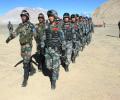
The talks between the two armies are going to be held this week at multiple locations including Patroling point 14 (Galwan area), Patrolling point 15, and Hot Springs area, top government sources said.

External Affairs Minister S Jaishankar and his Chinese counterpart Wang Yi met in Moscow on Thursday amid hopes of a possible breakthrough in reducing tensions along the Line of Actual Control (LAC) in eastern Ladakh.
"All temporary structures and other allied infrastructure created in the area by both sides have been dismantled and mutually verified. The landform in the area has been restored by both sides to the pre-standoff period," the Army said in a statement.
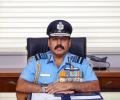
Air Chief Marshal Bhadauria was at the Leh IAF base on Wednesday where he reviewed operational preparedness of the force in effectively guarding the sensitive border areas in eastern Ladakh where Indian and Chinese armies have been on a nearly six-week standoff.

Defence Minister Rajnath Singh on Tuesday handed over to the Army a raft of home-grown military hardware including unmanned aerial systems, quick reaction fighting vehicles, patrol boats and surveillance equipment for boosting its overall combat capability in eastern Ladakh.
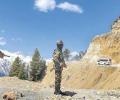
People familiar with the development said Chief of Army Staff General M M Naravane and the top commanders will review the country's combat readiness in eastern Ladakh where Indian and Chinese troops have been locked in a bitter standoff for 17 months.

The military brass is learnt to have apprised Modi about the evolving situation in eastern Ladakh, though officials maintained that the agenda of the pre-scheduled meeting was to discuss the ambitious military reforms and ways to boost India's combat prowess.
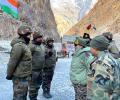
'We hope this round of meeting, on the basis of previous meetings, can move forward, further enlarge consensus, narrow differences and work for a solution that is acceptable to both parties,' the spokesperson said in updated comments posted on the ministry's website.

With the two armies again in a face-off at multiple points, there is apprehension of renewed clashes.
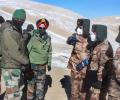
'We hope the Indian side will work with China to follow through the important consensus of our two state leaders, abide by relevant agreements and treaties to de-escalate the tension at the border'

Vice Chief of Army Staff Lieutenant General C P Mohanty on Thursday carried out a comprehensive review of India's military preparedness in eastern Ladakh on the first day of his three-day visit to the region where Indian and Chinese troops have been locked in a bitter standoff for over a year.

The sources said the Indian Army has been on a very high level of alert and is ready to deal with any eventuality in the area.

The Indian Army has been matching up to the Chinese build up in both Pangong Tso lake and Galwan Valley, the two locations in Ladakh which have witnessed major reinforcement of troops in the last two weeks, sources said. There was very little chance of easing of tension anytime soon as both sides are aggressively holding onto their respective positions, they said.
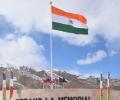
Visiting the Rezang La Memorial, one has a feeling of super-humans defending the Indian territory against the Chinese onslaught, says Claude Arpi on the 60th anniversary of the heroic battle of the 1962 War.
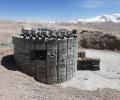
In a major technology push, Indian Army has envisioned construction of "permanent defences" along the Line of Actual Control in eastern Ladakh using cutting-edge 3D printing technology, a move that will save time and improve its defence preparedness, sources said on Tuesday.

The remarks of White House Press Secretary Jen Psaki came ahead of the 14th round of military-level talks between India and China on the 20-month row in eastern Ladakh.

Chinese foreign ministry spokesman Geng Shuang told a media briefing in Beijing that "at the moment the situation in the boundary region between China and India is overall stable and controllable".
The meeting primarily focused on implementation of certain decisions taken at the fifth round of talks between Corps Commanders of the two armies last week on the disengagement process as well as to bring down prevailing tension in the region, sources said.

'The Pangong Tso lake is frozen from September-October to February-March. The windchill factor is phenomenal. The night temperature goes to minus 40. The area is like a barren desert. You are out in the open with no trees or bushes to take cover.'

A village built by China along the Line of Actual Control in the Arunachal Pradesh sector and mentioned in a recent Pentagon report, is in territory controlled by that country, sources in the security establishment in New Delhi said on Tuesday.

Chinese President Xi Jinping, who made a rare visit this week to the restive Xinjiang region which borders Ladakh, met the troops and officers stationed there and praised their "outstanding contributions" to the border defence and stabilisation of the volatile province.
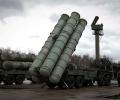
RInstead of disengagement, the Indian and Chinese armies have deployed an estimated 35,000 to 40,000 soldiers each along the LAC. The PLA has deployed S-400 air defence missiles to neutralise the IAF's advantage in air power
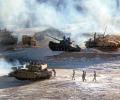
'The Chinese are only about 160-170 km behind.' 'It will not take much time for them to bring their troops back, considering that they have better infrastructure -- and the weather is now favourable.' 'They can move in much faster as the terrain favours them.'
"The meeting thus did not result in resolution of the remaining areas," the Army said in a statement.
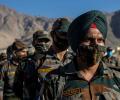
The decisions were mentioned in a joint statement issued by the two armies late Tuesday, a day after the sixth round of Sino-India Corps commander-level talks that lasted for 14-hours.
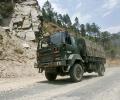
It is learnt that Defence Minister Rajnath Singh has conveyed to top military brass that there was no need for reviewing the implementation of any of the key projects along the Line of Actual Control (LAC) in Ladakh, Sikkim, Uttarakhand or in Arunachal Pradesh in view of the aggressive behaviour by Chinese troops in several sensitive areas.
 © 2026 Rediff.com - Investor Information - Advertise with us - Disclaimer - Privacy Policy - Sitemap - Feedback - About us - Terms of use - Grievances