
India, the world's third largest oil consuming and importing nation, bought crude oil worth 49 billion euros from Russia in the third year of Moscow's invasion of Ukraine, a global think tank said. India, which has traditionally sourced its oil from the Middle East, began importing a large volume of oil from Russia soon after the invasion of Ukraine in February 2022.
What is more surprising is that a surge in Russian oil supplies has come after the G7 imposed stringent sanctions on Moscow.
India was the world's biggest importer of Russian oil in February, exceeding China by 20 million barrels.
The government on Monday scrapped 30-month old windfall profit tax on domestically-produced crude oil and on export of jet fuel (ATF), diesel and petrol following a decline in international oil prices. Minister of State for Finance Pankaj Chaudhary tabled a notification in Rajya Sabha scrapping the levy on crude oil produced by firms like state-owned Oil and Natural Gas Corporation (ONGC) and exports of fuels done by companies like Reliance Industries Ltd.
India's biggest oil and gas bid round attracted four bidders that included state-owned ONGC and OIL and private sector Vedanta Ltd, with most blocks getting just two bids, according to Directorate General of Hydrocarbons (DGH). The OALP-IX bid round, where 28 blocks or areas spread over 1.36 lakh square kilometre were offered for finding and producing oil and gas, for the first time saw Reliance Industries Ltd-bp plc combine bidding together with ONGC for one block in Gujarat offshore.

'Retail investors, who had not seen such a massive correction in the SMID universe since COVID-19, are witnessing something like this for the first time. Panic profit booking may continue.'
Savings for Indian refiners from purchasing Russian oil have decreased to a third of what they were in the years following Russia's invasion of Ukraine, which triggered global crises, sanctions, and discounted Russian oil seeking buyers. Despite this, savings from importing cheap Russian oil were significant enough to help Indian refiners tide over frozen petrol and diesel pump prices.

Ravshan Teshabaev scored late into the second-half to give Vasco a 1-0 victory over Oil India in the 30th Federation Cup at the Vidyasagar Krirangan in Barasat on Tuesday. The victory kept Vasco's hopes alive in the tournament. The Goa side's fate now depends on the other Group C match between Mohun Bagan and Air India.

The Indian equity markets will soon account for over a fifth of a key emerging market (EM) benchmark tracked by funds with assets exceeding $500 billion. This development is expected to funnel as much as $3 billion into the domestic markets. Following the latest review undertaken by global index provider MSCI, India's weighting in the MSCI EM index will surpass 20 per cent for the first time, narrowing its gap with the current top-weighted China to fewer than 400 basis points.
Post-IPO and equity transfer, government shareholding in the company will come down to 78.43 per cent. IOC will hold 4.45 per cent equity stake in the expanded equity base while HPCL and BPCL would hold 2.23 per cent each. Public holding would be 12.66 per cent.
Appoints Foster Wheeler as consultant to prepare project report.
The government is likely to come out with 10 per cent stake sale offer of Oil India in the second fortnight of this month, followed by NTPC's issue in the first 14 days of February, a Finance Ministry official said.
The government is planning divestments in at least 5 public sector undertakings including Maruti, Balco, Bhel, Oil India and Powergrid in the next few months as part of efforts to raise Rs 5,000-7,000 crore (Rs 50-70 billion) in 2005-06.
Trends in the global energy markets are crucial if India's growth outlook is to remain healthy. Prices for the Indian crude basket were averaging around $86.2 per barrel through Q1FY25 and then moderated to $84 in July and to $78-79 in August (so far). But global crude supply may outpace weak global demand in the short term.
Oil India chief reveals plans of the upcoming IPO and future investment strategies.

Govt was selling 60.11 mn shares, or 10% co's stock, had set a floor price of Rs 510/share for bids.

'Those betting against PSUs will likely be punished in this upswing.'

While most analysts are expecting poor results from oil marketing companies (OMCs) in the first quarter of 2024-25 (Q1FY25) and even in the first half (H1) of FY25, GAIL (India) could be an outlier. Upstream producers, Oil and Natural Gas Corporation (ONGC) and Oil India (OIL) could do well due to strong crude and gas prices, but refiners are likely to see weak margins and the impact of frozen prices during the election period will also be negative.
BPCL is a high revenue-earning public-sector undertaking (PSU) and plans to privatise it are completely off the table, Petroleum and Natural Gas Minister Hardeep Singh Puri said on Tuesday after assuming charge of the ministry for the second time. "Why would we divest ourselves of highly successful Maharatnas like BPCL," Puri said, arguing the Centre was not in favour of divesting its stake in oil PSUs.

The asset it owned by Venugopal Dhoot and a US oil and gas explorer.


Petroceltic is headquartered in Dublin with offices in Edinburgh, London, Algiers, Varna, Cairo and Rome.
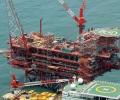
So far, 254 blocks of oil and gas have been auctioned.
Public sector exploration firm Oil India is likely to hit the capital market, with an initial public offering of 2.64 crore shares, in November.
Most brokerages are betting that the new government will shift to a policy focussing on boosting rural incomes and consumption since that has clearly been a pain point.
Oil India's IPO will open on schedule inspite of the market volatility, stated government sources.
Upstream majors ONGC and Oil India (OIL) results for the January-March quarter (Q4) of FY24 suggest better production in future. But OIL missed its own production targets although it delivered higher volumes and it disappointed the market in terms of Ebitda. ONGC reported standalone Ebitda of Rs 17,400 crore (up 7 per cent year-on-year or Y-o-Y) in Q4FY24, slightly below estimates due to other higher expenses.
OIL, which produces 3.5 million tonnes a year of oil, will offer 2.64 crore equity shares to public in the IPO, while the government will simultaneously sell 10 per cent of its stake in the company to state refiners.
OIL, which produces 3.5 million tonnes a year of oil, will offer 2.64 crore equity shares to public in the IPO, while the government will simultaneously sell 10 per cent of its stake in the company to state refiners.
Escalation of the conflict in West Asia between Israel and Iran has had a direct impact on the energy markets, and more broadly on the financial markets as well as the global economy.
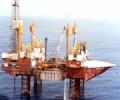
Though ONGC and OIL are major producers of natural gas, they currently have no presence in its retailing and marketing, a field dominated by GAIL and its joint ventures.

The government on Monday fixed the issue price of the share at Rs 1,050 per share, raising about Rs 4,982 crore (Rs 49.82 billion). The public issue of OIL, which closed on September 10, was subscribed nearly 31 times, generating demand for shares worth over Rs 85,576 crore (Rs 855.76 billion).
The timing, however, would be decided in consultation with the government and after the approval of the company's board. An 11 per cent fresh equity would be sold in the IPO while the government would divest 10 per cent of its stake at the IPO price.

The upstream oil and gas (O&G) sector has delivered a stellar performance in the stock market in the recent past. The O&G sector is dominated by PSUs and despite the imposition of a windfall tax, profitability has been impressive. Oil India Limited (OIL) is particularly favoured by investors.

OVL, the overseas arm of state-run explorer Oil & Natural Gas Corporation, and Oil India Limited agreed in June last year to jointly buy Videocon's 10 per cent interest in the Rovuma Area 1 for $2.475 billion.
