
Such minutes will be available within two weeks from the date of its confirmation in the next meeting of the central board and on being signed by the chairman in the same meeting, the RBI said in a statement on its website.

In another round of economic booster, Sitharaman announced steps to help homebuyers and push exports.

The RBI panel has also recommended a government-sponsored 'fund of funds' of Rs 10,000 crore to support the venture capital and private equity firms investing in the MSME sector.
The Centre's proposal to call for governance reform in the RBI could, however, take a back seat, a source privy to the development said.

The reforms will help FPOs procure directly from farmers, something that they have been pressing for long.

The combined profit before tax of 748 companies, which have declared their results for Q1FY21, is down 46 per cent YoY. Their net sales went down by a quarter as the Covid-19 lockdown led to a sharp fall in economic activity.

Reacting to the announcement, MSME Minister Nitin Gadkari said clearing GST dues within 30 days will be highly beneficial for the MSME sector and will also be instrumental in increasing job opportunities.

Maruti is not an online outlier, of course; other heavyweights have rolled out similar services. But as an analyst pointed out, Maruti's all-India roll-out has significant impact given that it accounts for over half of all cars sold, reports, reports Pavan Lall.

The Reserve Bank of India (RBI) has clarified that loans which have remained standard without any defaults as of March 1, 2020, will be eligible for restructuring under the pandemic-related resolution framework issued in August.

Employees of some top Indian companies were in for a pleasant surprise when they received a mail from their HR team announcing a hike in salaries and bonuses. Led by IT firms and start-ups, HR managers say that while some have offered cash and stock options, others are in a wait-and-watch mode and add the trend will pick up in other sectors. For example, IT giant Cognizant - which had an attrition rate of 19 per cent in the December quarter - has established a $30-million employee retention fund in order to bring down the high attrition rate.

As much as 20 per cent of the gross merchandise value (GMV) of sales made on e-commerce platforms is being financed through the no-cost EMI route, up from 4-5 pc two years ago.

With Deputy Governor Viral Acharya and another member Chetan Ghate voting for a status quo, RBI governor Shaktikanta Das and three others outvoted them for reduction in repo rate to 6.25 per cent from the existing 6.50 per cent.

M&M's used car biz becomes the first private firm to tie up with a bank for conducting online auctions of repossessed and off-lease cars. Ajay Modi reports.

If the interest rate on bank deposits is linked to any external benchmark, it would jeopardise the banks' fund-raising ability. Interest rates on small savings schemes are likely to be reduced very shortly, to maintain parity. All these steps would indeed affect retired people, and particularly those dependent on interest income, says Arindam Gupta.

You can get a lumpsum sanctioned, but you may draw only part of it and pay interest on the amount used.

Asset financing firms are still witnessing subdued demand and meaningful recovery is likely only in FY16, the report said.

The Reserve Bank of India (RBI) on Friday decided to leave the benchmark interest rate unchanged at 4 per cent but maintained an accommodative stance, implying rate cuts in the future if need arises to support the economy hit by the Covid-19 pandemic.

Among other proposals, she said NRI portfolio route would be merged with the FPI route for seamless investment in stock markets.
The Reserve Bank of India is expected to come out with comprehensive guidelines on the non-banking finance companies that are not involved in taking public deposits.
Financial inclusion has two parameters- access and use of banking services.
Financial inclusion has two aspects- access and use of banking services.

Low home loan rates by banks could put large players in an advantageous position over smaller non-bank players, believe analysts.

While banks are not as exposed as the corporate sector during the initial stage of the pandemic, the strain on lenders could ultimately be profound. Banks face a second-order hit compared with the corporate and household sectors.

Being one of the early commentators to flag economic slowdown and caution investors on corporate earnings, Gautam Chhaochharia, head of India research, UBS Securities, in an interview with Hamsini Karthik says the markets remain in an expensive zone despite the recent correction.

'If credit is not available, people will postpone buying. That's what has happened.'

New borrowers should go for banks over housing finance companies as the new benchmark -- MCLR -- is more transparent.

Thanks to the recapitalisation by the government and measures taken by the central bank, collapse of any large housing finance company won't pose as big a risk as it had six months ago.

'We are very watchful about inflation and growth. But the main challenge is economic revival and growth.'

Invest 5 to 10 per cent in a banking sector fund. Ensure that mutual fund's portfolio includes all three players -- private sector banks, public sector banks and NBFCs.

Ankit Mehra, founder and CEO, GyanDhan, an education financing marketplace, tells you how to apply for an education loan in the pandemic.
Is a short tenure (3 to 5 years) floating rate car loan a feasible option?

V Vaidyanathan, former executive director at ICICI Bank who turned entrepreneur to run Capital First, an NBFC that caters to smaller businesses, tells Pavan Lall in an exclusive interview that his new entity post the merger of Capital First and IDFC Bank which will be called IDFC First will launch by January and cater to a new India with value services.
Bank credit growth declined to 8.5 per cent in January from 13.5 per cent in the year-ago period.

'Inquiries and bookings are at quite a healthy level.'

Ahead of India's annual budget presentation next week, IMF's chief economist Gita Gopinath has favoured the extension of the pandemic support measures, thrust on investment in infrastructure and expanding health sectors programmes like Ayushman Bharat, and a very credible divestment path for commercially viable companies. The Indian government has provided a lot of schemes for small and medium enterprises, most of which is in the form of liquidity support, Gopinath told PTI on Tuesday. "And you want to revisit it and see how effectively that is working and see whether additional support may need to be provided," she said while responding to a question on her recommendations to Finance Minister Nirmala Sitharaman, ahead of her presentation of the annual Union Budget on February 1. It would be a good time for banks and Non-Banking Financial Companies (NBFCs) to raise capital given the attractiveness of financing conditions at this point, she said.

'When an institution believes its knowledge and capability is superior to everyone, it behaves like a frog in the well.' 'And this is precisely the cause for the mess,' says J N Gupta.

'Till now, we were under tremendous stress. The economy was not recovering, the financial cycle was not moving and the banks were not supporting.' 'With the government pumping in money to the banks and asking the NBFCs to give priority to the MSME sector, there will be a revival.'
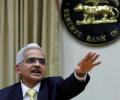
'The banking sector appears to be on course to recovery,' declares the RBI governor.

Given Indian corporates's high indebtedness, new credit will be used for servicing loans rather than building factories. This is setting us up for more companies on life support and more zombie banks, warns Rahul Jacob.

Join Rajeev Mahajan, Founder Director & CEO, Antworks Money, for an online chat at 2 pm, Thursday, January 25
