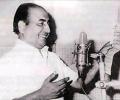
Mohammad Rafi had a powerful range that could accommodate anything from the sublime O duniya ke rakhwale for Bharat Bhushan in Baiju Bawra to the eccentric Badan pe sitare lapete huye for Shammi Kapoor in Prince.

'I wish you were here to see for yourself what Mughal-e-Azam means to Indians in America.'

'The credit for giving me my first major break goes to Master Ghulam Haider.'

'I somehow escaped the difficulties that a majority of working girls face.'
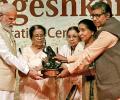
'Whatever we are today, if playback singers are here even today, and that includes me, it is because of Didi.'
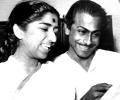
'If I had a chance to live it all again, I wouldn't change a thing.'

Long before she won royalty rights for playback singers, there was an undisclosed incident in Lataji's life where she not only put a male colleague in place, but also refused to sing with him thereafter.

'When the Shakti team had their meals, Dilisaab would squat with us and say, "Bhai mujhe bhi khilao".'
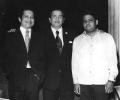
'Laxmi and I firmly believed that while working, the egoistic word 'Main (I)' never interferes.'

'There was no time to do all the normal things that children do as they grow up.' 'One day, I was playing with dolls.' 'The next day, I was on a train looking for opportunities to sing at various recording studios.'

'People say my father was scared of Kishore Kumar. That is untrue. There are so many songs that my father told the composers to let some other singer sing because they too are good.'

'Rafi was singing for Hanuman and I was singing for Ravan.' 'C Ramachandra corrected Rafisaab and he became red in the face.' 'I asked Anna (Ramachandra), "How could you do this?"' 'He replied, "How could I not do this? My song was being spoilt".'
Rafisaab's memory is as alive as ever in his devoted fans' minds.

Patcy N/ Rediff.com had spoken to Mubarak Begum back in 2011. We republish the interview.
 © 2026 Rediff.com - Investor Information - Advertise with us - Disclaimer - Privacy Policy - Sitemap - Feedback - About us - Terms of use - Grievances