
The National Pharmaceutical Pricing Authority will monitor how companies are increasing prices of non-scheduled drugs.

Recalling or relabelling medicines already in the supply chain before September 22 will not be mandatory, the finance ministry said on Tuesday, issuing a fresh set of frequently asked questions (FAQs) to address industry concerns following the announcement of goods and services tax (GST) revisions.

The USTR report, released just ahead of the US' April 2 deadline for implementing reciprocal tariffs, has also cited high tariffs and price caps, which have not increased in line with inflation, as key obstacles for US businesses.

The government has been stringent with pricing changes. Prices of 651 essential medicines came down from April 1, 2023 by 6.73 per cent with the government capping ceiling prices of these drugs.

For the consumer, there would be practically no impact on prices of essential medicines this year.

The top 300 pharmaceutical brands in the country will now bear a quick response (QR) code on their packaging to rein in spurious drugs and ensure better traceability.

Notwithstanding the fact that the country's pharmaceutical (pharma) pricing regulator has allowed a 12 per cent price increase for medicines listed under the National List of Essential Medicines (NLEM) in 2023, analysts and industry insiders predict that the overall domestic pharma industry will only witness a price hike of 5-6 per cent. This is attributed to higher competitive intensity in the market. Krishnakumar V, executive director and chief operating officer (CEO) of Eris Lifesciences, a domestic-focused pharma company, noted that the NLEM segment experienced growth suppression of around 150 basis points due to price reductions during the January to July period this year.
Anti-infectives like Ivermectin, Mupirocin and Meropenem have also been added to the list, taking the total drugs under it to 384.

The National Pharmaceutical Pricing Authority has decided to have one price for basic utility condoms and the other for pleasure condoms.

This import duty exemption would remain in force till October 31 this year.

The current total installed capacity of the seven manufacturers of remdesivir is 38.80 lakh vials per month, the Ministry of Chemicals and Fertilizers said in a statement.

NPPA seeks data from firms to revalidate existing prices.
NPPA denies price hike on Sanofi, Novartis, and Allergan products.

The Union home ministry said several steps have been taken to augment the production and supply of Remdesivir injections from 38.80 lakh units per month to 74 lakh units per month by early next month, and asked the states to ensure its seamless supply and transport.

National Pharmaceutical Pricing Authority names Cipla, Dr Reddy's Labs and Ranbaxy among those.
The drug regulator recently asked some domestic companies to cut prices of insulin while MNCs, which are major players, are allowed to set their own price for the drug.
Ranbaxy Laboratories Ltd said it has not received any notice from National Pharmaceutical Pricing Authority to deposit Rs 15 million as penalty for pricing flaws.
Now, the companies need to get National Pharmaceutical Pricing Authority's nod for changing medicine composition. If they flout norms, government will take penal action.
Department of Pharmaceuticals asks NPPA to review Eli Lilly product prices.
The department of pharmaceuticals turned down a review petition by drugmaker Cipla against a price fixation order by the National Pharmaceutical Pricing Authority, slashing the price of Dytor Plus, a medicine for kidney and heart ailments.
The prices of essential medicines may drop, as the National Pharmaceutical Pricing Authority (NPPA) has made significant changes in its norms to rationalise price approvals.

These items will remain under essential commodities segment till June-end, a move aimed at ensuring availability at reasonable prices and cracking down on hoarders/black marketeers.
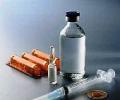
Another cap for imported insulin; domestic manufacturers cry foul.

Indian government has extended price caps to 39 more medicines ranging from commonly used diabetes drugs to antibiotics.

The National Pharmaceutical Pricing Authority, which regulates the prices of medicines, has identified around 70 anti-cancer drugs, including anti-breast cancer medication Letrozole and anti-blood cancer drug Imatinib, for detailed price analysis.
The National Pharmaceutical Pricing Authority (NPPA) on Thursday said it has increased prices of 62 drugs, which are mainly based on indigenously manufactured insulin, giving a filip to domestic firms.
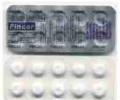
Leading pharmaceutical firms such as Cipla and Ranbaxy are among the firms pulled up by the drug price regulator National Pharmaceuticals Pricing Authority (NPPA) for overcharging.

Replying to supplementaries during Question Hour in the Lok Sabha, minister of state for chemicals and fertilisers Srikant Jena said the National Pharmaceutical Pricing Authority has been asked to look into demands for bringing 23 anti-cancer drugs within the ambit of price control.

Drug major Novartis has been slapped with a Rs 300-crore penalty by drug regulator NPPA for overcharging consumers on sale of Voveran, its best-selling painkiller medicine.

The first-ever study conducted by the National Pharmaceutical Pricing Authority (NPPA) on cancer medicines has found huge price variations among different brands of same medicines sold in the country.
The Union ministry of chemicals and fertilisers has initiated a move to bring all essential medicines sold in the country under a price cap.
Facing a steep rise in raw material and interest costs, pharmaceutical companies have sought an increase in prices of regulated medicines, saying otherwise they may be forced to curtail production of certain medicines that have become unprofitable.
Refusing to divulge identity of the companies, sources indicated that three of them are based in Delhi and the remaining are in Maharashtra.
The government is actively considering bringing 355 life saving drugs under price control and take a few additional measures to help the poor and below poverty line (BPL) families, once the Union Cabinet approves National Pharmaceutical Policy.
Move is the first in a series of steps to help pharma industry.
The medicines whose prices have been reduced belong to therapeutic categories, like dexametozone, betamethazone, ampicillin and ranitidine. The prices of some multi-vitamins and antibiotics would rise a bit.
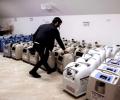
The government has capped the trade margin on oxygen concentrators at 70 per cent in order to keep in check the price of the much in demand critical life saving component amid the second wave of the coronavirus pandemic. The trade margin has been capped at 70 per cent on price to distributor level on oxygen concentrators. In an official release, the chemicals and fertilisers ministry said the decision has been taken in view of the extraordinary circumstances arising due to the pandemic which has resulted in volatility in Maximum Retail Prices (MRP) of oxygen concentrators.
In a move likely to influence future drug price regulation in the country, the National Pharmaceutical Pricing Authority (NPPA) has started a process to understand how other countries carry out this function.The authority has already studied the relevant regulatory systems in at least eight major countries. It has also finalised a round-table meeting on April 11 in New Delhi to sensitise stakeholders on the need to have an international outlook.
The move is in line with the NPPA's recent policy of putting a cap on prices.
 © 2026 Rediff.com - Advertise with us - Disclaimer - Privacy Policy - Sitemap - Feedback - About us - Terms of use - Grievances