
Expenditure on health in India is at a global low of 1.2% of GDP.

The implementation of the policy would require public health spending to rise to nearly 2.5 per cent of the gross domestic product, from the present dismal one per cent, with the Centre bearing about 40 per cent of it.
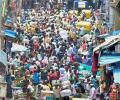
Efforts of the government have been successful in reining in the growth of population, she said in a written reply.

The richest one per cent in India now own more than 40 per cent of the country's total wealth, while the bottom half of the population together share just 3 per cent of wealth, a new study showed on Monday.

The richest one per cent in India now own more than 40 per cent of the country's total wealth, while the bottom half of the population together share just 3 per cent of wealth, a new study showed on Monday. Releasing the India supplement of its annual inequality report on the first day of the World Economic Forum Annual Meeting in Davos, rights group Oxfam International said that taxing India's ten-richest at 5 per cent can fetch entire money to bring children back to school. "A one-off tax on unrealized gains from 2017-2021 on just one billionaire, Gautam Adani, could have raised Rs 1.79 lakh crore, enough to employ more than five million Indian primary school teachers for a year," it added.

An increase in government spending on the healthcare sector - from the current 1 per cent to 2.5-3 per cent of GDP - as envisaged in the National Health Policy 2017 could reduce out-of-pocket expenditures, as per the Economic Survey 2020-21. The rise in public spending can lead to a reduction in expenditures from 65 per cent to 30 per cent of overall healthcare spend, it noted. The Economic Survey said that for the country to effectively respond to future pandemics, the country's health infrastructure needs to be agile. Given its potential to provide healthcare access in remote areas, telemedicine needs to be harnessed to the fullest by especially investing in internet connectivity and health infrastructure, it added.

CII has also called for tax incentives for new health care projects and import duty relief for lifesaving equipment.
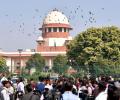
In an affidavit filed in the top court, the health ministry told the apex court that the family welfare programme in the country is voluntary in nature, which enables couples to decide the size of their family and adopt family planning methods best suited to them, according to their choice and without any compulsion.

Outlay for infra is also expected to see a significant increase in view of the government's Rs 111-trillion investment plan under the national infrastructure pipeline to develop social and economic infrastructure over five years.

The National Health Protection Scheme -- announced by the finance minister -- is aimed at benefiting 10 crore poor families by providing coverage of up to Rs 5 lakh per family per year.

'The CEA suggested that could be as high as 19 per cent.'

Of the seven surveys presented under Modi govt, predictions of three were quite close to the actual GDP growth rate, one saw the base year change in between, but the last three were way off the mark.
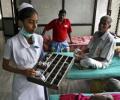
4,000 dialysis units to be set up across India, government working on providing free basic healthcare to BPL families.

Govt could cut the GST rate payable every time someone buys a health insurance product; or it could also provide a larger income tax set off for those who buy a health insurance product

The NITI Aayog's views are in contrast to the National Health Policy.

The policy also aims to provide training to physicians and paramedical staff for treating psychiatric patients.

Mandatory prescription of generic names is not a complete solution. Rather, in the absence of a range of approaches, it could mean passing the choice of selecting a drug from a doctor to a pharmacist, says Chandrakant Lahariya.

Uttar Pradesh still remains far behind the Indian average on most health indicators, says Dipa Sinha.
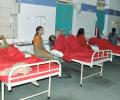
Taking away free healthcare facilities, as recommended by the Aayog, would place a huge burden on the people, especially in rural areas, says Devanik Saha.
.jpg)
Ayurvedic expert Dr G G Gangadharan on how the ancient Indian medical practice needs to be propagated in the country of its origin
 © 2026 Rediff.com - Investor Information - Advertise with us - Disclaimer - Privacy Policy - Sitemap - Feedback - About us - Terms of use - Grievances