
Throwing its weight behind actor-cum-MLA M Mukesh, the ruling Communist Party of India-Marxist in Kerala on Saturday said that he need not resign from his post as legislator merely because a rape case has been registered against him.

Among parties, the NCP stood out with five of its MPs raising an average of 410 questions each. On the other hand, two Apna Dal (Soneylal) raised only five questions each on average.

The representation of women in the ongoing Lok Sabha polls continues to remain dismally low, as only about 12 percent of the candidates in the fray in the fifth phase are female, according to an analysis by poll rights body ADR.
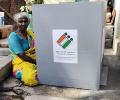
Forty-two of the 102 Lok Sabha seats going to polls in the general election's first phase are constituencies that have three or more candidates facing criminal cases, according to a poll rights body.
The BJP leads with 23 percent of its 90 Rajya Sabha members having declared criminal cases against themselves.
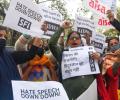
In the last five years, 480 candidates with declared cases related to hate speech have contested elections to state assemblies, the Lok Sabha and the Rajya Sabha, the ADR said.

The total assets of seven Members of Parliament analysed from Telangana is Rs 5,596 crore, that of 11 MPs from Andhra Pradesh is Rs 3,823 crore, and 30 MPs analysed from Uttar Pradesh have total assets worth Rs 1,941 crore.

In Kerala, 95 out of 135 MLAs, accounting for 70 per cent, have declared criminal cases against themselves.

About 40 per cent of sitting MPs have criminal cases registered against them out of which 25 per cent have declared serious criminal cases under charges of murder, attempt to murder, kidnapping and crimes against women, according to poll rights body Association for Democratic Reforms (ADR).
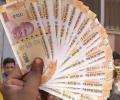
Nineteen political parties, including the Bharatiya Janata Party and the Congress, received over Rs 1,100 crore during assembly polls in five states and Union territories in 2021 and spent over Rs 500 crore, a big chunk of which went towards advertisements and travel expenses for star campaigners, a study said on Friday.
Only 18 Bharatiya Janata Party legislators switched parties to contest the polls in this period

If the first phase of Gujarat election will have 147 crorepatis in fray, the second will see another 150 contesting, says National Election Watch
The first phase of the Gujarat assembly elections will have 104 candidates with a criminal record, says a data analysed by the National Election Watch.
In a letter to the Election Commission, the National Election Watch has sought to know why there is no background declaration by the candidates contesting for the office of President of India. This information has been sought by the National Election Watch in a letter written to the Election Commission of India.
A breakdown of candidates in the first five stages of the election by the Association for Democratic Reforms and National Election Watch offers a fascinating insight into the declarations made by this year's Lok Sabha hopefuls.

The National Election Watch has appealed to all the Members of Parliament from both Lok Sabha and Rajya Sabha not to support a proposed amendment to the Right To Information Act.

The Jharkhand Mukti Morcha's vote share in the just-concluded Jharkhand assembly polls has slumped to 18.72 per cent despite the party winning 30 of the total 81 seats in the state. The JMM had won 19 seats in 2014 polls with a vote share of 20.43 per cent. This time the party bagged 30 seats but its vote share came down to 18.72 per cent.
Latest records show that only one MLA in the newly-elected Gujarat assembly spent more on the election expenses than the limit specified by the Election Commission, reports Vicky Nanjappa.
Politics and crime remain inextricably linked in Karnataka politics.

Politically, women have been making their presence felt in voter turnouts. According to the Election Commission, the female voter turnout was higher than male turnout in 16 states and Union territories.
The percentage of criminal candidates contesting the Gujarat elections was 23 per cent in 2007. This year, 19 per cent of the candidates contesting the second phase of the elections have a criminal background.
The National Election Watch has said that several companies make political donations, which makes it necessary to probe if the donations have led to any favours. Vicky Nanjappa reports.
The hurly burly of politics may have made Louise tougher than she ever imagined she could be but a core of sensitivity remains, says Aditi Phadnis
The next President of India will be chosen by the electoral college which includes 141 murder accused, six alleged rapists and 90 members with charges of kidnapping, reports Vicky Nanjappa
Of the 360 candidates analysed for the 6th phase of Uttar Pradesh assembly elections, 128 candidates or 36 per cent of them have criminal cases registered against them.
The National Election Watch and the Association for Democratic Reforms states in it report and analysis that out of the 248 candidates 76 candidates or 31 per cent declared criminal cases against them. In 2007 assembly elections for Uttar Pradesh, 27 per cent candidates had declared criminal cases against themselves. Vicky Nanjappa reports.

As the nation debates the law proposed to safeguard convicted MPs and MLAs, statistics show that since 2008 only 24 (out of 4,807 analysed MPs and MLAs) i.e. only 0.5 per cent have declared they have been convicted at some point in a court of law.

More than 2,000 candidates will fight for 117 seats on what is set to be the second busiest day of the 2014 Lok Sabha elections. Know their details.
Uttar Pradesh Chief Minister Mayawati has assets worth a whopping Rs 87.27 crore, according to the National Election Watch, which has analysed the affidavits filed by the chief ministers of the five poll-bound states.
While a total of 33 ministers face criminal charges in five states that go to poll, 41 ministers from these states are 'crorepatis'. Vicky Nanjappa reports.
Here are some thoughts for the voter to ponder over
The first list put out for the Uttar Pradesh assembly elections has a total of 77 candidates with a criminal background. Topping this list are both the Congress and the Bharatiya Janata Party who have 13 candidates each with serious criminal charges against them.
Uttar Pradesh has created a record of sorts. Out of the 2,195 candidates that contested the election, 795 had criminal records against them, reports Vicky Nanjappa
The National Election Watch has put out a report pertaining the chief ministers of the five states going to polls -- Uttar Pradesh, Punjab, Uttarakhand, Goa and Manipur.
A recent report put out by the Association for Democratic Reforms and National Election Watch revealed that 47 per cent of the newly-elected Uttar Pradesh assembly has candidates with criminal cases pending against them.
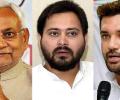
According to the report, 32 (73 per cent) out of 44 candidates analysed from the Rashtriya Janata Dal have declared criminal cases against themselves and 22 (50 per cent) of them have declared serious criminal cases against themselves in their affidavits.
The manner in which Members of Legislative Assembly spent their funds during the recent four-state assembly elections is something that needs to be looked into.
When it comes to financial contributions/donations, political parties in the country seem to benefit a lot by them as a significant part of their income depends upon them.
The union territory of Puducherry has the dubious distinction of having the laziest legislators in India. A report shows that in comparison to the other four poll-bound states -- Tamil Nadu, Kerala, West Bengal and Assam -- the legislative assembly in Puducherry had the lowest number of sittings in the past 5 years.

Nine ministers in the Manmohan Singh-led United Progressive Alliance government have criminal records pending against them. Of the nine ministers, one minister face serious charges, according to a National Election Watch report.
