
Right actions might help reduce this trust deficit. But what we have today is over- enthusiastic vigilante groups targeting minorities over beef or 'love jihad', against whom the government does little apart from meek condemnation, says Utkarsh Misgra.

In a four-page 'open letter' released in Mumbai, Naik posed five questions to the government.
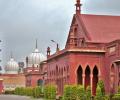
'The brazen politics, in this series of bullying of AMU by functionaries of the Union and provincial governments, utterly disregarding the fact that the matter is sub judice, is quite obvious.' 'One needs to see through the desperate politics of the BJP which governs both Uttar Pradesh and the Centre, especially its woes over its Dalit support base,' says AMU Professor Mohammad Sajjad.
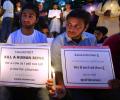
'Most Hindus believe in living in peace with their Muslim neighbours and vice versa.' 'It is this India we have to preserve.'

He said that as the home minister of the country, he wanted to make it clear that India is committed to taking along everybody and moving ahead on the path of development.
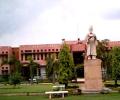
Attorney General Mukul Rohatgi's stand that AMU is not a minority university reveals the anti-minority stand of the political party now in power, says Mohammad Sajjad, outlining the long history behind one of India's premier universities.

'Once the violence is contained, the politicians must play their role, but unfortunately that is not happening.'

'As long as true Hinduism survives in India, we need not let the Hindutva fear factor keep us from accepting a change in Muslim personal law with a ban on triple talaq,' says Najid Hussain.

With its refusal to accept the modern social values, the Indian Muslim community is going down the slope of progress, says Najid Hussain.

Hours ahead of his dinner with President Barack Obama, Prime Minister Narendra Modi cautioned the United States against hasty withdrawal of its troops from Afghanistan, citing the mistakes it has committed while pulling out from Iraq.
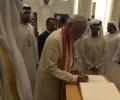
'Here is a man who can steer the country out of the woods. That sense of hope towards Modi was already there. And now that he has actually visited this region, it will go to the next level.' Zafar Sareshwala, a close confidant of Prime Minister Narendra Modi, shares his impressions about the PM's historic visit to the United Arab Emirates.

'Modi's campaign has been strikingly devoid of anti-Muslim rhetoric. After the kutta pilla incident, it has been several months since he said something horrible about the Muslims of India. It is the result of democratic constraints. He has to make compromises... He's trying to reinvent himself. He will politically hurt himself if 2002 becomes the definition of Mr Modi again', says political scientist Ashutosh Varshney.

'The default by the State or its agents in terms of deprivation, exclusion and discrimination (including failure to provide security) is to be corrected by the State; this needs to be done at the earliest and appropriate instruments developed for it.'

How to deal with a country that has made export of terror a reason to make the world notice and fund it? Rediff.com contributor Sanjeev Nayyar offers a few suggestions

'My confidence in the Indian judiciary is absolute after I saw justice being delivered in Gujarat even when a BJP government was ruling the state. The Muslims of Gujarat believed that they will never get justice in a BJP-ruled state, but the facts are before all of us to make a judgment.'

While the row over allowing women into the AMU library has been wrongly portrayed, it does not mean gender biases are non-existent in AMU. The campus does have its own shares of all kinds of cultural and ideological prejudices prevalent in the world outside. The AMU campus is not a segregated island, says Mohammad Sajjad.

'What hurts people most is dynastic impulses and corruption under a family-ruled Congress party -- and Nehru has borne the brunt of it... I cannot be blinded by how the Nehru family has functioned but just as Gandhi can't be judged by his descendents, why should Nehru?' asks political scientist Ashutosh Varshney.
 © 2026 Rediff.com - Advertise with us - Disclaimer - Privacy Policy - Sitemap - Feedback - About us - Terms of use - Grievances