
Wholesale price inflation marginally rose to 2.38 per cent in February due to expensive manufactured food items like vegetables oil and beverages, government data released on Monday showed. The Wholesale Price Index (WPI) based inflation was 2.31 per cent in January. It was 0.2 per cent in February 2024.

Wholesale price inflation rose to a 4-month high of 2.36 per cent in October as prices of food items, especially vegetables, and manufactured goods turned dearer, as per the government data released on Thursday. The wholesale price index (WPI) based inflation was 1.84 per cent in September 2024. It was (-) 0.26 per cent in October, last year.

Wholesale inflation in the country rose for the fourth consecutive month in June at 3.36 per cent on account of rise in prices of food articles, especially vegetables and manufactured items. The wholesale price index (WPI) based inflation was 2.61 per cent in May. It was (-) 4.18 per cent in June 2023.
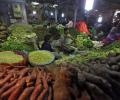
The wholesale inflation rose for the third consecutive month in May at 2.61 per cent on account of rise in prices of food articles, especially vegetables, and manufactured items. The wholesale price index (WPI) based inflation was 1.26 per cent in the previous month. It was (-) 3.61 per cent in May 2023. "Positive rate of inflation in May, 2024 is primarily due to increase in prices of food articles, manufacture of food products, crude petroleum & natural gas, mineral oils, other manufacturing etc," the ministry of commerce & industry said in a statement on Friday.
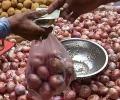
The wholesale inflation rose to a 13-month high of 1.26 per cent in April fuelled by rising prices of food articles, especially vegetables, amid expectations of RBI holding interest rates in the policy review next month. The wholesale price index (WPI) based inflation has been rising for two months in a row.

Exports of electronics goods has risen by 24 per cent from April to November as compared with the same period in the last fiscal, the largest increase out of India's top 10 export categories. The increase has been propelled by mobile exports under the Production Linked Incentive (PLI) scheme and has pushed electronics up from sixth to fifth position in the top 10. A gap of $200 million separates electronics from occupying the fourth position, currently held by drugs and pharmaceuticals at $17.9 billion.

The case has been registered against entities such as the Halal India Private Limited Chennai, Jamiat Ulama-i-Hind Halal Trust Delhi, Halal Council of India Mumbai, Jamiat Ulama Maharashtra and others for allegedly exploiting religious sentiments to boost sales by providing halal certificates to customers of a specific religion, the UP government said in a statement on Saturday.

The department of personnel and training has asked the Union Public Service Commission to recruit such specialists through "lateral entry" mode in 12 government departments/ministries, he said.

In a statement, the state government alleged 'malicious attempts' to discourage the use of products lacking a halal certificate not only seek 'unfair financial benefits' but also form part of a 'pre-planned strategy to sow class hatred, create divisions in society, and weaken the country' by "anti-national elements".

Candidates will be short-listed for interview on the basis of the information provided by them in their online application, the statement said.

Total foreign direct investment (FDI) inflow to India declined to $74.01 billion in the calendar year 2021, which is 15 per cent lower from $87.55 billion recorded in the previous year, the ministry of commerce & industry said on Wednesday. The FDI inflow includes equity inflow, equity capital of unincorporated bodies, re-invested earnings and other capital. "FDI is largely a matter of commercial business decisions and FDI inflow depends on a host of factors such as availability of natural resource, market size, infrastructure, political and general investment climate as well as macro-economic stability and investment decision of foreign investors.

SEZ in Mundra, Gujarat denotified for three violations.

The note recommends allowing FDI in domestic firms through the issue of partly-paid up shares and convertible warrants, but with certain riders.

The Union ministry of food and consumer affairs proposes to insert a new clause in the fresh discussion note for the Cabinet on allowing foreign direct investment (FDI) in multi-brand retail.

The country's largest real estate player, DLF, on Friday said it has approached the government for surrendering four of its IT-ITeS notified special economic zones (SEZ).

PM also said that states must act against any hoarding of oxygen and directed officials to ensure that the oxygen supply to various states happens in a smooth, unhindered manner and called for fixing responsibility with the local administration in cases of obstruction.
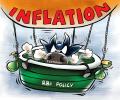
With pricing power of producers unlikely to strengthen and commodities ex-crude oil likely to remain sluggish in the immediate term, the core-WPI inflation may remain sub-zero in the rest of this calendar year.

It is for the first time in the history of Independent India that not a single Muslim is part of the Union Cabinet.

Among food articles, vegetable prices surged by 69.69 per cent mainly on account of onion, which witnessed 455.83 per cent jump in prices, followed by potato at 44.97 per cent.

The queries can now be addressed to and their responses accessed from the makeinindia.com website that was unveiled along with the campaign aimed at making India a manufacturing hub by Modi at a mega event in New Delhi on Thursday.

Build up inflation rate in the financial year so far was 2 per cent compared to a build up rate of 4.56 per cent in the corresponding period of the previous year. Inflation in food articles as a group rose to 11.08 per cent during the month as against 9.80 per cent in the previous month, mainly driven by exorbitantly high onion prices, the rates of which spiked by over 172 per cent from a year-ago. The annual rate of inflation, based on monthly wholesale price index was at 0.16 per cent in October.

While India ranks 60, Switzerland, Sweden, the Netherlands, the US and UK retained their top spots as the most-innovative countries. China is at 22nd spot.

Proposed investment dip 33% from Rs 1.42 lakh crore (Rs 1.42 trillion) in 2011 to Rs 94,259 crore (Rs 942.59 billion) in 2013

Developers had been urging dual usage of their SEZ land since the beginning of global financial recession in 2008.

Financials are the top gainers along with index heavyweights.
 © 2026 Rediff.com - Advertise with us - Disclaimer - Privacy Policy - Sitemap - Feedback - About us - Terms of use - Grievances