
Maruti Suzuki India is strategically investing in the premium hatchback segment, launching a refreshed Baleno with advanced driver assistance systems (ADAS) to capture a significant share of the evolving Indian passenger vehicle market, even as SUVs continue their dominance.

The updated Maruti Suzuki Baleno redefines the premium hatchback segment in India with its aggressive new look, advanced Level 2 ADAS features, and a more fuel-efficient Z series petrol engine, catering to the evolving demands of tech-savvy car buyers.

Maruti Suzuki India announced a price hike of up to Rs 20,000 on select models, effective from September 2026, marking its third increase since May, citing continuous increases in input costs and inflationary pressures.

Maruti Suzuki India has significantly increased its capital expenditure (capex) outlay to Rs 77,500 crore for the five-year period ending FY31, aiming to boost capacity, develop new models, and enhance R&D, as announced by MD and CEO Hisashi Takeuchi.
Maruti Suzuki India will increase the prices of its vehicles by up to Rs 30,000 across all models from August 2026, citing a sustained increase in input costs.

While the new Brezza keeps its tried and tested 1.5 litre NA engine, there is now an additional 1.0l turbo petrol unit with a 6-speed manual gearbox to tempt younger buyers, points out Somnath Chatterjee.

Maruti Suzuki, India's leading passenger vehicle manufacturer, is experiencing robust growth in the June quarter, driven by a recovery in the entry-level segment, easing supply constraints, and significant market share gains. Despite potential headwinds from El Nio, analysts remain optimistic about the company's future performance.

Maruti Suzuki India Ltd has launched the Wagon R, India's first flex-fuel car, capable of running on any blend of ethanol and petrol from E20 to E100, aligning with national energy security and sustainability goals.
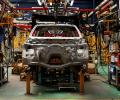
Passenger vehicle dispatches in the domestic Indian market are estimated to have surged by 33 per cent to approximately 4.7 lakh units in July, with market leaders Maruti Suzuki and Hyundai reporting record sales, alongside significant growth from Tata Motors and Mahindra & Mahindra.

Major automobile manufacturers in India, including Maruti Suzuki, Tata Motors, Hyundai, and Audi, have announced fresh price hikes for their vehicles to partially offset the impact of sustained increases in input and commodity costs, which have been eroding operating margins and profitability.
Maruti Suzuki India's CFO, Arnab Roy, has urged the central government to introduce an amnesty scheme or an 'as-is' settlement option to resolve past indirect tax disputes, aiming to clear legacy litigation and foster growth in the automotive industry. Roy emphasised the need for a 'smarter way to address the past' to provide long-term certainty for businesses.
'With inflationary pressures now at elevated levels and the adverse cost environment persisting, the company has to pass on a portion of the increased costs to the market, while continuing to ensure that the impact on customers is kept to the minimum extent possible.'
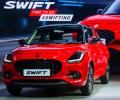
Maruti Suzuki India (MSIL) reported a mixed Q1 FY27, with record quarterly sales driving strong revenue growth, but operating performance was below expectations due to higher commodity and other costs impacting margins. Brokerages anticipate sustained sales growth for the company in the current fiscal year, supported by new launches, robust demand, and significant capacity expansion.
Maruti Suzuki India (MSIL) reported a 9.1 per cent year-on-year decline in net profit for the April-June quarter of 2026-27, marking its second consecutive quarterly fall. This dip occurred despite a significant 29.3 per cent jump in sales volume, primarily due to escalating commodity prices, increased energy costs, and logistics disruptions stemming from the West Asia conflict.

Four suspected drug peddlers were arrested in Jammu's Janipur area on Wednesday evening, with police recovering 21.8 kg of suspected cannabis. The arrests are part of an ongoing anti-narcotics drive, and further investigation is underway to dismantle the drug trafficking network.

Maruti Suzuki India reported a significant 147 per cent year-on-year increase in mini-car sales (Alto and S-Presso) during April-May 2026, reaching 32,341 units, driven by eased production constraints and a surge in demand for CNG vehicles amidst rising fuel prices.

Maruti Suzuki India's shares gained over 2.5 per cent after a strong March-quarter performance, with analysts maintaining a positive medium-term outlook driven by buoyant domestic market volumes, capacity expansion, and export growth, despite anticipated near-term margin pressures from higher commodity prices and startup costs.

Indian stock markets witnessed a strong rebound, with the Sensex climbing nearly 1,000 points to 83,021.75 and the Nifty settling above 25,500 for the first time in nine months, driven by a rally in auto, bank, and FMCG stocks, sustained foreign fund inflows, and easing commodity prices.

Indian benchmark equity indices, Sensex and Nifty, opened higher, driven by sustained foreign fund inflows and a significant drop in crude oil prices, even as global markets faced a downturn. Track Sensex, Nifty on November 17.

India's auto sector has reported robust vehicle deliveries during Dhanteras, with major automakers like Maruti Suzuki, Tata Motors, and Hyundai India experiencing significant growth across two-wheeler, passenger vehicle, and commercial vehicle segments. This strong momentum is expected to continue through Diwali, driven by positive market sentiment and high demand, even in the pre-owned car market.

'When the prime minister urges the corporate sector -- rather than seeking further concessions -- to focus on improving the conditions of their workers and employees, creating more jobs, and investing in R&D to enhance product quality, this should be viewed not as criticism, but as a vital piece of advice offered in the national interest,' points out Dr Ashwani Mahajan, Co-Convenor, Swadeshi Jagran Manch.

India's passenger vehicle wholesales increased by 12.4 per cent year-on-year in October, reaching 528,384 units, driven by robust festival demand, GST rate cuts, income-tax relief, and low interest rates, which collectively improved vehicle affordability.

The Himachal Pradesh Police have seized properties and articles worth over Rs 1 crore belonging to a convicted drug trafficker, Dalviro, and her family members. The action was taken under the Narcotic Drugs and Psychotropic Substances (NDPS) Act, following a financial investigation into Dalviro's assets after her 2017 arrest and subsequent conviction.
Indian benchmark indices, Sensex and Nifty, closed significantly higher, with the Sensex rallying 1,233 points and the Nifty climbing to 23,440.80. This surge was primarily fuelled by a sharp increase in Reliance Industries' share price following strong quarterly earnings and a notable decline in crude oil prices.

Electric passenger vehicle registrations in India surged by nearly 75 per cent year-on-year in October, significantly cushioning the 14.6 per cent contraction in the overall passenger vehicle market. This growth was particularly beneficial for manufacturers like Tata Motors and Mahindra, whose EV sales helped offset sharper declines in conventional internal combustion engine (ICE) vehicle registrations.

Maruti Suzuki India on Friday said it has onboarded five early-stage startups to co-create new technology solutions across business functions.
The Indian Road Transport Ministry has amended the Central Motor Vehicles Rules to permit flex-fuel vehicles capable of running on up to E100 (nearly pure ethanol), a move aimed at reducing dependence on imported crude oil and promoting alternative fuels.

India's entry-level passenger vehicle market is experiencing a significant recovery, with mini car wholesales surging 86.3 per cent year-on-year in the first half of FY27, driven by improved affordability and stronger overall demand.

Domestic passenger vehicle dispatches in India are estimated to have grown by approximately 21 per cent to 4.60 lakh units in September, with major carmakers like Maruti Suzuki, Tata Motors, M&M, and Hyundai all reporting double-digit growth, driven by increased supplies for the upcoming peak festival season and healthy demand.

Maruti Suzuki has discontinued its Ignis hatchback due to weak sales and a shift towards SUVs, while simultaneously facing supply chain issues for its popular S-Presso and WagonR models, leading to booking halts at some dealerships.

Electric vehicle (EV) sales in India are growing faster than the industry's ability to produce and deliver them, leading to supply shortages at dealerships during the peak festival season. This surge in demand is attributed to rising conventional fuel prices, making EVs a more attractive option for cost-conscious buyers.
Leading automakers in India, including Maruti Suzuki, Tata Motors, Mahindra & Mahindra, and Hyundai, reported increased vehicle dispatches to dealers in February, driven by sustained domestic demand.
Leading automakers in India, including Maruti Suzuki, Tata Motors, Mahindra & Mahindra, and Hyundai, reported increased vehicle dispatches to dealers in February, driven by sustained domestic demand.

Indian equity benchmarks Sensex and Nifty experienced a decline in early trade, primarily due to a sell-off in power and metal stocks, mirroring a broader downturn across Asian markets. Elevated crude oil prices and firm US bond yields further dampened investor sentiment, while an expert warned of an impending correction in overvalued mid and small-cap segments. Track Sensex, Nifty on October 22.

India's sedan market is experiencing a notable divergence: affordable entry-level sedans are gaining market share, while midsize sedans are seeing a significant decline as buyers increasingly opt for SUVs in higher price brackets.
The Road Transport Ministry has updated the Central Motor Vehicles Rules 1989 to allow flex-fuel vehicles capable of running on up to E100 (nearly pure ethanol). These amendments include E100 alongside E85 for emission certification and raise the vehicle weight limit for light petrol and diesel vehicles. This move supports India's strategy to reduce crude oil import dependence, with major automakers already developing flex-fuel models for the Indian market.

The 200-DMA is a closely watched indicator of a stock's long-term trend and can serve as an early warning of trouble.

Tata Motors is maintaining its lead over Mahindra & Mahindra in the race for the second position in India's passenger vehicle market, largely driven by its strong performance in electric vehicle sales. Both companies are aggressively expanding their SUV and EV portfolios and scaling up production to meet surging demand, indicating a fierce competition ahead.

More than 40 per cent of Cars24's sales are now linked to rural registration and transport office (RTO) locations, although procurement remains concentrated in urban markets.

India's passenger vehicle sales are estimated to have surged by approximately 35 per cent to about 4.5 lakh units in August, driven by strong performances from major automakers like Maruti Suzuki India, Tata Motors Passenger Vehicles, and Mahindra & Mahindra, with the industry entering the festive season with optimism.
