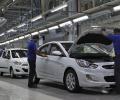
Indian carmakers experienced a robust start to the new fiscal year, with an estimated 4.5 lakh passenger vehicles sold in April, marking a 27 per cent increase year-on-year, attributed to factors like GST 2.0, repo rate cuts, and income tax benefits.

The operating performance of the country's largest passenger carmakers, Maruti Suzuki India (MSIL) and Hyundai Motor India (HMIL), in the July-September quarter (Q2) of 2025-26 (FY26) outpaced brokerage expectations.

Speaking at the unveiling of the model at the Auto Expo, held as part of the Bharat Mobility Show, Suzuki Motor Corporation representative director and president Toshihiro Suzuki said the electric SUV would be exported to various regions, including Europe and Japan. Suzuki Motor Corporation, which has around 58 per cent stake in Maruti Suzuki India, plans to make India a global production hub for the model.

With features usually seen in more expensive cars and segment-first paddle shifters, the Tiago offers excellent value for money, says Rajesh Alva/Rediff.com.

The country's largest carmaker Maruti Suzuki India is recalibrating production of its upcoming model e-Vitara due to the shortage of rare earth magnets, industry sources said. The auto major is looking to produce around 8,000 units of the model by September as against the earlier stated plan of rolling out over 26,000 units during the period.

India's leading passenger vehicle manufacturers are significantly increasing investments and factory capacities, alongside planning major product launches for FY27, driven by strong confidence in sustained domestic demand growth despite global geopolitical tensions and supply chain risks.

Maruti Suzuki India and Tata Motors on Monday announced plans to increase vehicle prices from April, the second time in this year, in order to partially offset the impact of rising input costs. Maruti Suzuki said it plans to hike prices of its entire model range by up to 4 per cent from next month.

A potential US-Iran peace deal, expected to be signed on June 19, is anticipated to ease geopolitical stress and benefit various sectors, particularly in India, with analysts suggesting investors await finer details before making significant moves.

Tata Motors emerged as the biggest gainer in the passenger vehicles (PV) market in the second half of FY25, following a GST rate cut in September, achieving the highest growth among major OEMs and overtaking Mahindra & Mahindra in volumes.

Indian markets on Dalal Street rallied sharply as easing tensions in the US-Iran conflict and stable oil prices boosted sentiment. Track Nifty 50 and BSE Sensex performance and key global triggers.
Maruti Suzuki India on Thursday posted a marginal increase in consolidated net profit to Rs 3,792 crore for the June quarter, with robust overseas shipments compensating for the drop in domestic sales. The country's largest carmaker reported a net profit of Rs 3,760 crore in the April-June period of the previous fiscal year.

Fuel prices have risen by about Rs 7.5 per litre since May 15, as global crude oil prices surged due to the ongoing conflict in West Asia and supply concerns around the Strait of Hormuz.

Automotive (auto) stocks have been among the best performers in the BSE 200 index in recent months. More than half of the top 15 gainers over the past one, two, and three months have come from the sector.
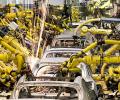
Passenger vehicle sales in India reached a record high of 4.7 million units in FY26, boosted by strong performances from major automakers and the implementation of GST 2.0.

In 2025, the Maruti Suzuki Dzire has emerged as India's top-selling car, while sport utility vehicles continue to rule the broader passenger vehicle market, capturing almost 55 per cent of the segment.

Sensex gains over 400 points while Nifty trades above 23,800 amid strong IT sector buying.

Tata Motors' 2026 Tiago facelift is a tech-loaded and safety-focused entry-level hatchback, with prices starting at Rs 4.69 lakh.

India's consumption stocks, which have outperformed the broader market, are now facing significant pressure due to a gradual rise in fuel prices and the potential for higher inflation. Analysts warn that companies may be forced to pass on increased input costs to consumers, potentially hurting demand across both staples and discretionary categories, with a looming threat of deficient monsoon rainfall further exacerbating inflationary concerns.

Indian stock markets saw a significant rebound, with the Sensex jumping nearly 790 points, primarily fuelled by strong buying interest in telecom, pharma, and private banking shares, despite a volatile trading session and a weakening rupee.

The growing rift between MSIL and rival automakers has complicated the government's efforts to finalise the CAFE norms.

Indian benchmark equity indices, Sensex and Nifty, closed lower due to investor caution over rising bond yields, a weaker rupee, and fresh fuel price hikes, which have revived inflation concerns.
Indian benchmark indices Sensex and Nifty closed higher, with the Sensex climbing 355.90 points, driven by positive state election results and better-than-expected Q4 earnings, despite ongoing geopolitical concerns.

Auto major Maruti Suzuki India on Friday said its consolidated net profit declined by 1 per cent year-on-year to Rs 3,911 crore in the fourth quarter ended March 31, 2025, on account of higher expenses. The country's largest carmaker reported a net profit of Rs 3,952 crore in the January-March quarter of FY24.
Car market leader Maruti Suzuki India cut production of its passenger cars by 16 per cent last month but increased those of utility vehicles by 33 per cent compared to October 2023, according to a regulatory filing by the company. Its passenger cars production stood at 89,174 units last month against 1,06,190 units in October 2023, down 16 per cent, Maruti Suzuki India said in the filing.

Indian equity benchmarks Sensex and Nifty surged nearly 1 per cent, driven by strong earnings reports from FMCG and auto sectors, alongside a rally in Asian markets and signs of de-escalation in geopolitical tensions.

Maruti Suzuki India on Wednesday said its consolidated net profit increased by 16 per cent to Rs 3,727 crore for the third quarter ended December 31, 2024. The auto major had reported a net profit of Rs 3,207 crore in the October-December period of last fiscal.

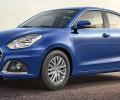
Maruti Suzuki India is targeting markets like UAE, Saudi Arabia, Chile, Mexico and other Latin American countries with its upcoming new version of compact sedan Dzire to accelerate exports as it eyes over 3 lakh units of overseas shipments this fiscal, a senior company official said on Wednesday. In the domestic market, the company hopes to enhance its share in the sedan market amid the passenger vehicles market shifting towards SUVs (Sports Utility Vehicles), with the new Dzire which is slated for launch next week. "We have been growing (exports) at a rate of about 11.9 per cent in the first seven months of the financial year and we hope to continue on that momentum.

The Narcotics Control Bureau (NCB) has busted a major international narcotics ring, seizing 349 kg of high-grade cocaine worth Rs 1,745 crore in Mumbai.

Automobile exports from India rose 24 per cent in 2025 driven by robust demand for cars, two wheelers and commercial vehicles in the overseas markets, as per the latest SIAM data. Overall exports last year raced to 63,25,211 units as against 50,98,474 units in the 2024 calendar year, up 24.1 per cent.

Benchmark equity indices Sensex and Nifty extended their gains for the second straight session on Monday, driven by optimism over the India-US trade deal and robust buying in public sector banks, consumer durables, and realty stocks.

Divya Ganesh takes home Rs 50 lakh as well as a Maruti Suzuki Victoris.

It is after seven years that a sedan has claimed the top spot -- Dzire had last achieved the No.1 position in 2018.
The January-March quarter (Q4) results for 2024-25 (FY25) from the country's largest passenger vehicle (PV) maker, Maruti Suzuki India (MSIL), were a mixed bag, with revenues broadly in line but operating profit missing Street expectations. Given cost pressures, margins at the operating level were the lowest in the past seven quarters.
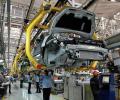
India's passenger vehicle (PV) industry is projected to experience moderated growth in FY27, following a strong rebound in H2FY26, primarily due to the high base effect, absorbed pent-up demand, and the lingering impact of geopolitical tensions in West Asia.

Leading automakers Maruti Suzuki, Tata Motors, Mahindra & Mahindra, and Hyundai Motor India posted higher sales in January riding on the growth momentum ushered in by the GST reforms in the festive period last year.

Maruti Suzuki India on Wednesday reported a 47 per cent jump in its net profit to Rs 3,650 crore for the April-June quarter on account of cost reduction efforts, favourable commodity prices and foreign exchange gains. The auto major had posted a net profit of Rs 2,485 crore in the April-June quarter of last fiscal.

Maruti Suzuki sold more cars than ever before, earned more money, and saw many first-time buyers choosing small cars again.

Car market leader Maruti Suzuki India on Thursday said it will hike prices by up to Rs 32,500 across various models from February 1 to partially offset the rise in input costs. Due to rising input costs and operational expenses, the company plans to increase car prices, starting February 1, 2025, Maruti Suzuki India said in a regulatory filing.
Domestic passenger vehicle dispatches from companies to dealers rose 13 per cent year-on-year to 449,616 units in January with demand remaining robust owing to GST rate rationalisation and subsequent dip in prices, industry body SIAM said on Friday.
Indian stock markets recovered from early losses to close higher, driven by value buying in IT and banking shares and a rebound in the rupee.
