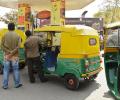
After hike in rates of petrol, diesel and LPG, the prices of CNG and cooking gas piped to household kitchens (PNG) in the national capital were hiked on Thursday by Re 1. CNG price in NCT of Delhi has been increased to Rs 59.01 per kg from Rs 58.01, according to the information posted on the website of Indraprastha Gas Ltd - the firm which retails CNG and piped cooking gas in the national capital. This is the third increase in CNG rates this month, which follows a spike in input (natural gas) prices across the globe.
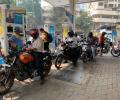
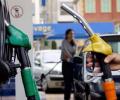
Petrol pumps in many cities witnessed long queues on Tuesday as people came to fill up their vehicle tanks fearing shortage of fuel amid the protest by truck drivers against a provision in the new penal law on hit-and-run accident cases involving motorists.

Addressing the 'parivartan sankalp rally' in Ahmedabad, Gandhi made a host of promises to people of Gujarat, where the assembly polls are due later this year, including creation of 10 lakh new jobs, building 3,000 English medium schools and free education to girls.

Rinku Singh speaks in a matter of fact manner, just like his evening job under arc-lights -- smoke the bowlers to all parts of the park and dip the crowd in delirium.

Pawar's comments were at variance from ally Shiv Sena-UBT, whose leader Sanjay Raut had said PM Modi should come forward to inform about his academic qualification and that his degree should be displayed at the entrance of the Parliament building.


Home Minister Amit Shah on Wednesday appealed to the opposition for the unanimous passage of the women's reservation bill and said shortcomings, if any, can be rectified at a later date.

India's fuel sales fell in the first half of April as a record rise in prices in a short 16-day period dented demand, preliminary industry data showed on Saturday. Petrol sales fell almost 10 per cent in the first half of April when compared with the same period in the preceding month, while diesel demand slid 15.6 per cent. Even cooking gas LPG, which had consistently shown growth even during the pandemic period, saw a 1.7 per cent month-on-month fall in consumption during April 1-15.
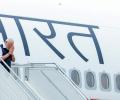
Several BJP leaders in the past have raised a demand for changing the name of the country from "India" to "Bharat".
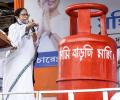
Banerjee, addressing a rally in Siliguri following her protest march over LPG price hike, said the prime minister made many "empty" promises over the years, and people no longer trust him.
Modi's BJP has promised more revdis or freebies for these assembly elections than ever before, points out N Sathiya Moorthy.

The police on Thursday arrested one more person in connection with the car explosion case in Coimbatore, taking the total number to six.
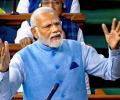
The prime minister was seen wearing a light blue "sadri" jacket as he sat in the Rajya Sabha in the morning.

'Gruha Lakshmi Yojana' is an attempt of the Congress party to share the 'burden of the exorbitant' LPG prices and the 'costly daily expenses' that a woman has to bear, the party said.
Officials from State-run refiners contend that savings from purchase of Russian oil are used to offset a part of the losses in revenues from selling transport fuels and LPG at State-set rates.
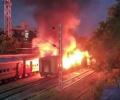
At least 10 persons were 'reported dead' in a fire that broke out inside a stationary train compartment in Madurai railway station in the wee hours of Saturday, the Southern Railway said, adding a 'gas cylinder illegally' taken in led to the blaze.
Modi said the country needs to increase domestic output of energy.

A fierce competition among parties to offer freebies and guarantees, a scramble for tribal, OBC, women votes and a touch of Hindutva -- all have combined to make the Madhya Pradesh assembly polls a high-stakes battle with main rivals BJP and the Congress pulling out all the stops to gain power.
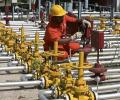
Gail India subsidiary Mahanagar Gas (MGL) on Friday announced a steep reduction in the retail price of compressed natural gas (CNG) by Rs 8/kg and domestic PNG (piped natural gas) by Rs 5/SCM across its licenced area. The move comes on the heels of the Centre revising the pricing methodology of domestically-produced natural gas on Thursday as proposed by the Kirit Parikh committee and following it with the new price announcement earlier in the day. In February, the city gas distributor reduced its CNG price by Rs 2.5/kg but prices are still around 80 per cent more than those in April last.
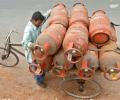
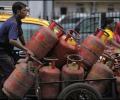
A shortfall in LPG supply from Aramco has led to huge booking backlog across states. To meet the backlog, India has asked Abu Dhabi National Oil Company for two additional cargos of LPG, but that may take another 10 days to reach.

OMCs' Digital India move is likely to have an impact on more than 80.3 million Pradhan Mantri Ujjwala Yojana consumers, majority of whom are not exposed to digital transact.

A man, one of the six accused in the explosion case in Coimbatore, confessed during interrogation that he met two men in a Kerala prison who had links with an ISIS group involved in the Easter bombings in Sri Lanka, police sources said on Friday.

In the first reduction in rate in two months, jet fuel or ATF price on Thursday was cut by 3 per cent in line with softening international crude oil prices. Aviation turbine fuel (ATF) price was reduced by Rs 1,887 per kilolitre, or 3 per cent, to Rs 58,374.16 per kl in the national capital, according to a price notification of state-owned fuel retailers. This is the first reduction in rates after four rounds of increase since February. Rates were increased by Rs 3,246.75 per kl on February 1, followed by a 3.6 per cent hike on February 16, and a steep 6.5 per cent raise on March 1. On March 16, prices were again raised by Rs 860.25 per kl. On Thursday, a Rs 10 per cylinder reduction in price of domestic cooking gas LPG also came into effect.
Since international oil prices have fallen, the government's subsidy payout will fall by almost Rs 50 per cylinder to Rs 240.
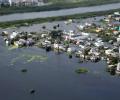
If only you had thought ahead, you would have stocked snacks and biscuits, bread and cake, and vegetables suited for Amma or pondatti to make your favourite bajji and pakoda, observes N Sathiya Moorthy.
Changes in global oil and gas rates matter more to India's economy than other major economies because the country imports around 87 per cent of its oil, half of its gas in the form of LNG, and over 60 per cent of its LPG.
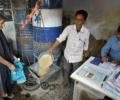
The Chhattisgarh government has decided to set up model fair-price shops (FPS) in each district and encourage owners to act as banking correspondents for providing financial services. The state has around 12,300 fair-price shops across 33 districts. The state government is, however, encouraging FPS owners to provide a host of services besides acting as a banking correspondent.

The umbrella body of over 40 farmer unions said at a press conference that two days before the session begins, a "chetavani patra" (warning letter) will be given to all the opposition MPs to protest the laws inside the House.

The Congress and NCP workers staged protests against price rise outside a luxury hotel and the Bal Gandharva auditorium, where Irani attended events during her visit to the city.

The Rajya Sabha was adjourned twice while the opposition parties staged a walkout in Lok Sabha on Tuesday, voicing their protest against the increase in the prices of petrol, diesel and cooking gas LPG.
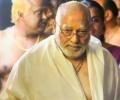
Prime Minister Narendra Modi's brother Prahlad Modi, who is also the vice president of All India Fair Price Shop Dealers' Federation, on Tuesday staged a dharna here with various demands of the organisation. Prahlad along with several other members of the All India Fair Price Shop Dealers' Federation (AIFPSDF) gathered at Jantar Mantar, holding banners and raising slogans.

It also promised financial assistance of Rs 24,000 annually to all dependent widows and single mothers, two free LPG cylinders to all the beneficiaries of the PM Ujjwala Yojana and 24x7 power supply.

Rinku Singh stole the show with as he guided Kolkata Knight Riders to a thrilling three-wicket win over Gujarat Titans in Ahmedabad on Sunday.
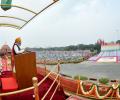
'To summarise, PM Modi's failures in the last nine years can be categorised under 'durniti' (bad policies), 'anyay' (injustice) and - perhaps most importantly - 'badniyat' (ill intention)'
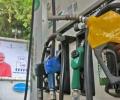
This may come as a surprise to many. Retail price inflation in petrol was the lowest at 10.21 per cent in March since November 2020. In diesel, it scraped the bottom of the barrel at 5.19 per cent in the last month of 2021-22 since February 2020. Even liquefied petroleum gas (LPG) was at a nine-month low of 9.97 per cent in the month.
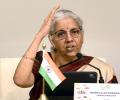
'I'm pitching India for the strengths we offer, including the English language, engineers, doctors, nurses, professionals, innovative talent of startups.'

The government's subsidies on food, fertilisers, LPG and kerosene are pegged at Rs 5.96 lakh crore in the current fiscal, over 2.5-fold jump from the initial budget estimates as the Centre distributed additional foodgrains free of cost to help poor mitigate the impact of COVID-19 pandemic. In February 2020 Budget, presented in the pre-COVID scare, the government had estimated the subsidy bill at Rs 227,794 crore. However, all the budget estimates, have undergone major revisions as the country imposed strict lockdown to check the spread of COVID-19.

Yadav also pressed for the caste census which, he said, would be a major issue in the 2024 Lok Sabha polls.

He also held another meeting with a delegation of civil society organisations as part of his outreach and they expressed their commitment to peace and assured that they would work for restoring normalcy in Manipur.

India's fuel sales surged past pre-pandemic levels in March on twin impact of the economy rebounding from the lifting of pandemic-related restrictions and anticipation of price increases leading to stocking. In the first two weeks of March, dealers, as well as the public, topped up their tanks in anticipation of an increase in prices that had been on hold in the run-up to the elections in states like Uttar Pradesh. While daily price revisions restarted on March 22, the increases were calibrated.
