
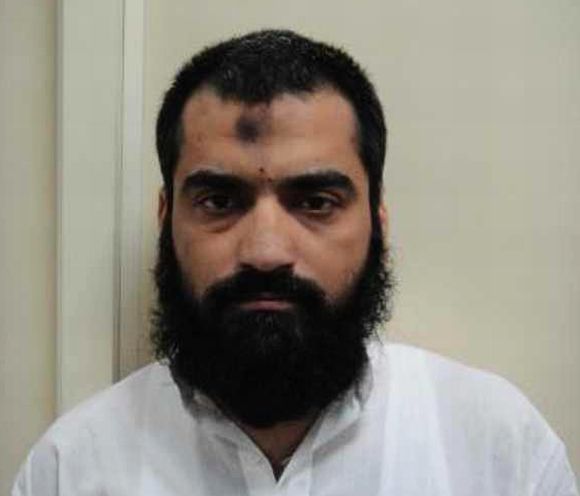
Key handler of 26/11 and Lashkar-e-Tayiba terrorist Abu Jundal was on Thursday remanded in judicial custody by a Delhi court after the Mumbai Anti-Terrorism Squad produced him and stated that he was no longer wanted for interrogation in cases registered against him in Maharashtra. Jundal was produced before Chief Metropolitan Magistrate Vidya Parkash by the Mumbai ATS and was sent to Tihar jail.
Zabiuddin Ansari alias Abu Jundal has been spilling the beans about how the entire 26/11 operation was executed from Karachi with the blessings of Lashkar-e-Tayiba founder Hafiz Mohammad Saeed. Rediff.com's Vicky Nanjappa gives details of his ongoing interrogation
26/11 handler Abu Jundal has been in custody of the Delhi police's special cell since June 21, but insiders say that his 'real' interrogation is yet to begin. Vicky Nanjappa reports
"Since the investigation of the Special Cell of Delhi Police with which the custody of the accused is in full swing, it would not be appropriate for this court to cut short his (Jundal) police custody and handover his custody to Mumbai Police," Chief Metropolitan Magistrate (CMM) Vinod Yadav said.
In the arms case, a Maharashtra ATS team had chased a Tata Sumo and an Indica car on the Chandwad-Manmad Highway on May 8, 2006, and arrested three terror suspects while seizing a huge cache of 30 kg RDX, 10 AK-47s and 3,200 bullets from the vehicle and along the road. The Indica, which was allegedly driven by Jundal, who hails from Beed district, however, could not be intercepted at that time, according to ATS.
While it is confirmed that there was a man by this name who imparted accent training to the 26/11 terrorists, police are finding it extremely difficult to identify him.
Intelligence agencies believe Jundal -- it is not known if that is his original name -- hails from Hyderabad and has played a key role in training Lashkar-e-Tayiba terrorists.
Five other convicts were also granted varying jail terms by a special MCOCA court.
Pakistan on Tuesday offered India counter-terrorism cooperation in the backdrop of the arrest of Abu Jundal, a LeT terrorist and key handler of attackers who struck Mumbai in 2008.

The Congress party has claimed credit for the extradition of Tahawwur Rana, an accused in the 2008 Mumbai terror attacks, from the US, saying the Modi government did not initiate the process and merely benefited from the "mature, consistent and strategic diplomacy" begun under the UPA. Former Home Minister P Chidambaram said the government did not secure any breakthrough to make the extradition possible, nor is it the result of any grandstanding. He added that it was a testament to what the Indian state can achieve when diplomacy, law enforcement and international cooperation are pursued sincerely and without any kind of chest-thumping. Chidambaram detailed the UPA government's efforts in securing Rana's extradition, citing the registration of a case against him in 2009, diplomatic pressure on Canada and the US, and continued efforts despite legal setbacks. He highlighted the role of the UPA in securing Rana's conviction for other terrorism-related offences and the cooperation between the US and Indian agencies in gathering evidence and securing his extradition. The Congress leader further stated that it was the UPA's groundwork that paved the way for Rana's extradition, even after the change in government in 2014.
Abu Jundal, an alleged operative of terrorist outfit Lashkar-e-Tayiba and a key handler during the 26/11 terror attacks, has approached the Bombay high court seeking that he should not be kept in solitary confinement in the same cell where Pakistani terrorist Ajmal Kasab once stayed.
India will give Pakistan a dossier on LeT terrorist Syed Zabiuddin Ansari, alias Abu Jundal, during Indo-Pak Foreign Secretary-level talks in New Delhi on Wednesday including the passport issued by Pakistan indicating the involvement of state agencies of that country.
Sayed Zabiuddin alias Abu Jundal, a prize catch in 26/11 terror case, picked up his first lessons in terrorism when Lashker-e-Tayiba terrorist Mohammed Aslam alias Aslam Kashmiri arranged for his arms training in Nepal in 2004.

Apart from being a top ranking terrorist in the Lashkar-e-Tayiba circles, Abu Jundal is giving investigators a tough time with the speed at which he talks. Investigators say that he speaks so fast and continuously that they are finding it difficult to grasp what he says.
A senior Maharashtra minister on Tuesday denied any links with arrested Lashkar-e-Tayiba terrorist Abu Jundal, and said she is ready to face any probe. Nationalist Congress Party leader and Minister of State for Education Fauzia Khan said, "I am not aware of who he is, where he is from. If he is a terrorist and is working against the country, it is good news that he has been arrested".
Pakistan had exerted immense pressure on Saudi Arabia not to hand over Lashkar-e-Tayiba terrorist Abu Jundal to India at any cost as he was too prize a catch and an insider of the terror outfit who could expose the role of so-called 'state actors' in 26/11 attack.
Initial reports had claimed that the suspect arrested by the police was Abu Hamza who orchestrated the Mumbai terror attacks sitting in Pakistan. However, some reports now claim that the suspect in police custody is Abu Jundal and the he had been deported to India following his arrest in Saudi Arabia
Alleged Laskkar-e-Tayiba operative Sayed Zabiuddin Ansari, alias Abu Jundal, wanted to take part in the 2008 Mumbai terror attack by landing in the city along with others, according to his confession.

Tahawwur Hussain Rana, a Pakistan-born Canadian national and close associate of David Coleman Headley, could be extradited to India in connection with the 26/11 Mumbai terror attacks. Rana's travel history in parts of north and south India before the attacks in 2008 is expected to provide crucial leads for the investigation. His extradition would mark the third person to be tried in India for the attacks, after Ajmal Kasab and Zabiuddin Ansari alias Abu Jundal.
Abu Jundal, one of the handlers of the 26/11 terrorists, on Friday expressed his desire before a metropolitan court to confess his complicity in the brazen attacks, a day after he was confronted with Ajmal Kasab, the lone surviving assassin in the case.
Security expert B Raman wonders what would be the impact on the peace process between India and Pakistan if Zabiuddin Ansari alias Abu Jindal alias Abu Jundal alias Abu Hamza, a co-conspirator of the 26/11 terrorist strikes in Mumbai, makes any sensational disclosures regarding involvement of the Inter-Services Intelligence in Mumbai attacks
Indian investigators doubt that the entire maritime wing of the Lashkar-e-Tayiba is handled by the elite Musa Company -- the special services group of the Pakistan Army, reports Vicky Nanjappa.
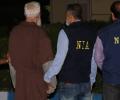
Tahawwur Hussain Rana, a key accused in the 26/11 Mumbai terror attacks, was brought to India on Thursday after being "successfully extradited " from the US, the National Investigation Agency (NIA) said. The 64-year-old Canadian citizen of Pakistani origin landed in Delhi in a special plane on Thursday evening, ending days of speculation of when and how he will be extradited, officials said. The NIA said in a statement that it had secured the successful extradition after years of sustained and concerted efforts to bring to justice the key conspirator behind the 2008 mayhem that claimed 166 lives. Rana is accused of conspiring with David Coleman Headley alias Daood Gilani, and operatives of designated terrorist organisations Lashkar-e-Taiba (LeT) and Harkat-ul-Jihadi Islami (HUJI) along with other Pakistan-based co-conspirators, to carry out the the three-day terror siege of India's financial capital.
Close on the heels of India announcing the arrest of a key handler of terrorists who struck Mumbai in 2008, Pakistan has said that it was trying to collect details from India on the matter.

Terror outfit Indian Mujahideen and terrorist Abu Jundal may have played major roles in orchestrating the Bodh Gaya blasts, initial investigations have revealed. IM terrorists had planned the terror strike way back in 2010 to achieve two main objectives. They wanted to carry out a retaliatory strike against the arrest of their operatives across India and they wanted to send a strong message to boost the morale of their local supporters.
On the first day of talks between the foreign secretaries of India and Pakistan, focus was on terrorism, especially revelations by recently-arrested Lashkar-e-Tayiba operative Abu Jundal on Pakistan's involvement in Mumbai terror attacks, and Jammu and Kashmir.

Mumbai terror attacks handler Zabiuddin Ansari alias Abu Jundal, who is lodged at the Arthur Road jail in the megapolis, is in a serious condition, according to his advocate Ejaz Naqvi.
The Anti-Terrorism Squad of the Maharashtra police on Wednesday told the special Maharashtra Control of Organised Crime Act court in Mumbai that the Lashkar-e-Tayiba operative and a key 26/11 handler Sayed Zabiuddin Ansari alias Abu Jundal was involved in terror activities since as far back as 1996.
Saudi Arabian authorities have expressed unhappiness over the media leaks of details of the operation that led to the arrest of key Mumbai attack handler Abu Jundal, according to National Security Advisor Shivshanker Menon.

Tahawwur Hussain Rana, a Canadian national convicted in the United States for his role in the 2008 Mumbai terror attacks, has been extradited to India. Rana, a close associate of Pakistani-American terrorist David Coleman Headley, was involved in the conspiracy from 2005 onwards and assisted Headley in obtaining a visa for India. He is the third person to be sent on trial in India for the 26/11 attacks after Ajmal Kasab and Zabiuddin Ansari alias Abu Jundal. Rana's extradition comes after US President Donald Trump approved the request.
The bail plea of Lashkar-e-Tayiba terrorist and 26/11 Mumbai attack key handler Abu Jundal, arrested for his alleged role in conspiring to launch terror strikes across the country, has been dismissed by a Delhi court which also gave the national Investigation Agency up to 180 days time to complete its probe into the case.
Key 26/11 handler Abu Jundal was on Thursday remanded in Delhi Police custody for another 15 days by a Delhi court which said his interrogation by its special cell will help other agencies as well in their investigation.
A round-the-clock three-tier security ring has been thrown around the special cell office of the Delhi police where the prize catch in 26/11, Sayed Zabiuddin alias Abu Jundal of the Lashker-e-Tayiba, has been kept.
Hamza, wanted for his role in the attack on the Indian Institute of Science in Bengaluru and who was among those present in the control room in Karachi, Pakistan when the 26/11 attacks were being carried out in Mumbai, has been off the radar for a while now.
The National Investigation Agency on Friday told a Delhi court that it has been unable to get the custody of 26/11 key handler Abu Jundal, whom it wanted to interrogate for unearthing the conspiracy hatched by the Lashkar-e-Tayiba for terror strikes across India.
Key 26/11 plotter Sayed Zabiuddin Ansari alias Abu Jundal's lawyer on Monday informed a Mumbai court that he wanted to cross-examine Pakistani-American terrorist David Coleman Headley for four days.
The fact that Pakistan's Inter-Services Intelligence shows a lot of interest in the operations in India is no secret. Abu Jundal, who is now being questioned by the Maharashtra Anti Terrorism Squad has told his interrogators that two senior ISI officers are exclusively in charge of the Indian operatives of the Lashkar-e-Tayiba. Vicky Nanjappa reports.
Foreign Secretary Ranjan Mathai and his Pakistani counterpart Jalil Abbas Jilani began their talks in New Delhi on Wednesday during which India is expected to strongly flag the issue of terror activities being planned from Pakistani soil in the backdrop of arrest of Laskar-e-Tayiba terrorist Abu Jundal, who has revealed Pakistani involvement in Mumbai terror attacks.
'Abu Hamza', who has been linked to several terror strikes in the country, including the 2005 attack on the prestigious Indian Institute of Science in Bangalore, is dead, if the statement of 26/11 key handler Syed Zabiuddin is to be believed.
The Bharatiya Janata Party on Wednesday said it was not surprised by the comments of Pakistan Interior Minister Rehman Malik on alleged 26/11 handler Abu Jundal, saying Islamabad is 'habitually in denial mode' and India should follow a policy of first veryfying its claims and then trusting them.
