
As a proxy of Pakistan's ISI, Sirajuddin is believed to be behind several attacks directed against India, including the murderous attack on the Indian embassy in Kabul in 2008 and the 2013 attack close to the Indian consulate in Jalalabad.
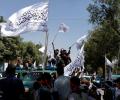
The Taliban government in Afghanistan is not going anywhere. That being the case, why is the hesitation to establish formal diplomatic relations with the Taliban? asks Lieutenant General Prakash Katoch (Retd).

One of the most dreaded terrorists in the world is now a member of the Taliban cabinet.

Badruddin Haqqani, the key operational commander of the Al Qaeda linked Haqqani network, and top Pakistani Taliban commander Mullah Dadullah are believed to have been killed in US drone and air strikes in the tribal region of Pakistan and Afghanistan.
The Pakistan military believes that American and British military will withdraw from Afghanistan -- and when they do, they will need old Taliban friends such as Jalaluddin Haqqani and his son Sirajuddin to minimise the influence of India in its Afghan backyard.Although Pakistan's military chiefs have been talking about an 'imminent' assault since last June, all the evidence has pointed to deep reluctance to launch a massive ground offensive.
Haji Omar Khan, a lieutenant of Afghan Taliban commander Jalaluddin Haqqani, was killed when two missiles slammed into a suspected militant training camp near Ladha town in South Waziristan close to the Afghan border early on Monday morning, local TV channels reported.
14 people, including three women, were killed and 20 others injured in missile strikes by suspected unmanned US drones on a seminary linked to top Taliban Commander Jalaluddin Haqqani in Pakistan's restive North Waziristan tribal region on Monday.
On Monday, Pakistan Foreign Office Spokesperson Tasnim Aslam during a media briefing declined to answer a question relating to the kidnapping saying that she had no information on it.

Jalaluddin Haqqani was closely tied to Al Qaeda leaders and had played a key role in supporting the terror group in both Afghanistan and Pakistan.

According to one American analyst, the "house that was struck was owned by a top aide to Sirajuddin Haqqani," who is now the interior minister in the Taliban government in Kabul.
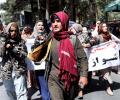
Mullah Muhammad Hassan Akhund is appointed as Prime Minister with two deputies Mullah Abdul Ghani Baradar and Molavi Abdul Salam Hanafi.

He was the chief of the hardline political party Jamiat Ulema-i-Islam-Sami.

Former Inter-Services Intelligence chief Ahmed Shuja Pasha has admitted that the deadly Haqqani network was created by it and America's Central Intelligence Agency and claimed that the insurgent group's chief Jalaluddin Haqqani had "in fact been invited to the White House by President (Ronald) Reagan".
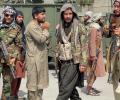
'Afghan people will not accept a governing structure that excludes women and minorities'
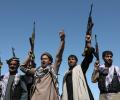
The 13th report of the Analytical Support and Sanctions Monitoring Team cites a UN Member State as saying that Jaish-e-Mohammed (JeM), a Deobandi group ideologically closer to the Taliban "maintains eight training camps in Nangarhar, three of which are directly under Taliban control."
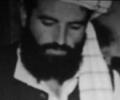
The son of the chief of the Haqqani terror network, blamed for attacks on US forces and the Indian Embassy in Kabul, was shot dead by unidentified gunmen near the Pakistani capital, leaders of the group said on Monday

Jalaluddin Haqqani died a year ago due to prolonged illness and was buried in Afghan province of Khost.

The madrassa in Akora Khattak in Nowshera district of the province is known for having several top Afghan Taliban leaders among its alumni, including former Taliban chief Mullah Omar who received an honorary doctorate from the seminary.

The Taliban had promised an 'inclusive' government that represents Afghanistan's complex ethnic makeup, but there is no Hazara member in the cabinet.

Specially designated global terrorist Sirajuddin Haqqani, who carries a reward of $10 million US bounty on his head, is the acting interior minister while his uncle -- Khalil Haqqani -- has been named as acting minister for refugees.

Seeking to wriggle out of the FATF's grey list, Pakistan has imposed tough financial sanctions on 88 banned terror groups and their leaders, including Hafiz Saeed, Masood Azhar and Dawood Ibrahim, by ordering the seizure of all of their properties and freezing of bank accounts, a media report said.
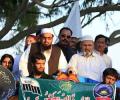
In a paradigm shift in its policy against terrorism, Pakistan has included Jamaat-ud-Dawa led by the 2008 Mumbai attack mastermind Hafiz Saeed and the dreaded Haqqani network in the list of proscribed organisations after the US mounted pressure on the country.

Pakistan plans to ban 10 terror outfits, including 26/11 mastermind Hafiz Saeed-led Jamaat-ud-Dawa and the dreaded Afghan-based Haqqani Network, a move seen by experts as a "paradigm shift" in the country's security policy in the wake of Peshawar school massacre.
Pakistan has ordered a probe into the killing of the eldest son of the chief of the dreaded Haqqani network that has been blamed for attacks on the Indian Embassy and American forces in Afghanistan, a report said on Friday.=
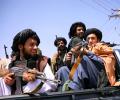
India is worried about Pakistan getting the Taliban to ignite trouble in Kashmir, observes Ramesh Menon.
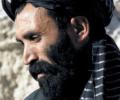
Top Taliban leader Mullah Omar was sheltered by Pakistan's powerful spy agency Inter-Services intelligence after the outfit's leadership fled from Afghanistan in 2001, according to an email received by former secretary of state Hillary Clinton during her tenure.

Dawood Ibrahim is wanted in India to face the law of the land for carrying out serial blasts in Mumbai in 1993 in which scores of people were killed and injured.

Pakistan, which has propped up the new Taliban leadership, would be keen to use its influence over the group to neutralise India's presence in the region.
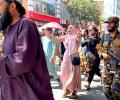
ISI chief Faiz Hameed coerced the Taliban to announce an interim government guaranteed to preserve Pakistan's control over the levers of power in Kabul, observes Ambassador M K Bhadrakumar.
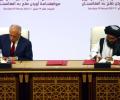
'Pakistan's trump card is that it is the only credible guarantor on the horizon who can reasonably assure the Western world that Afghanistan will not again become the revolving door for international terrorism.' 'Trust Pakistan to play this card optimally,' explains Ambassador M K Bhadrakumar.

'It was a mission undertaken in darkness in every sense -- literally, because Afghanistan had no electricity at that time; and, metaphorically because Delhi historically dealt only with the Pashtuns of Afghanistan and the foreign ministry's vast archives had nothing to offer on the culture and politics of the northern tribes in the Hindu Kush.'

'US counter-terrorism policy was encouraging and emboldening the Indians to deal with the problem of Pakistani-supported terrorism once and for all.' 'The US had been trying to browbeat Pakistan into doing what it wants, with very limited success.'
 © 2026 Rediff.com - Investor Information - Advertise with us - Disclaimer - Privacy Policy - Sitemap - Feedback - About us - Terms of use - Grievances