
Indian companies are now more confident about the execution skills of local banks.
Regulator Sebi on Friday approved a slew of measures to further improve the ease of doing business for market participants, including providing relaxations to Foreign Portfolio Investors (FPIs) and entities looking to raise funds through initial share sale. The proposals were cleared by the Sebi board during its meeting on Friday.

"The decision has been taken due to prevailing adverse market condition...although the QIB and HNI portions of the IPO were fully subscribed and the overall book was closed to 90 per cent," the company said in a statement.
Met with lukewarm response from a volatile market, Wockhardt Hospitals withdrew its IPO. It received bids only for 19.5%.
Spectacular returns by the recent initial public offerings on listing day are prompting a growing number of retail investors and even high net worth investors to borrow funds at a costly 16 to 17 per cent (for two or three weeks) to bid for IPO shares.
At least 11 firms have called-off their Initial Public Offer (IPO) plans since the beginning of 2012, even as the country's largest commodity exchange MCX today made a stellar debut in the stock market after a highly-successful IPO last month, a report has said.

This is the biggest IPO in the Indian market since Bharti Infratel's over Rs 4,000 crore public offer in December 2012.
Sixteen merchant banks are in the fray to act as book running lead managers (BRLM) for the initial public offering of Life Insurance Corporation of India (LIC). These merchant banks will have to make a presentation before the Department of Investment and Public Asset Management (DIPAM) on August 24-25. The shortlisted banks are BNP Paribas, Citigroup Global Markets India, BofA Securities, Goldman Sachs (India) Securities, HSBC Securities and Capital Markets(India), J.P. Morgan India, Nomura Financial Advisory and Securities (India), Axis Capital, DAM Capital Advisors, HDFC Bank, ICICI Securities, IIFL Securities, JM Financial, Kotak Mahindra Capital, SBI Capital Market, and Yes Securities India.
Tata Sons Private Limited, the holding company of the Tata group, witnessed a precipitous drop in its net debt to Rs 5,656 crore in the 10 months ended January this year, as its cash reserves burgeoned to Rs 9,516 crore during this period. Eight years ago, in 2015-16, Tata Sons reported a net debt of Rs 5,132 crore; from March 2017 until March 2023, this figure was above the Rs 14,700 mark, peaking at Rs 27,437 crore at the end of March 2019, according to data sourced from Capitaline. The company's gross debt nearly halved to Rs 15,173 crore until January 2024 on a standalone basis, down from a peak of Rs 31,363 crore reported in the financial year ended March 2019.
SP Jain Institute of Management and Research, Mumbai, will hold its annual entrepreneurship mock IPO event Lock, Stock and Trade on January 4.

The prospective bidders of Haldiram Snacks Foods (HSFPL), a leading food firm, have sought clarity on the ownership of the brand as it is currently owned by different family factions. The Delhi and Nagpur families have decided to merge their operations and formed a joint venture to sell part of their stake. On the other hand, the Kolkata family runs its separate, independent operations. Bankers said prospective bidders of the company do not want any confusion over the brand in future. They have sought clarity over usage of the brand.

The Rs 702-crore IPO received bids for 2,93,41,84,140 shares against the total issue size of 2,32,59,550 shares, according to data available till 3.30 pm on Wednesday.

The shares - close to 30% of the total holding - are expected to list on rival National Stock Exchange on or around February 3.

Going 'long' is becoming an overcrowded trade on Dalal Street, and any negative trigger could lead to a sharp correction, warn experts. However, given the strong momentum, particularly in IT stocks, the downside could be protected in the immediate term. "With the Nifty50 surging to new life-time highs, the bulls remain in control. Further upsides are likely once the immediate resistance of 21,492 is taken out.
Investment bankers handling the IPO had said marquee global investors made big-ticket applications.
The year saw as many as 86 IPOs followed by listings, of which 52 are available at a discount.

Following the Reserve Bank of India's (RBI's) action against Paytm Payments Bank, participants in the fintech ecosystem have turned their attention to giving priority to compliance with regulatory norms. Fintech industry players say the episode will ensure adherence to such measures. Executives Business Standard spoke to said companies should have clarity on their requirements.

Euphoric about India's biggest IPO, possibly to garner up to Rs 15,000 crore, from the world's largest coal producer CIL, Coal Minister Sriprakash Jaiswal on Friday said October is an "auspicious" month to launch the issue.

The gains came on expectations that the company will post strong growth given its presence in application to peer services and the fast-growing communication platform as a service segment.

The revival in Mumbai's property market could help the group.

Under the 2007 agreement between Vodafone and Essar, the latter has a put option of divesting its stake in the telecom venture.
The mega initial public offer of realty giant DLF, through which the developer is expecting to garner Rs 9,625 crore (Rs 96.25 billion), got fully subscribed on Tuesday.

The IPO grey market premium does not value a company accurately. You may burn your fingers.

Singapore government's sovereign wealth fund Temasek is looking to invest $10 billion in India during the next three years, Ravi Lambah, Temasek's head of India and strategic initiatives, said.

Top Indian private sector lender ICICI Bank, which owns nearly 68 percent of the insurer, is selling up to 181.34 million shares in the IPO.
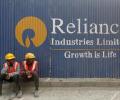
Given the company's expansion into internet and retail, more investments including mergers and acquisitions seem highly likely.
With seven of the nine public offers listed last week flopping on debut, the days of making money through public issues seem to be over. Last week's wasn't a one-off case.

Prominent exits by promoters included a Rs 15,300 crore share sale in Indus Tower by Vodafone Plc, a Rs 9,300 crore share sale by the Tata group in Tata Consultancy Services.

State-run telecom major Bharat Sanchar Nigam Ltd (BSNL) says it expects to increase its visibility in the domestic and international markets, besides improving company performance, as a fallout of the proposed initial public offering (IPO) of equity.

An e-IPO is a mechanism through which investment in public offerings can be done online without signing any physical documents.

National Stock Exchange (NSE) chief Ashishkumar Chauhan on Friday cautioned retail investors against trading in derivatives and suggested them to invest in equities through mutual fund route. He emphasized that trading in Futures & Options (F&O) derivatives should be limited to informed investors who can manage risk and comprehend the market. Recently, Finance Minister Nirmala Sitharaman and chief economic advisor V Anantha Nageswaran flagged the growing risk of F&O trading for retail investors.

This article will try to give some tools and ratios, which help us decide whether to invest in an IPO or not at any time!
These firms are Avenue Supermarts, owner and operator of supermarket retail chain D-Mart; Music Broadcast Ltd, a Jagran group firm that runs Radio City FM channel; Shankara Building Product; BSE-promoted CDSL; and test-prep player C L Educate.

Capital markets regulator Sebi has rejected a proposal by the National Stock Exchange (NSE) to extend the trading hours in the equity derivatives segment citing a lack of feedback from the stock brokers community. "Currently, there is no plan to extend the timings as Sebi has returned our application as the stock brokers have not given the feedback that Sebi wanted. "So, as of now, the extended time frame (plan) is shelved," NSE MD and CEO Ashishkumar Chauhan said in a post-earnings analysts call.

Eleven years on, while 80% of scam-hit investors have been fully compensated, more than 50% of the sum is yet to be distributed.

India's largest commodity bourse MCX is likely to launch its up to Rs 750 crore (Rs 7.5 billion) initial public offer (IPO) by month-end, becoming the first ever exchange in the country to get listed.

It's not only the Indian markets that command a valuation premium over their global peers; shares of subsidiaries of India-listed multinational companies (MNCs) also trade at rich valuations compared to their parent companies. An analysis of 12-month forward price-to-earnings (P/E) and price-to-book (P/B) multiples of domestically listed MNCs shows that most quotes have a premium ranging from 2.1x to 6x that of their parent. Similarly, P/B, in most cases, is significantly higher in the domestic market.

Coffee Day Enterprises has already raised over Rs 334 crore from anchor investors.
Facebook's much-hyped IPO has hit the headlines for the wrong reasons.

At present, seven companies are planning to raise Rs 2,965 crore (Rs 29.65 billion) and have Sebi's approval. Another 12 firms, intending to mop-up Rs 5,362 crore (Rs 53.62 billion), have filed draft documents with the capital market watchdog and are awaiting approval, Prime Database managing director Pranav Haldea said.
