
Indian drug companies, which have introduced copies of biotechnology drugs in the country, are bullish over the marketing prospects of 'biogenerics' after patents expire in developed markets. Experts say Indian companies may not repeat the success they achieved in selling generic medicines in biogenerics. The cost of clinical trials and the absence of substitutability will ensure that only those with deep pockets to launch such products globally will succeed, they feel.

While the opposition party asked the government to stop boasting about India being a pharmacy to the world and take strictest action, the ruling party accused it of deriding India in its "hate" for Prime Minister Narendra Modi.
According to Amitabh Arora, chief representative, Think London, "The agency will help Indian companies enter business agreements with 100-odd biotech and pharma companies and about 50 contract research organisations based in London besides arranging private equity from London-based PE firms.

It's time for Indian generic companies to rethink their strategies.
As marketing rights for off-patent drugs in the US become less exclusive, companies are scrambling for fresh strategies to make up for the revenue loss.
Not too long ago, authorised generics were used by the big US-based pharmaceutical companies to thwart competition from makers of generic drugs

Indian pharmaceutical companies, which always wanted a big share in the global copycat drug market, are betting high on the oral contraceptive (OC) market in America.

European countries are trying to woo back the Indian customers they had lost following seizure of drug consignments by Customs authorities of several European Union members.

But the newer entrants prove nimbler than the slowing pioneers.

I would focus on R&D, correct or fine tune the US strategy and look at inorganic growth routes
This unprecedented rate could attract more global companies to enter the domestic drug market, thus triggering more buyouts of Indian companies by multinational drug makers, said industry experts.

'The deaths of the children in the Gambia would batter India's reputation as the developing world's pharmacy.'

Indian pharmaceutical companies may have spread their wings far and wide, but they have been hitting the wall in China.

Opportunities will also stem from the clear support for generics.

Russia on Tuesday invited Indian pharmaceutical companies to set up joint ventures in the country. Russian Deputy Prime Minister Sergei Sobyanin during his meeting with Commerce and Industry Minister Anand Sharma said Russian pharma firms were keen to increase their engagements with Indian companies including setting up joint ventures.

If most of the top 10 Indian drug companies were less than Rs 500-crore (Rs 5-billion) turnover ones a decade earlier and were focused only on domestic business, now they are companies with annual businesses ranging from Rs 2,000-Rs 6,000 crore (Rs 20-60 billion) and with operations spanning 60-100 countries and employing 3,000-5,000 people.

An analysis of the growth rate of 15 leading drug companies for the third quarter of 2008-09 show excellent performances in domestic turf have been often marred by the poor show of their acquired assets.
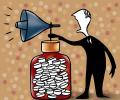
Reinvent and innovate will be the key mantra for the Indian pharma industry in the New Year as the 'pharmacy of the world' looks to move from volume to value leadership, amid emerging challenges of inflation and pricing pressures in the global markets. While R&D investment, market competitiveness, regulatory scrutiny, and domestic price regulations are expected to shape the growth of generics and injectable products, concerns such as price control and customs duties on medical equipment will continue to bother the healthcare industry in 2023. The industry believes that in view of India's G20 Presidency, digital health innovation, achieving universal health coverage, improving healthcare infrastructure and delivery will continue to be the key driving factors in 2023.
With the new patent regime impending, the focus on the exports market can save Indian companies from any unlikely event post-2005.\n\n\n\n

Some Indian generic drugmakers are, however, uncertain about the pace of approvals in the near future.
Despite the ongoing trouble India's largest drug maker, Ranbaxy, is facing in the United States, domestic pharmaceutical companies are betting high on the world's largest drug market with added vigour.
Ranbaxy, Cipla and other Indian drug makers are helping US retailer Wal-Mart sell drugs at low cost and boost revenue.
"The 2012 outlook for the Indian pharmaceutical industry is stable. The agency expects credit profiles to remain stable given that long-term earnings and profitability prospects remain intact with moderate capex," Fitch said in its report '2012 Outlook: Indian Pharmaceutical'.

In contrast with their strong performance in 2020 and 2021, pharmaceutical and healthcare funds experienced a decline in 2022, with returns plummeting by an average 9.8 per cent. This trend has continued in the current year, with year-to-date return remaining in the negative (-4.9 per cent). In the past three months, pharma funds have been hit hard, experiencing a 7.9 per cent decline.
India's pharma companies are moving beyond generics to set their sights on the research and development of new drugs, but the risks are many

Asia's falling stocks have triggered an exodus of funds from the region.
Foreign multinational drug makers, barring GlaxoSmithKline Pharmaceuticals, continue to have a miniscule presence in the domestic market even after the product patent regime came into being.
Cheap bulk drug imports from China may soon post a threat to the Rs 20,000 crore (Rs 200 billion) domestic bulk drug industry.
The proposal will help India, one of the most cost-effective location for pharmaceutical production, to increase its growing generic exports multifold in a hassle-free regulatory environment.

Continued demand for generics from the US market will ensure stable outlook for Indian Generics Pharmaceuticals in 2011, global rating agency Fitch Ratings said on Monday.

Indian pharma firms under European drug regulator's scanner.
Former US President Bill Clinton's foundation has reached an agreement with eight pharmaceutical companies worldwide, including India's Cipla and Ranbaxy, to drastically lower the prices of AIDS tests and drugs.

'With Trump, the relationship was very transactional, whereas with President Biden it is very structured.'

The growth prospects are particularly high for Indian companies in the speciality and complex generic drugs segment in the US, the report said.

The growth of the Indian pharmaceutical industry has been fuelled by exports, which increased 25 per cent in 2008-09. "Exports of pharmaceuticals have consistently outstripped imports," the Survey said.
India on Monday hoped Argentina would soon scrap the existing ban on its finished pharmaceutical products and increase trade between the two countries.
 © 2026 Rediff.com - Investor Information - Advertise with us - Disclaimer - Privacy Policy - Sitemap - Feedback - About us - Terms of use - Grievances