
From rising prescriptions to the pharma sales force back on the field with full vigour and companies finally finding their feet with the digital marketing strategies - Indian drug makers have shown that medicine sales is certainly a sunshine sector.

'That is a significant milestone for us and something we aspired for.'

Industry must take strong collective action to protect the reputation it enjoys in global markets, says Kiran Mazumdar Shaw.

Deals indicate growing interest of private equity firms in India's pharma and healthcare segments.

With sales of over Rs 12,240 crore in nine months of the current financial year, it is ahead of Rs 11,580 crore recorded by Lupin but behind Sun Pharma, which reported Rs 19,350 crore sales.
Leading drug firms Aurobindo Pharma, Sun Pharma and Jubilant are recalling different products in the US market for various reasons, as per the latest enforcement report by the US Food and Drug Administration (USFDA). While Aurobindo Pharma is recalling Cyanocobalamin Injection, which is used to treat and prevent lack of vitamin B12, Mumbai-based Sun Pharma is recalling a drug used to increase the production of natural tears in eyes. Similarly, Jubilant Cadista is recalling a drug which is used to treat different inflammatory conditions.

Dilip S Shanghvi reminisces about Anji Reddy.

Indian pharma exports are likely to register 17-20 per cent growth this fiscal, touching the USD 12 billion mark, a top official of the Pharmaceuticals Export Promotion Council (Pharmexcil) said.

Bharat Biotech, Serum Institute, Zydus Cadila, Panacea Biotec, Indian Immunologicals, Mynvax and Biological E are among the domestic pharma firms working on the coronavirus vaccines in India.

The list of guests included celebrities from across the globe, politicians, the who's who of Hindi and south Indian cinema world and almost all the top cricketers of the country.

The only category of pharmaceuticals that showed a negative growth in exports this time was herbal products, exports of which stood at $299 million as compared to $ 312 million in the previous year.
In recent months, several pharma multinational corporations (MNCs) are increasingly turning to Indian companies to expand market reach in the country's pharmaceuticals sector. Sanofi's partnerships with Dr Reddy's, Cipla, and Emcure, AstraZeneca and Mankind Pharma - teaming up for asthma medication distribution - are a few instances of this trend. This strategy allows MNCs to leverage established Indian networks and reach a wider audience. Indian companies also benefit from global brands and expertise, say analysts.

South-east Asian countries are emerging as preferable destination for India's pharma companies to expand their business as they share similar patient population and disease profile and moreover, have a conducive environment for their operations like easy market approach without any regulatory uncertainty, the survey of Indian pharma firms highlighted.

Rising penetration of trade generic medicines is eating into the value growth of the domestic pharmaceutical market, showed a recent analysis. According to a Kotak Institutional Equities analysis, 70-110 basis points (bps) annual dent is expected from trade generics and Jan Aushadhi on Indian Pharma Market (IPM) growth at least until FY27-28 (see chart). Trade generic medicines are those that are not pushed into the market through doctor promotions.
Increasing personal incomes, addition of healthcare facilities and deeper penetration of health insurance will see India's pharmaceutical market triple to touch $20 billion in a decade, global consulting firm McKinsey said.

'There is not any negative connotation associated with it.'

Indian pharmaceutical firms foresee minimal disruptions in trade with Israel despite escalating regional tensions. Rising crude prices and export shipping insurance premiums have raised concerns, but the pharmaceutical sector remains optimistic. Pharmaceutical exports from India to Israel in FY 2020-21 amounted to $32.5 million, which represents only a minor segment of India's overall pharma exports.

The biggest bounce is in the realty sector, where the industry index jumped 80%. There's been a turnaround also in automobiles and ancillaries (up 45%). The pharma and health care indices have a welcome return of roughly 35%.
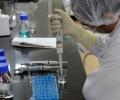
The western world had largely considered India to be a production hub, and also, a good potential geography for clinical trials, and a big market. But in Covid-19 research, Indian companies and government researchers are also researching new drug candidates and potential vaccines, says Prosenjit Datta.
The pharmaceuticals sector is expected to post a revenue growth of around 13.5 per cent and a net profit growth of 30.3 per cent for the third quarter of 2023-24 (FY24), riding on the approval for niche drugs in the US market, fall in raw material prices and correction in shipping rates. In the healthcare segment, hospitals are expected to post revenue growth of 13 per cent during the coverage, while net profit growth would be around 37 per cent, ICICI Securities said in a note. However, the performance may not be comparable on a sequential basis due to the offset of the festive season in Q3FY24, the analysts noted.

Companies that are developing biosimilars (for regulated markets) or have portfolio of new chemical entities (NCEs) under development.

The drug maker will lose some incentives if its membership is suspended, sources in Pharmexcil said.

Many companies globally are working on plasma research to develop and manufacture hyperimmune globulin therapies from plasma donations.

'Auto, pharma, and industrials have delivered well in the recent quarter, while businesses like quick-service restaurants, consumer staples, and durables have underperformed in volume growth.'

Details on prices sought as 10 generic drugs become up to 83 times costlier in 6 months
At a time when the Indian Drug Manufacturers' Association (IDMA) is also celebrating its 50th year of inception, many mid-cap pharma companies like Indoco are seeing the baton being passed down to the next generation.

The future looks somewhat bright for the Indian pharmaceutical industry which is wholly into generics. It expects to get a push from the new US legislation bringing into the health-care fold 32 million or 10 per cent of the country's population which is currently uninsured.
With an eye on improving quality assurance in the wake of increased global scrutiny on Indian pharma products, the Centre on Tuesday said that Schedule M of the Drugs and Cosmetics Act, 1940 will be made compulsory for small and medium scale manufacturers in a phased manner. Union Health Minister Mansukh Mandaviya has asked micro-small and medium enterprises in pharma manufacturing to move towards good manufacturing practices (GMP) through self regulation. "This will help in quality assurance and also reduce compliance burden," Mandaviya.

After decades of hunt for fortune abroad, India's pharmaceutical companies now plan to strike gold in their own backyard. Large players from Ranbaxy to Dr Reddy's and Piramal Healthcare are all headed to rural India to boost their revenues.

Dr Reddy's, Glenmark, Wockhardt have lined up alternatives for Zytiga
While companies continue to face regulatory pressure leading to higher costs, they see an uptick from the launch of differentiated and high-margin products
Indian Pharma majors are looking at different strategies to boost their global business.

Russia's central bank early on Tuesday raised interest rates to 17 per cent to counter the 50 per cent rouble fall in six months.
Teva Pharmaceutical Industries Ltd has sued Indian drug makers, including Ranbaxy Laboratories and Dr Reddy's, for alleged patent violation of ingredients used in Coreg, used for treatment of cardiovascular diseases.

The government on Monday said that multinational companies (MNCs) are campaigning against domestic pharmaceuticals industry as their interests were getting impacted due to increasing global presence of Indian firms in the generic segment.
Notwithstanding the fact that the country's pharmaceutical (pharma) pricing regulator has allowed a 12 per cent price increase for medicines listed under the National List of Essential Medicines (NLEM) in 2023, analysts and industry insiders predict that the overall domestic pharma industry will only witness a price hike of 5-6 per cent. This is attributed to higher competitive intensity in the market. Krishnakumar V, executive director and chief operating officer (CEO) of Eris Lifesciences, a domestic-focused pharma company, noted that the NLEM segment experienced growth suppression of around 150 basis points due to price reductions during the January to July period this year.


Trade generic drugs (medicines that are sold directly through distributors) are fast becoming a key segment for domestic pharma firms as volume growth slows in the overall market. Big companies like Cipla and Alkem have a significant presence in the segment but recently, players like Torrent Pharmaceuticals and Dr Reddy's Laboratories (DRL) have also entered this market. What is driving big pharma's focus on trade generics? The volume growth in the Indian Pharma Market (IPM) has come down from 5.6 per cent in FY16 to 0.1 per cent in FY23.

Decision by the Supreme Court denying a patent to Glivec discourages innovative drug discovery.
 © 2026 Rediff.com - Investor Information - Advertise with us - Disclaimer - Privacy Policy - Sitemap - Feedback - About us - Terms of use - Grievances