
Since February 2025, the RBI has reduced the policy rate by 100 basis points. In its previous policy review in April, it had also trimmed the repo rate by 25 basis points to 6 per cent.

Deloitte on Thursday projected economic growth at 6.5-6.7 per cent for the current fiscal, as tax incentives provided in the Budget are expected to push domestic demand amid an uncertain global trade environment. Deloitte estimated India's GDP growth at 6.3-6.5 per cent for FY25 and said that the economic outlook for FY26 hinges on a delicate balance between evolving trade relations and government efforts to boost domestic consumer demand.

'That combination of a rising economy, a growing middle class, and a deepening love of diamonds and jewellery is what we see really doubling the market for diamonds over the next five years.'

India's economic growth slowed to 7.4 per cent in the March quarter, bringing down the annual growth rate to 6.5 per cent during 2024-25, according to official data released on Friday. The growth in the January-March period was lower than the 8.4 per cent expansion in the year-ago quarter.

"For instance, you generally buy your military gear from Russia. That's a way to kind of get under the skin of America, if you go to buy your armaments from Russia."

Despite sharp interest rate cuts expected in this financial year amid easy liquidity conditions, state-run banks are treading cautiously on their loan growth projections for FY26. Most large banks are projecting loan growth at 11-13 per cent, almost similar to the previous financial year.

The next Census' findings will help identify the extent of India's ageing population and vulnerability levels.

Bajaj Finance, IndusInd Bank, State Bank of India, Maruti, Tata Motors, ITC, Tata Steel and Reliance Industries were also among the gainers. Nestle, NTPC, Kotak Mahindra Bank, Power Grid and Titan were among the laggards.

The Reserve Bank of India (RBI) brass, including its Governor Sanjay Malhotra, on Tuesday told a Parliamentary panel that it was "optimistic" about the impact of the US tariffs on the Indian economy and, in long-run, it could benefit the country due to dipping trade relations between the US and China.

The prospect of protracted uncertainties in the global economic landscape not only pose a risk for India's growth outlook in 2025-26, but are also likely to dent the private sector's capital raising and investment plans, the finance ministry averred on Tuesday, cautioning the country's corporates that the era of 'easy pickings' was over.

'But this Budget alone will not fix what ails the Indian economy.'

The Indian economy could remain less affected by global trade wars than other countries because the two engines of domestic growth - consumption and investment - are likely to face a limited impact from such headwinds, according to an article on the 'State of the Economy' in the Reserve Bank of India's (RBI's) bulletin, released on Tuesday.
The RBI on Wednesday slashed key interest rate by 25 basis points, for the second time in a row, to support a shuttering economy hit by reciprocal tariffs imposed by the US. Following the rate cut, the key policy rate eased to 6 per cent providing relief to home, auto and corporate loan borrowers.
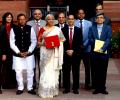
Finance Minister Nirmala Sitharaman on Saturday said the Union Budget 2025-26 continues efforts to accelerate growth and provide inclusive development.

Escalating trade tensions amid a tariff war after Donald Trump took over as President of the United States (US) could adversely impact global growth and fuel inflation, an article on the "State of the Economy" in the Reserve Bank of India (RBI) monthly bulletin said.

'...without massive amounts of force.'
The Indian economy is projected to grow at 6.2 per cent in 2025-26, slower than earlier estimated rate of 6.5 per cent, due to escalated trade tensions and global uncertainty, the International Monetary Fund (IMF) said on Tuesday. "For India, the growth outlook is relatively more stable at 6.2 per cent in 2025, supported by private consumption, particularly in rural areas," IMF said in its World Economic Outlook (WEO).

Fuelled by rising disposable incomes and growing awareness about disciplined investing, monthly SIP inflows across the mutual fund industry could scale up to Rs 40,000 crore over the next 18-?24 months, according to Madhu Nair, CEO of Union Asset Management Company (AMC). SIP inflows stood at Rs 25,925 crore in March, although the industry has witnessed a declining trend over the past four months amid heightened market volatility triggered by frequent US tariff changes.

Indian economy to grow at 6.3-6.8 pc in FY26, against 6.4 pc in FY25

In response to the panic triggered by Trump's trade policies, the RBI net sold approximately $43 billion in the second half of FY25 to curb volatility, as the rupee plunged to a low of 87.95 per dollar in February this year.

'For the Indian economy to maintain a growth rate of 7 to 8 per cent, it needs large foreign direct investment coming in, and that's mainly coming from the US.'

Housing sales are estimated to decline 23 per cent annually to nearly 1.06 lakh units during January-March across nine major cities on subdued demand due to high prices and concern over economic growth, according to PropEquity.

Facing criticism from the government over the central bank prioritising inflation over growth, the new RBI Governor Sanjay Malhotra on Monday said that prospects of the Indian economy are expected to improve on the back of high consumer and business confidence in 2025. "As we strive to preserve financial stability to support a higher growth path for the Indian economy, our focus remains steadfast on maintaining stability of financial institutions and, more broadly, systemic stability," Malhotra said in foreword to the Financial Stability Report.

'If in our cities, all urban bus transport services are free, then the taxpayers are paying for it, or if electricity were to be made free, that's a huge cost to the rest of the people'
The Reserve Bank of India (RBI) on Friday cut the repo rate by 25 basis points to 6.25 percent, marking the first reduction in five years. The central bank also projected GDP growth for fiscal year 2026 at 6.7 percent and inflation to come down to 4.2 percent in FY26 from 4.8 percent in FY25. The RBI said the global economic backdrop remains challenging but the Indian economy continues to remain strong and resilient.

Commerce Minister Piyush Goyal's scathing remarks on Indian startup ecosystem and its innovation priorities have drawn sharp reaction from the industry, with Zepto CEO Aadit Palicha putting up a strong defence citing the company's contribution to jobs, FDI and terming it a "miracle in Indian innovation".
Geopolitical tensions, trade policy uncertainties, volatility in international commodity prices and financial market uncertainties pose considerable risks to India's economic growth in the coming year, the finance ministry cautioned on Wednesday. "Global trade continues to be affected by uncertainty in the policy environment... tariff-related developments in multiple countries have heightened trade-related risks, affecting investment and trade flows globally.

India's manufacturing sector growth fell to a 14-month low in February amid softer increase in new orders and production, a monthly survey said on Monday. The seasonally adjusted HSBC India Manufacturing Purchasing Managers' Index (PMI) registered 56.3 in February, down from 57.7 in January, but remained firmly within the 'expansionary' territory. In PMI parlance, a print above 50 means expansion, while a score below 50 denotes contraction.

The resilience of the economy and strength of domestic demand will continue to make India an engine of growth amid the rapidly evolving global trade landscape as a result of US tariffs, Finance Minister Nirmala Sitharaman said in London on Tuesday.

Isn't there something significant in the UPI example for all of us to learn from and execute to enable world-scale success for our startups?, asks Ajit Balakrishnan.
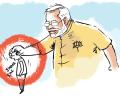
Prime Minister Narendra Modi on Wednesday urged all stakeholders to come together and invest in people for skill development, nurturing talent and promoting innovation which are essential for job creation and boosting the economy. Participating in post-Budget webinar on employment, Modi said the government has provided skill training to 3 crore youth since 2014 and decided to upgrade 1,000 ITIs and set up five centres of excellence.
US-based Citigroup is likely to allocate more global roles to India than to any other centre it operates in due to the country's strong talent pool, said Jane Fraser, chief executive officer of Citigroup, on Wednesday in an interaction with CNBC-TV18. Fraser also expressed confidence that India will remain the world's fastest-growing economy.

The Tesla careers page reveals there are 14 staff vacancies, of which 13 are based in Mumbai.

The Indian economy is projected to grow at 6.3 per cent in current financial year aided by investment and domestic demand. According to a World Bank report released on Tuesday, India continues to show resilience against the backdrop of a challenging global environment. In India, which accounts for the bulk of South Asia region, growth is expected to remain robust at 6.3 per cent in 2023-24, India Development Update of the World Bank said.

India's services sector activity witnessed a sharp uptick in February boosted by improving domestic and international demand, which resulted in a quicker expansion in output and a substantial increase in employment, a monthly survey said on Wednesday. The seasonally adjusted HSBC India Services PMI Business Activity Index rose from January's 26-month low of 56.5 to 59.0 in February, indicating a sharp rate of expansion.

'In the past six months, capital markets have seen a dip, and realty is struggling. The stock-market investor will be cautious of putting that investment in real estate when there may be a slowdown coming.'

Gross GST collections rose by 9.1 per cent to about Rs 1.84 lakh crore in February, boosted by domestic consumption and indicating potential economic revival. As per the official data released on Saturday, on a gross basis, mop up from Central GST stood at Rs 35,204 crore, State GST at Rs 43,704 crore, Integrated GST at Rs 90,870 crore and compensation cess of Rs 13,868 crore.

Equity markets will take cues from the US tariff related developments, global trends and trading activity of foreign investors this week, analysts said.

S&P Global Ratings on Tuesday said the Indian economy is set for "resilient growth" in 2025 and projected inflation pressure to recede which will lead to "modest" easing of the monetary policy by the RBI. In its India outlook for 2025, S&P also retained India's growth forecast for current fiscal at 6.8 per cent, followed by 6.9 per cent growth in 2025-26.

'From the Indian perspective, young customers with more disposable income will also drive the growth.'
 © 2026 Rediff.com - Advertise with us - Disclaimer - Privacy Policy - Sitemap - Feedback - About us - Terms of use - Grievances