
It also demanded that the government expedite the proposal of vaccinating individuals aged 12 to 18 years.
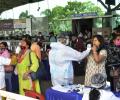
A single-day rise of 50,040 fresh COVID-19 infections took India's tally to 3,02,33,183, while the number of active cases dipped to 5,86,403, according to the Union health ministry data on Sunday.
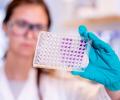
Each state has its own weak areas that need attention. Some states have already identified the gaps and sought the Centre's help. Vinay Umarji, Ishita Ayan Dutt, Samreen Ahmad and Sohini Das report.

The total number of beneficiaries who have been vaccinated on Thursday till 6 pm include 15,507 in Andhra Pradesh, 15,798 in Bihar, 10,266 in Kerala, 16,103 in Karnataka, 7,117 in Madhya Pradesh, 6,497 in Tamil Nadu, 5,128 in Delhi, 12,212 in Gujarat and 7,187 in West Bengal, according to the provisional report.

Thanking all, including doctors, nurses, healthcare staff, security personnel and journalists, who have been at the frontline in the fight against the pandemic, the minister said they ensured India reaches the stage when vaccine gets delivered to the people.
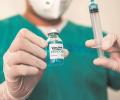
According to the findings of the phase 1/2 randomised clinical trial, published in The Lancet Infectious Diseases journal, the vaccine candidate could induce an antibody response in participants within 28 days of the first immunisation, by giving two doses 14 days apart.
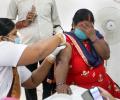
Not enough data has been generated locally to decide on the need for a booster dose of COVID-19 vaccine for those fully inoculated, say experts amid the possibility of a third wave of the viral disease hitting the country between September and October.
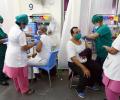
Amid an unprecedented surge in coronavirus cases in the country, the government has decided to allow everyone above 18 years of age to get vaccinated from May 1.

India's manufacturing sector activities eased slightly in February but firms were upbeat as they responded to increased new work intakes by stepping up production and purchasing activities, a monthly survey said on Monday. The seasonally-adjusted IHS Markit India Manufacturing Purchasing Managers' Index (PMI) fell marginally to 57.5 in February from 57.7 in January, indicating that even though the pace of growth eased from January it remained sharp in the context of historical data. The headline figure for February remained above its long-run average of 53.6, the survey noted. In PMI parlance, a print above 50 means expansion while a score below 50 denotes contraction.

Modi said India has taken an important step forward in protecting its youth population against the disease.
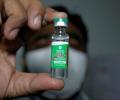
Those who have recovered from COVID-19 respond faster to the Covishield vaccine and reach high antibody levels, says a study, leading to hopes that they may not need a second dose and therefore help widen India's corona immunisation cover.
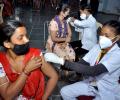
India achieved this coverage in 130 days as against the USA's feat in 124 days.
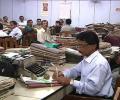
India's services sector activities contracted further in June as the intensification of the COVID-19 crisis and reintroduction of containment measures restricted demand, a monthly survey said on Monday. The seasonally adjusted India Services Business Activity Index fell from 46.4 in May to 41.2 in June, as new work intakes and output contracted at the fastest rates since July 2020, which prompted companies to reduce employment again. Subdued demand conditions resulted in a second successive monthly drop in new business received by services firms.

'WHO issued an emergency use listing for Covovax, expanding the basket of WHO-validated vaccines against COVID-19. The vaccine is produced by the Serum Institute of India under licence from Novavax,' the world health body said in a tweet on Friday.
Addressing an online question and answer session, WHO's chief scientist Soumya Swaminathan said there would be at least one effective vaccine by 2021 but it would be available 'only in limited quantities'. "Most people agree, it's starting with healthcare workers, and frontline workers, but even there, you need to define which of them are at highest risk, and then the elderly, and so on," Swaminathan said on prioritising who gets the vaccine first.
With the US education system operating independently from the government, universities are adopting varying strategies when it comes to Covid vaccination.
'The residents are a bit apprehensive about the lack of complete trial in case of Covaxin and might not participate in huge numbers thus defeating the purpose of vaccination. We request you to vaccinate us with Covishield which has completed all stages of trial before its roll-out'


Even as the inoculation drive against COVID-19 is set to start in two days, a Maharashtra government official said on Thursday that it will take six to seven months for the vaccine to become available for those who are not in the high-risk category.

Officials said he was one of a 'handful' of successful applicants among 26 people who sought exemptions.

Prime Minister Narendra Modi will flag off the first phase of the pan India roll-out of COVID-19 vaccination drive at 10.30 am via video conferencing.
Addressing a press briefing, Union Health Secretary Rajesh Bhushan said healthcare workers and frontline workers need not register themselves as their database has been populated on to the Co-WIN vaccine delivery management system in a bulk manner.
'Someone may have diabetes, but at what level the disease qualifies as a comorbid condition is something a doctor will decide upon and certify accordingly.'
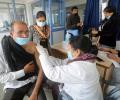
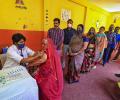
Over one crore COVID-19 vaccine doses have been administered in the country till now with the highest single-day vaccinations of more than 6 lakh jabs given on Thursday, the Union health ministry said on Friday.
According to the sources, the vaccine will be much more affordable than existing ones manufactured by two foreign companies. India's drug regulator in July had granted market approval for the Pneumococcal Polysaccharide Conjugate vaccine, after reviewing the phase 1, 2 and 3 clinical trial data submitted by the Pune-based firm.

Symptoms such as common cold, mild body ache and fatigue have emerged among patients and people tend to postpone their visit to a doctor when they notice these signs
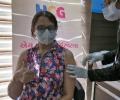
Under the nationwide mega vaccination drive launched on January 16, a total of 4,319 (53 per cent) health workers against a target of 8,117, were administered the shots at 81 centres across the city on day one.
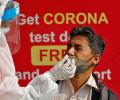
The Centre, however, noted that the last national serosurvey findings have shown that over 70 per cent of the population is still susceptible to the disease.

The assurance comes as India's Covid graph dips -- on Friday 1,109 new coronavirus infections were reported -- and also one case of a new Covid strain in Mumbai.

'People who were vaccinated early on, for example, from January to April this year, namely health workers, the elderly, and the immunocompromised, should be identified for a booster dose.' 'We should start getting ready for administering booster doses to them on priority.'

Hari Shukla from Tyne and Wear said he feels it is his duty to receive his first of the two-dose vaccine, a moment UK Prime Minister Boris Johnson hailed as a "huge step forward" as Tuesday was dubbed "V-Day" or Vaccine Day in the UK.
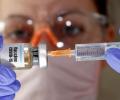
According to the health ministry, the block task force would be tasked with resolving bottlenecks, thus de-centralising planning and preparedness for vaccine introduction.
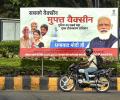
India has the capacity to store vaccines that may require a lower temperature in the range of -15 to -20 degrees Celsius and there are over 29,000 cold chain points (CCPs) across the country where vaccines are stored at the recommended temperatures, the Centre has told the Supreme Court.
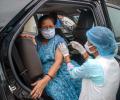
These decisions were taken by the ministry based on the fresh recommendations by The National Expert Group on Vaccine Administration for COVID-19 (NEGVAC) and have also been communicated to the states and union territories, an official statement said.

"This antibody is both highly neutralising (meaning it works very well at low concentrations) and broadly neutralising (meaning it works against all variants)," said Michael S Diamond, a professor at Washington University School of Medicine in St Louis, US.

NITI Aayog Member (Health) Dr V K Paul said the pandemic situation in the country worsened with a sharp rise in cases and a large part of the population is still susceptible to the virus.

With the virus mutating, can vaccines be assumed safe and effective in the long run?

The end-to-end exercise was undertaken in Krishna district of Andhra Pradesh, Rajkot and Gandhinagar of Gujarat, Ludhiana and Shaheed Bhagat Singh Nagar of Punjab, and Sonitpur and Nalbari districts of Assam on Monday and Tuesday.

According to the petitioner, P G Hari, who is a homoeopathy practitioner in Wayanad and president of the 'Jankeeya Manushyavakasasamrakhana Prasthanam' (Organisation Fighting for Protection of People's Rights), "adverse effects" of the vaccine had been reported from Sri Lanka, Bhutan and Bangladesh and no proper studies were conducted before it was introduced in India

'There is indeed a link between BCG vaccination and resistance to COVID-19.'
