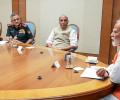
'If Pakistan has fired one bullet at us then we have to respond by firing 10 bullets at them. It is our right to do so.'

From the many large communal riots across decades to the six-hour mass cull of Muslims in Nellie, 1983; Sikhs in Delhi and elsewhere, 1984; Kashmiri Pandits, 1990; selective massacres of Hindus in Punjab, 1983-93; and Gujarat, 2002, we have failed to bring perpetrators of our biggest tragedies to account, asserts Shekhar Gupta.

As the United States grapples with the Af-Pak problem, eight Indian-American organisations on Wednesday appealed to the Barack Obama administration to make military aid to Pakistan conditional and ensure that it is not used against India.In an unanimous resolution, passed after a Capitol Hill briefing on 'Cross-Border Terrorism in Kashmir and the Hindu (Pandit) Victims: Challenges and Solutions', they urged Obama to make sure that the aid is not used against India.

When a university allows a small group of students to prevent classes being held; when the professor selected to hold those classes gives up and goes back to his hometown; what conclusion can be drawn, asks Jyoti Punwani.
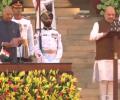
'Amit Shah's trajectory seems unstoppable; no wonder some say the day is not far off when he could be pitching for the top job, and that this is only the first step,' says Saisuresh Sivaswamy.

India witnessed religiously motivated killings, arrests, riots and coerced religious conversions and the police in some cases failed to respond effectively to communal violence, according to the US State Department report on International Religious Freedom.

This is one bill that will ensure that no politician, official or person can play politics with the lives of any other person and if they do, they will be arrested. It is time for such a bill to protect the minorities, says Neeta Kolhatkar.
'Treating our ethnic cleansing with budgetary measures and financial doles is - one, not a prudent solution and second, an insult to our cause. Please understand the gravity of the situation. Our exodus is just a symptom of the malaise that has affected the valley. We would prefer to stay in exile than being sent back to be slaughtered again in a few decades. Please treat the disease and not the symptoms,' writes Lalit Koul 'Sharnarthee'.

Sumedha Raikar-Mhatre examines the Marathi film industry, which annually produces around 190 dissimilar films that requires an investment of Rs 400 crores.
 © 2026 Rediff.com - Investor Information - Advertise with us - Disclaimer - Privacy Policy - Sitemap - Feedback - About us - Terms of use - Grievances