
The share of public sector undertakings (PSUs) in the total market capitalisation of listed companies--at an all-time low of 10 per cent currently --- may get a leg-up from the government's divestment push. Recently the government announced the successful sale of national carrier Air India to Tata Sons, India's first privatisation of a PSU since 2002-03. The transaction is expected to be completed by December.

Gold, which lost its sheen to some extent in the second half of 2021, is likely to regain the glitter in the New Year and cross the Rs 55,000-per-10-grams level amid pandemic woes, inflation worries and stronger US dollar. After a stellar run up in 2020 when the yellow metal touched a record high of Rs 56,200 on the MCX in August, the prices are near Rs 48,000 per 10 grams now. This is roughly 14 per cent lower from the all-time highs and 4 per cent lesser compared to January 2021 levels.

The average estimate of 12 brokerage houses stands at Rs 6,994 crore for the June 2020 quarter. This is 30.8 per cent lower than the June 2019 quarter net profit of Rs 10,104 crore.

IIM Lucknow has concluded its 2020-21 final placements.

Experts believe while escalation with Pakistan might not have a significant impact on trade economics, both India and China have major trade and investments in each others' economies. While the dispute might continue, it could have a temporary effect on the markets.
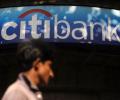
Axis Bank's acquisition of Citibank's consumer finance business for Rs 12,325 crore - the second biggest deal in the Indian banking sector - is seen as a good deal at a good price. The acquisition enables Axis Bank to close the gap with competition in some key segments such as credit cards. At the same time, there are some key issues that are crucial for the deal's success, apart from the fact that it will take some time for Axis to reap the full harvest of its investment.

Brokerages are expanding the universe of stocks they cover amid a boom in the market. Several stocks in the mid-cap universe are now tracked by more analysts than they were a year ago. For instance, SBI Cards and Payment Services is now tracked by 17 brokerages, compared to just four a year ago.

The Nifty Bank index has come off 15 per cent from its peak in February, underperforming the benchmark Nifty which is down 6%.

As share of cash volumes in trading mix sees decline, it will result in moderation of profitability from core broking operations.

The FPI holding in India's top 100 companies, which are part of the Nifty 100 index, declined to 24.23 per cent on average at the end of March this year, from a high of 27.5 per cent at the end of March 2021. This is the lowest FPI holdings in India's top listed companies in at least three years. A general sell-off by FPIs has weighed on stock prices and the benchmark S&P BSE Sensex is down 8.5 per cent, from its 52-week high made in October 2021. Most analysts expect FPI flows to remain weak in FY23 as well, given rising bond yields in the US and an expected earnings slowdown in India due to high inflation and commodity prices.

Companies in the small-cap universe are having a dream run - the Nifty Smallcap 100 index has shot up more than 25 per cent on a year-to-date basis, even as the benchmark Nifty is up 7 per cent. This is the best start for the index since 2017 when the Nifty Smallcap 100 index surged 32.3 per cent between January 1 and May 10. However, in terms of outperformance to the Nifty, this year's performance is the best in more than a decade. A combination of sectoral tailwinds and lack of institutional selling pressure has helped small companies escape from the correction triggered by the second wave of Covid-19.

Financial planners advise against putting capital to work by anticipating what might go up or down.

'At this moment, investors should look for relative value within sectors and clear visibility (third-wave-or-not) on earnings delivery.'

The only caveat is that your will should be a simple one.

Currency played an important role in Q2, with US dollar, Japanese yen and euro appreciating vis-a-vis the Indian rupee, while the Brazilian real, South African rand and Russian ruble depreciating against rupee.

In spite of a severe second wave of the coronavirus pandemic, and a widespread disruption in public life therefore, India's fast-moving consumer goods (FMGC) sector seems to have emerged as one of the most resilient segments of the economy. The early numbers and estimates for the April-June quarter indicate a steady recovery in FMCG players' business, which is now set to exceed the pre-pandemic level. Amid nationwide lockdowns because of the first Covid wave, FMCG revenues had been severely affected in mid-2020.

SoftBank-backed Ola Electric took the wraps off its maiden e-scooter offerings -- Ola S1 and S1 Pro -- for a commercial launch on Sunday. With prices starting from Rs 99,999 (excluding state government incentives, registration fee, and insurance cost), the Bhavesh Aggarwal-founded firm said the e-scooters are designed and engineered in India for the world and will deliver the best scooter experience to the consumer. He suggested that after 2025, sale of petrol-powered two-wheelers should not be allowed.

Without exception, the top four majors beat Street estimates across all parameters - revenues, profitability, or net profit growth. However, what stood out were the large deal wins reported by the big two, TCS and Infosys.

June indicates a change in trend from previous quarters in terms of how much companies are spending on employees. The worst hit sectors included steel, air transport service and automobile firms.

Gold prices may trade higher in the coming days because of weaker dollar and speculations of US Fed rate cut.

From the 30-share pack, 24 companies fell, with Yes Bank emerging as the top loser, dropping 8.36 per cent, followed by NTPC, M&M and Vedanta.

Most of the large Indian IT services players, such as TCS, Infosys, Wipro, and HCL Tech, have signalled increased offshoring efforts and opting for local hires in the US, primarily to address the immigration-related challenges.

What worked for the markets was favourable global investor sentiment and encouraging flows into the emerging markets following stimulus measures taken by central banks.

Strong foreign fund inflows, a weakening dollar and slipping oil prices propped up the local unit.

If the outcome of the elections is as expected, markets, which have lost hope on the government, will start discounting a brighter future

41 companies take back shares worth Rs 27,783 crore in FY17

Lenders can now initiate recovery proceedings since the SC has lifted the standstill on asset classification, which protected stressed accounts from slipping into NPAs.
In the April-June period, bond yields rose by 30 bps.
Some media reports stated that Rohan has been designated as a vice president, which is a relatively senior position in the company.

Thousands of retail investors are reaping the benefits of the disruption that the latest technologies have brought to the equity market. Brokerage firms are aggressively investing in technologies such as artificial intelligence, machine learning, big data and analytics, social media, chatbots, virtual assistants and so on.

Lenders had filed 1,251 cases to recover Rs 24,765.5 crore. Wilful defaulters are the entities that do not pay back money despite the ability to do so. Defaulters above Rs 1 crore were considered for this exercise.

This is not the first time that users of Zerodha clients have faced technical issues. As recently as February, 2019, the platform faced a connectivity issue that led to a pile-up of orders.

The companies that have seen sharp erosion of market wealth include YES Bank, Indiabulls Housing Finance, Zee Entertainment, Vodafone Idea, and Bharat Heavy Electricals.

Market experts say that FIIs have been caught off-guard on their exposures to companies with high-leverage and those facing cyclical headwinds.

Market players said the new norms were more suited for online brokers, where clients were typically internet savvy.

While the overall loan disbursements stood strong at 15 per cent YoY in Q2, pockets such as vehicle finance, loans to NBFCs, and business banking showed some weakness. A continued fall in these numbers may make it tough for AU SFB to defend its valuations under the current circumstances.
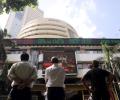
The bulk of the erosion in terms of value took place in India's most-valued firms. For instance, Mukesh Ambani-led Reliance Industries alone has lost Rs 3.8 trillion in m-cap, followed by HDFC Bank, which has seen its value erode by Rs 2.45 trillion and Tata Consultancy Services (TCS), which has lost Rs 1.85 trillion to stand at Rs 6.24 trillion, making it India's most-valued.

Some of the firms that have witnessed major drop in analysts' coverage include Dish TV, YES Bank, and JSW Energy.

Despite the recent fall, the Nifty Midcap 100 index has outperformed by gaining 20 per cent till date in this year calendar year.
Despite the recent fall, the Nifty Midcap 100 index has outperformed by gaining 20 per cent till date in this year calendar year.
 © 2026 Rediff.com - Advertise with us - Disclaimer - Privacy Policy - Sitemap - Feedback - About us - Terms of use - Grievances