
A Pakistan-based gangster posted a video on social media purportedly showing the killing of a police officer in Gurdaspur, near the Indo-Pak border. A terror outfit has claimed responsibility for the incident, prompting a thorough investigation by Punjab Police.

HDFC Bank's January-March quarter result, which came in-line with expectations, failed to enthuse investors. The reason? The management's decision to abstain from providing any specific growth guidance, and analysts' expectations of an arduous road to recovery. Analysts believe the path to normalisation of several growth metrics is unlikely to be a straightforward one, and the road to balance sheet realignment may be long.
As many as 140 million customers of HDFC Bank and Axis Bank are expected to face interruption in banking services in the weekend due to the former's system upgrade and the transition of Citi India business to the latter. Both the banks have notified their customers about the interruption in services. HDFC Bank - the country's largest private sector lender with 93.2 million customers - had announced that it will undertake a system upgrade on July 13, wherein it will migrate its core banking system (CBS) to a new engineered platform to enhance customer experience.
Financial services giant HDFC Bank, carrying a brand value of $44.9 billion, has surged past IT consulting behemoth Tata Consultancy Services (TCS) to reclaim its crown as the country's most valued brand, according to the 2025 Kantar BrandZ Most Valuable Indian Brands report.
The country's largest private sector lender HDFC Bank on Saturday said it will grow its loan book slower than the industry in the current financial year (FY25). The move comes as the lender looks to bring down its elevated credit - deposit (CD) ratio to pre-merger levels. "We will bring down the CD ratio faster than what we had anticipated.
HDFC Bank's market capitalisation (market cap) touched Rs 13 trillion in Thursday's (December 28, 2023) intra-day trades as the largest private sector lender is set to report its sharpest monthly rally in the past two years. At 10:33 AM; HDFC Bank's market cap stood at Rs 13.03 trillion, the BSE data shows. The stock was up 1 per cent at Rs 1,717.90 in intra-day trades on December 29, inching towards its record high of Rs 1,757.80 touched on July 3, 2023.

Tech Mahindra, HCL Tech, State Bank of India, UltraTech Cement and HDFC Bank were also among the gainers. In contrast, Eternal, Asian Paints, Bharat Electronics, Sun Pharma and Maruti were among the laggards.

From the 30-Sensex firms, Maruti, Power Grid, Tata Motors Passenger Vehicles, HDFC Bank, Asian Paints and Tata Steel were among the biggest laggards. However, Titan, HCL Tech, Tech Mahindra, Infosys and Tata Consultancy Services were among the gainers.

Banking sector has witnessed healthy growth in advances in the third quarter of financial year 2026 (Q3FY26) against the same period last year, as the full impact of goods and service tax (GST) rate cuts drove growth. Most of the lenders saw their credit growth outpace the deposit growth in the quarter.

All three Bharti group companies outperformed in CY25 but the biggest gain came from Bharti Airtel, the flagship.

From the 30 Sensex firms, Power Grid, ICICI Bank, Bharti Airtel, HDFC Bank, Kotak Mahindra Bank, Larsen & Toubro, Adani Ports and UltraTech Cement were among the laggards. Sun Pharma, Reliance Industries, Titan, HCL Technologies and Bajaj Finserv were among the biggest gainers.
Among Sensex firms, Trent, HDFC Bank, Adani Ports, ICICI Bank, Bajaj Finserv, Bharat Electronics, Titan and Asian Paints were the major laggards. However, State Bank of India, Infosys, Axis Bank and Maruti were among the gainers.

Between March 2022 and September 2023, HDFC Bank added 56,310 employees.

From the 30-Sensex firms, Tata Steel, Asian Paints, Trent, State Bank of India, Hindustan Unilever, UltraTech Cement, ICICI Bank and Bharti Airtel were among the gainers. On the other hand, Infosys, Bajaj Finance, Bharat Electronics, Larsen & Toubro and HDFC Bank were the laggards.

A national rollout will take place after the pilot test in which SBI, PNB, Axis Bank, Bank of Maharashtra, Canara Bank, Kotak Mahindra Bank, IndusInd Bank, ICICI Bank, HDFC Bank, Indian Overseas Bank and Punjab & Sind Bank are participating.

From the Sensex firms, Mahindra & Mahindra, Maruti, Adani Ports, Bajaj Finserv, Titan, and HDFC Bank were among the major laggards. However, Hindustan Unilever, Trent, HCL Tech, Asian Paints, and Tata Steel were among the gainers.
Maruti, Bajaj Finance, Titan, Kotak Mahindra Bank, HDFC Bank, IndusInd Bank, Mahindra & Mahindra and Larsen & Toubro were among the major gainers. Wipro, HCL Technologies, Nestle, Tata Consultancy Services and Tata Motors were among the laggards.

HDFC Bank has been conscious in not accepting high-cost deposits, which have resulted in slower growth in October-December, said Sashidhar Jagdishan, managing director and chief executive officer, during an interaction with Goldman Sachs recently. He said during times of tight liquidity, short terms hardened, as was the case in October-December. "Not only did we participate, but we also gave up which came up for maturity," he said.

Among Sensex firms, Infosys, Bharti Airtel, Adani Ports, Sun Pharma, Tech Mahindra, Eternal, Axis Bank and Maruti were the major laggards. However, ITC, UltraTech Cement, Tata Steel and HDFC Bank were among the gainers.

Among the 30 Sensex companies, Mahindra & Mahindra, Titan, HDFC Bank, Reliance Industries, UltraTech Cement, Bajaj Finance, Axis Bank, Tata Motors and Asian Paints were the biggest gainers. On the other hand, Tech Mahindra, Tata Consultancy Services, Wipro, HCL Technologies, Larsen & Toubro and State Bank of India were among the major laggards.
Among the Sensex components, Mahindra & Mahindra, Bharti Airtel, Tech Mahindra, Titan, Infosys, JSW Steel, Bajaj Finserv, HDFC Bank, Larsen & Toubro and Kotak Mahindra Bank were the major gainers. Maruti, State Bank of India, Power Grid, Tata Motors and IndusInd Bank were the laggards.

From the Sensex firms, Bharat Electronics, Mahindra & Mahindra, Titan, NTPC, State Bank of India, Adani Ports, Tata Motors Passenger Vehicles and Bajaj Finserv were among the major laggards. Tata Consultancy Services, ICICI Bank, Infosys and HDFC Bank were among the gainers.

Benchmark indices Sensex and Nifty fell for the third day running on Thursday, dragged by continuous selling in HDFC Bank and profit-taking in consumer durables and utility shares. The 30-share BSE Sensex fell by 313.90 points or 0.44 per cent to settle at 71,186.86. During the day, it tanked 835.26 points or 1.16 per cent to 70,665.50.
HDFC Bank on Tuesday said RBI has given approval to the group to acquire up to 9.5 per cent stake each in six lenders, including ICICI Bank and Axis Bank.

The rupee, which was the worst performing Asian currency in 2025 and also in January, was the best performing Asian currency on Tuesday.

The 12-month programme is expected to offer shorter internship duration in the third phase of the pilot in certain sectors such as services.

Among Sensex firms, Axis Bank, HDFC Bank, Reliance Industries, ICICI Bank, Bharat Electronics and Larsen & Toubro were the biggest laggards. However, Asian Paints, Maruti, Bharti Airtel and Bajaj Finance were among the gainers.

From the Sensex basket, Power Grid, IndusInd Bank, Tata Motors, JSW Steel, NTPC, HCL Technologies, Tata Steel, ICICI Bank, Mahindra & Mahindra, Axis Bank, HDFC Bank and Reliance Industries were among the major laggards. Among the gainers, Hindustan Unilever climbed over 5 per cent. Tech Mahindra, Nestle, ITC, Wipro, Tata Consultancy Services and Kotak Mahindra Bank were the other major gainers.

In November, six primary market issuances accounted for more than 13,000 crore of net equity investments by MFs.
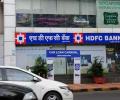
HDFC Bank on Wednesday reported a 2.3 per cent year-on-year rise in its consolidated net profit to Rs 17,657 crore for the October-December quarter, restricted by slower loan growth. On a standalone basis, the largest private sector lender's net profit came at Rs 16,735.50 crore for the period, up from Rs 16,372.54 crore in the year-ago period, but marginally down from the preceding quarter's Rs 16,820.97 crore.
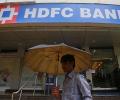
The board of HDFC Bank has approved the appointment of Keki Mistry and Renu Karnad as the additional non-executive directors of the bank, and V Srinivasa Ranjan as its executive director. Mistry was the chief executive officer and vice chairman of HDFC, which merged with the bank today (1 July 2023). Karnad has been the managing director of HDFC since 2010. Ranjan was the executive director and chief financial officer of HDFC.
HDFC Bank's latest shareholding data showed that the room for foreign investment has fallen just 5 basis points short of the threshold set by Morgan Stanley Capital International (MSCI) to fully include the stock in its indices. Currently, the index provider has applied an adjustment factor of 0.5 since the foreign room is less than 25 per cent. Removal of the adjustment factor will result in inflows of a massive $4.8 billion (Rs 40,000 crore) into HDFC Bank, according to Brian Freitas, a New Zealand-based analyst with Periscope Analytics.
After the latest rout, the American depositary receipt (ADR) premium of HDFC Bank to its local shares has shrunk to nearly zero. Shares of HDFC Bank on Thursday fell 3.1 per cent to Rs 1,490, extending its two-day decline to 11 per cent. Meanwhile, the ADR has slumped over 15 per cent in the past two trading sessions.

Public sector banks' (PSBs') employee count grew for the first time in five years while private sector banks' staff strength saw a decline in 2024-25 (FY25), according to latest data released by the Reserve Bank of India (RBI). The employee count of state-owned lenders rose 0.22 per cent year-on-year (Y-o-Y) to 757,641 at the end of March 31, 2025 from 756,015 in FY24.

'LIC's investment decisions are taken independently, following strict due diligence, risk assessment and fiduciary compliance.'
Among the Sensex constituents, Eternal, Trent, Bharti Airtel, Infosys, Tech Mahindra, UltraTech Cement, ICICI Bank, HDFC Bank, Bajaj Finance, Tata Consultancy Services, Bharat Electronics Ltd, Larsen & Toubro and Tata Motors Passenger Vehicles were the laggards. However, Tata Steel, Sun Pharmaceuticals, ITC, NTPC, Reliance Industries, HCL Technologies, PowerGrid, and Asian Paints were among the gainers.

Among the Sensex constituents, Bharat Electronics Ltd, Eternal, Trent, Tata Steel, Bajaj Finance, Adani Ports, Bajaj Finserv, State Bank of India, PowerGrid, Asian Paints, Tata Motors Passenger Vehicles, Titan, NTPC, Kotak Mahindra Bank, Larsen & Toubro and Bharti Airtel were among the laggards. Tech Mahindra, HCL Technologies, Reliance Industries and HDFC Bank were the only gainers.
Among Sensex firms, Bharat Electronics, Mahindra & Mahindra, Tata Steel, UltraTech Cement, Bajaj Finserv and Tata Motors Passenger Vehicles were the major laggards. However, Tech Mahindra, Asian Paints, Infosys, Adani Ports, Sun Pharma and HDFC Bank were the gainers.

'The government's decision to keep interest rates unchanged on small savings schemes will certainly constrain banks' ability to cut deposit rates further.'

The banking sector could see better loan growth in the third quarter of financial year 2026 (Q3FY26) with improved net interest margins (NIMs), though the full impact of latest rate cuts will be largely felt in the fourth quarter. There may be lower slippage in unsecured loans and microfinance institutions (MFIs) along with steady recovery trends, which should lower credit cost.
