
Indian equity markets experienced a volatile session, with the Sensex and Nifty recovering some ground after a significant plunge the previous day. Gains were driven by PSU bank, IT, and metal stocks, but concerns over rising fuel prices and geopolitical tensions limited the recovery.

From the Sensex pack, Reliance Industries, Bajaj Finserv, HDFC Bank, Adani Ports, Maruti Suzuki India, Axis Bank, Hindustan Unilever, Sun Pharmaceuticals and Asian Paints were among the laggards. Reliance Industries fell the most by 2.38 per cent to close at Rs 1,171.10 apiece.

A man in Uttar Pradesh's Chandauli district has been arrested for allegedly killing his younger brother due to a property dispute and ongoing financial tensions. The accused confessed to the crime, citing humiliation and a desire to control his brother's assets as motives.
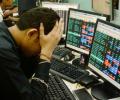
Equity benchmark BSE Sensex tumbled nearly 700 points to sink below the 79,000 level on Tuesday, extending its losses for the second straight day due to selling pressure in HDFC Bank, SBI and ITC amid fresh foreign capital outflows. The 30-share BSE Sensex tumbled 692.89 points or 0.87 per cent to settle at 78,956.03. During the day, it tanked 759.54 points or 0.95 per cent to 78,889.38.
With a deployment of Rs 2,720 crore in July, MFs' total investment in HDFC Bank in calendar year 2024 (till now) surged to Rs 48,820 crore.
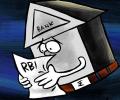
Indian banks are urging the Reserve Bank of India (RBI) to reconsider its new $100 million cap on net open foreign-exchange positions, warning that the directive could lead to significant mark-to-market (MTM) losses and force an accelerated unwinding of trades, potentially impacting FY26 earnings.
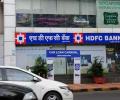
The Supreme Court on Friday refused to entertain a plea by HDFC Bank CEO and MD Sashidhar Jagdishan challenging an FIR of cheating and fraud registered against him on a complaint by the Lilavati Kirtilal Mehta Medical Trust, which runs the prominent Lilavati Hospital in Mumbai. A bench of Justices P S Narasimha and R Mahadevan noted that the matter was already listed for hearing on July 14 before the Bombay high court.

Google has unveiled the Pixel 10a in India and worldwide, expanding its Pixel series. The device can be pre-ordered through the brand's online store and an e-commerce platform, with sales starting next month.

Indian stock market benchmark indices Sensex and Nifty experienced a significant decline, driven by escalating tensions in the Middle East and rising crude oil prices.
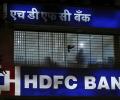
Analysts have largely maintained their positive outlook on HDFC Bank, as the private lender reported in-line results for the October-December quarter (Q3) of the current financial year (2024-25/FY25). They believe the results were 'strong' given the tough macro environment, and relative to peers.

Trading pattern in the stock market this week will largely depend on the ongoing Q3 earnings announcement from corporates, global trends, and foreign fund movement, analysts said. Moreover, geopolitical developments and any update on trade negotiations would also be keenly tracked by investors, experts noted.

Stock market benchmarks ended with losses for the third straight session on Wednesday as heightened geopolitical tensions, weak global peers and persistent foreign fund outflows unnerved investors.

For over a decade, HDFC Bank consistently outperformed industry growth rates in both deposits and advances, maintaining impeccable asset quality. Amid a landscape where other banks struggled with soaring non-performing assets (NPAs), HDFC Bank thrived, eventually surpassing ICICI Bank to become the largest private sector lender in India. Its net interest margin (NIM) remained stable in the range of 4.1-4.4 per cent.

Bharat Electronics, Power Grid, NTPC and HDFC Bank were among the other major gainers. However, Infosys, Tata Steel, Eternal and Tech Mahindra were among the laggards.

Benchmark indices tumbled about 2 per cent on Friday, capping one of the most turbulent weeks for domestic equities as investors fretted that the West Asian conflict could drag on for weeks or even months.

Equity benchmark indices Sensex and Nifty rebounded sharply by nearly 1 per cent on Monday, driven by strong buying in power, banking, and financial stocks.

Benchmark equity indices Sensex and Nifty extended their gains for the third straight session on Wednesday, driven by last-hour buying in bank, metal, and FMCG shares.
Banks are depending more heavily on the market for certificates of deposit (CDs), whose worth climbed to a record Rs 5.75 trillion in the fortnight to January 15, owing to deposit tightness in the system.
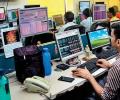
From the Sensex pack, Tata Steel, Zomato, Power Grid, UltraTech Cement, IndusInd Bank, Larsen & Toubro, Adani Ports, NTPC, State Bank of India and Reliance Industries were among the major gainers. On the other hand, Tech Mahindra, Tata Consultancy Services, ITC, Infosys, Sun Pharma, Maruti, HCL Tech, and Nestle were among the laggards.

From the 30-Sensex firms, HDFC Bank, Infosys, HCL Tech, Bajaj Finance, Tata Consultancy Services and Reliance Industries were among the biggest laggards. In contrast, Bharat Electronics, Hindustan Unilever, Tata Steel and UltraTech Cement were among the gainers.
Benchmark equity indices Sensex and Nifty rebounded on Thursday after three sessions of losses, tracking gains in global markets after US President Donald Trump struck a conciliatory tone on Greenland. In a volatile session, the 30-share BSE Sensex climbed 397.74 points, or 0.49 per cent, to close at 82,307.37.
Indian equity markets closed higher, driven by gains in PSU bank, auto, and financial stocks, following the US Supreme Court's decision on tariffs. Sensex climbed 479.95 points to 83,294.66, and Nifty advanced 141.75 points to 25,713.
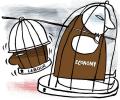
The new labour Codes, notified by the central government in November 2025, have pushed up employee costs for private-sector banks and insurance companies, with these firms reporting higher operating expenses in the October-December quarter (Q3FY26) due to the statutory impact of the new labour Codes.
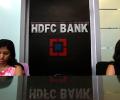
Growing concerns over slower-than-expected margin recovery, amid weak deposit growth have caught HDFC Bank's investors off guard. HDFC Bank's stock on Wednesday plunged nearly 9 per cent to hit an intraday low of Rs 1,527 on the BSE after reporting weaker-than-expected earnings in the third quarter (October - December) of the current financial year (Q3FY24). The shares of India's biggest private lender closed at Rs 1,536.9, down 8.46 per cent.

The BSE Sensex and the Nifty 50 declined around 4.5 per cent each since the start of the West Asia conflict.
Indian equities on Dalal Street saw volatility as global market trends and fresh tariff concerns linked to Donald Trump impacted investor sentiment. Track Sensex, Nifty50 movement and key market drivers for Feb 24, 2026.
Equity benchmark indices Sensex and Nifty experienced a significant decline, primarily driven by a selloff in IT stocks due to concerns about AI disruption and renewed worries over global trade.

Stock markets rebounded on Friday with the benchmark Sensex closing higher by 316 points after heavy buying in banking and metal shares amid optimism over trade deal progresses and India's participation in Pax Silica.

Sensex and Nifty post steepest weekly loss in over a year, falling nearly 3 per cent.

India's private-sector banks are likely to lose market share for a second consecutive year in 2025-26, as their loan books continue to expand much slower than overall bank credit.
Benchmark equity indices Sensex and Nifty tumbled more than 1 per cent on Friday due to across-the-board selloff, especially in metal, IT and commodity stocks, tracking sluggish global markets.

Equity benchmark indices Sensex and Nifty advanced for the third straight session on Tuesday driven by firm global cues and optimism over India-US trade agreement, even as investors turned to profit-booking at higher levels.
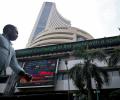
Benchmark stock indices Sensex and Nifty closed on a flat note in a choppy session on Wednesday as gains in PSU banks and auto shares were offset by losses in IT stocks.

From the 30-Sensex firms, Tata Consultancy Services, Asian Paints, Maruti, Sun Pharma, Hindustan Unilever, ICICI Bank, Kotak Mahindra Bank, Tech Mahindra, HDFC Bank and Larsen & Toubro were among the biggest laggards. On the other hand, Tata Steel, NTPC, Axis Bank and UltraTech Cement were among the gainers.
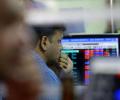
Benchmark BSE Sensex fell 558 points on Thursday amid heavy selling in IT shares, as concerns over AI-led disruptions and waning hopes of a Fed rate cut after firm US economic data weighed on investor sentiment.

Worries about global politics and trade are pulling the Nifty 50 down. Experts say the market could drop further low.

The Supreme Court has sought responses from the Centre, the CBI and others on a plea filed by a 78-year-old retired banker who was duped of Rs 23 crore after allegedly being put under "digital arrest" for nearly a month.

Banking operations at public sector banks across the country were impacted on Tuesday as the United Forum of Bank Unions (UFBU) went on nationwide strike demanding the immediate implementation of a five-day work week.

It takes a lot of mental strength to play in front of nearly 100,000 people in Ahmedabad. Even the bravest can succumb to the tension.

From the 30-Sensex firms, Eternal declined by 4.02 per cent, followed by Bajaj Finance (3.88 per cent), Sun Pharma, InterGlobe Aviation, Trent, Asian Paints, Mahindra & Mahindra and Bajaj Finserv. HDFC Bank emerged as the only gainer from the pack.
