
Avenue Supermarts (DMart) reported lower-than-expected Q2FY27 performance, with revenue growth of 18.4 per cent year-on-year but visible margin pressure, leading to a 4.5 per cent stock drop. The company faces challenges from lower-margin sales, operating cost pressures, and aggressive store expansion, impacting profitability despite improved same-store sales growth.
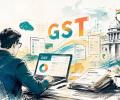
As India marks a decade of the Goods and Services Tax (GST), the focus is shifting towards enhancing efficiency through artificial intelligence, data sharing, and process simplification. The reform, which unified India's indirect tax system, has significantly broadened the tax base and boosted revenues, with future plans including a streamlined two-tier rate structure and continued technological integration to reduce compliance costs and combat evasion.

The goal is to ensure that your bank works for you, providing liquidity and convenience without charging you for the privilege of holding your own money.

India's Goods and Services Tax (GST) collections saw a significant 14 per cent increase in June, reaching approximately Rs 1.95 lakh crore. This surge was primarily driven by a substantial 34.6 per cent growth in tax mop-up from imports, alongside a 6.5 per cent rise in domestic supplies, reflecting the country's economic resilience despite global uncertainties.

Chief Economic Advisor V Anantha Nageswaran stated that the second half of the current fiscal year (FY27) is expected to be challenging due to increased downside risks to global growth and rising interest rates worldwide.

More than 40 per cent of Cars24's sales are now linked to rural registration and transport office (RTO) locations, although procurement remains concentrated in urban markets.

The Indian government has made Bureau of Indian Standards (BIS) certification compulsory for smartphone screen protectors, effective April 1, 2027. This move aims to ensure product quality, curb low-quality imports, and significantly boost domestic manufacturing, creating a substantial industry and job opportunities.
Businesses may eventually have to file returns largely based on invoices uploaded by suppliers, with limited scope for manual changes.
India's eway bill generation reached 139.08 million in August, marking the third-highest monthly count on record and indicating sustained momentum in goods movement and formal economic activity, according to official data.
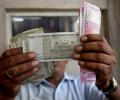
Government sources clarify that the 0.4% merchant discount rate (MDR) on UPI transactions above Rs 2,000, effective October 15, will not be passed on to consumers. The charge, paid by merchants, aims to create a sustainable revenue framework for the digital payments ecosystem, with funds shared among banks and UPI entities. Small merchants using QR codes for up to Rs 1 lakh monthly are exempt.

India's passenger vehicle (PV) exports saw a 17 per cent year-on-year decline in August, contrasting sharply with a 36.5 per cent surge in domestic dispatches, which reached a record high for the month as automakers prepared for the festive season.

The Finance Ministry has clarified that the 0.4 per cent Merchant Discount Rate (MDR) on UPI transactions above Rs 2,000, effective October 15, is not expected to increase cash transactions or cause inflation. The ministry also dismissed allegations of US pressure influencing the decision, asserting that the policy aims to promote RuPay credit cards within the UPI ecosystem, and a monitoring mechanism will ensure the MDR burden is not passed on to consumers.

Delhi Police have arrested Shantaram Barku Shelke, the alleged mastermind behind a Rs 40 lakh visa fraud conspiracy that duped 41 individuals seeking overseas jobs in Russia and Israel. Shelke, proprietor of M/s SS Overseas Travels Agency, issued fake documents and evaded authorities before being apprehended in Nalasopara, Maharashtra.

The Retailers Association of India (RAI) has voiced concerns that the government's new 0.4 per cent Merchant Discount Rate (MDR) on UPI transactions above Rs 2,000 could reverse the progress of digital payment adoption among small retailers. This fee, effective October 15, places the burden on merchants operating on thin margins, potentially pushing them back to cash transactions and undermining the government's formalisation agenda, especially ahead of the festive season.

India's Monsoon session of Parliament remains formally unprorogued 40 days after adjournment, setting a new record. This unusual delay fuels speculation that the government intends to introduce a key legislation, possibly an amendment to the women's reservation law, without convening a new session. The proposed amendment aims for a 50 per cent seat expansion to address concerns over delimitation.

The Delhi Police's Economic Offences Wing (EOW) has dismantled a GST fraud cartel, arresting six individuals involved in swindling Rs 128 crore through shell companies and fake invoicing.

Citron, a brand under Stellantis, anticipates that three-fourths of its sales in India will originate from Tier-II, Tier-III, and smaller cities within the next five years, a significant increase from its current 55 per cent, as it expands its retail network beyond major urban centres.

The central government has introduced a 0.4 per cent fee on UPI transactions exceeding Rs 2,000, prompting traders' associations to advocate for cash payments to avoid additional costs on digital payments. This move ends the zero-Merchant Discount Rate (MDR) regime, with traders expressing concerns about operating on tight margins and the potential for increased charges.
India's gross GST collections increased by 3.2 per cent to over Rs 1.94 lakh crore in May, driven by improved supplies of goods and services and a continued expansion in collections from imports.
Despite the Centre's GST 2.0 guidelines aiming to facilitate provisional refunds within seven days for low-risk cases, many large taxpayers are still encountering significant delays in obtaining Goods and Services Tax (GST) refunds under the inverted duty structure (IDS), with experts citing inconsistent state-level scrutiny and subjective interpretations.

India's automobile retail sales reached an unprecedented 24.23 lakh units in August, marking a 17.51 per cent year-on-year growth, with alternative fuels (CNG, hybrid, and electric) collectively surpassing petrol in the passenger vehicle segment for the first time.

Fitch Ratings has increased India's GDP growth forecast for the current fiscal year (FY'27) to 6.9 per cent, up from 6.4 per cent, attributing the revision to robust economic growth in the June quarter and overall economic resilience. The agency also anticipates the Reserve Bank of India (RBI) will raise interest rates by 0.25 per cent in October.

Domestic passenger vehicle dispatches in India surged by 27.3 per cent year-on-year to a record 4,38,854 units in May, driven by reduced GST rates and easier financing, according to the Society of Indian Automobile Manufacturers (SIAM).

Apple's upcoming iPhone 18 lineup is set to cost 20 to 43 per cent more in India, primarily due to rising global memory component costs and a depreciating rupee, while the new foldable iPhone Duo will be priced between Rs 3 lakh and Rs 4.5 lakh, matching the cost of some hatchback cars.

Leading appliance and consumer electronics manufacturers are set to increase prices of air conditioners, LED TVs, washing machines, and other products by 5 to 8 per cent from October 1, citing rising input costs for metals like copper and steel, crude derivatives, and currency exchange volatility due to the West Asia crisis.

India's passenger vehicle sales are estimated to have surged by approximately 35 per cent to about 4.5 lakh units in August, driven by strong performances from major automakers like Maruti Suzuki India, Tata Motors Passenger Vehicles, and Mahindra & Mahindra, with the industry entering the festive season with optimism.

Hyundai Motor India is set to outpace the broader passenger vehicle market, projecting an 8-10 per cent domestic sales growth in H2FY27, fueled by strategic launches of a new mid-size SUV and a dedicated electric vehicle, alongside increased production capacity.

Fast-moving consumer goods (FMCG) companies in India are committed to maintaining current prices through the festive season, despite facing increased commodity costs and geopolitical disruptions. This strategy aims to protect consumer demand and sustain volume growth, even as margins remain under pressure.

As the world's most populous country, India's economy looks large in the aggregate even as its average incomes stay modest.

India's deposit growth has reached a 15-year high of 17.8 per cent, primarily driven by a surge in foreign currency non-resident (bank), or FCNR(B), deposits. This influx of funds is expected to lead to a softening of corporate loan rates as banks seek to deploy their excess liquidity.

The Indian coal ministry announced that 147 commercial coal blocks auctioned since 2020 are expected to attract approximately 55,000 crore in capital investment, generate 490,000 jobs, and contribute significantly to state revenues.

Maruti Suzuki India's CFO, Arnab Roy, has urged the central government to introduce an amnesty scheme or an 'as-is' settlement option to resolve past indirect tax disputes, aiming to clear legacy litigation and foster growth in the automotive industry. Roy emphasised the need for a 'smarter way to address the past' to provide long-term certainty for businesses.

'UPI has been free since Covid, so why is the government charging us now?'

The Congress party has strongly criticised the Modi government's decision to introduce a 0.4% Merchant Discount Rate (MDR) on UPI transactions over Rs 2,000, alleging it is a result of US pressure to benefit American card companies. The party also linked this move to broader US actions against India, including tariffs and H-1B visa issues, coining the term "Narendra's Ongoing Trump Appeasement." The government, however, clarified that consumers will not bear the charge, which applies only to merchants.

A top SBI official has highlighted the challenges bankers face in lending to MSMEs using only GST data, advocating for the integration of alternative data sources like power consumption and telecom records through credit bureaus to improve credit assessment.

Delhi Police's Economic Offences Wing has arrested two individuals, including a chartered accountant, in connection with a GST and VAT fraud involving the misuse of business credentials and dummy firms.

CPI(ML) Liberation general secretary Dipankar Bhattacharya has strongly criticised the newly introduced Merchant Discount Rate (MDR) on select UPI transactions, labelling it a "UPI tax" and demanding its immediate rollback. He drew parallels with demonetisation, arguing that the new framework would negatively impact small shopkeepers, MSMEs, and ordinary citizens by increasing prices.

Analysts predict that the Indian stock market's sentiment this week will be primarily influenced by the domestic GDP data announcement, crude oil prices, and the crucial US non-farm payrolls report.

Indian passenger vehicle manufacturers are significantly increasing production and stocking dealerships in anticipation of strong festival season demand, with new launches planned and supply bottlenecks being addressed. However, the industry faces potential moderation in growth during the second half of FY27 due to a high base from last year's post-GST surge, commodity inflation, and elevated inventory levels.
India's MSME sector faces a significant formal credit gap of approximately Rs 60 lakh crore, with traditional channels meeting only a fraction of the demand. A new report suggests that a centralised, interoperable digital layer could effectively bridge this gap and enhance productivity across the formal business sector by digitising workflows and enabling cash-flow-based underwriting.
