
The next meeting of the GST Council will be held on September 28-29 in Goa.

He also lashed out at the Congress for its opposition to the GST and for dubbing it as 'Gabbar Singh Tax'.

With the total tax burden currently at 53 per cent, 19.5 per cent and 56 per cent, respectively for cigarettes, bidis and smokeless, tobacco taxation in India is much lower than the level recommended by the World Health Organisation.
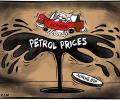
Many states are open to the idea of petrol and diesel being brought under the goods and services tax (GST) regime - contrary to the perception that they are averse to it - but they want a concrete proposal, including a compensation mechanism, from the Centre. West Bengal Finance Minister Amit Mitra says while the issue can be discussed, the Centre may not be keen to bring the change because it earns "much more" from taxes on petrol and diesel. "(The peak rate of) GST is 28 per cent. Under the regime, the Centre would only get 14 per cent. "So, definitely, the Union government does not want GST on fuel. It is all lies. Currently, they are in a very cozy place," Mitra said.
Reflecting widespread recovery, the 50-share NSE Nifty too spurted by 91 points, or 0.92 per cent to close at 9,979.70.

Extending losses for 7th session, Nifty fell below the 8,000 mark for the first time since Nov 25
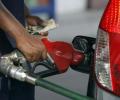
Petrol and diesel prices were hiked for the fourth consecutive day on Saturday by 35 paise per litre, pushing the total increase in rates on petrol to Rs 36 per litre and on diesel to Rs 26.58 since early May 2020 when taxes on the two fuels were raised to record levels. Petrol in Delhi now costs Rs 107.24 a litre and diesel comes for Rs 95.97, according to a price notification of state-owned fuel retailers. The latest increase that follows the unrelenting hike in international oil prices has pushed pump rates across the country to their highest-ever levels.

The GST rate on mobile phones will be hiked to 18 per cent while that on maintenance repair overhaul (MRO) services for aircraft will be lowered to 5 per cent with effect from April 1, Finance Minister Nirmala Sitharaman said on Saturday. The GST rate on handmade and machine-made matchsticks has been rationalised to 12 per cent from 5 per cent and 18 per cent respectively.
The all-powerful GST Council on Friday decided to charge food delivery platforms such as Swiggy and Zomato a tax even as it extended concessional tax rates on certain COVID-19 drugs by three months till December 31. The Council, which comprises the Union finance minister and her state counterparts, decided to continue keeping petrol and diesel out of the GST purview as subsuming the current excise duty and VAT into one national rate would impact revenues. Briefing reporters on the decisions taken by the Council at a meeting here, Union Finance Minister Nirmala Sitharaman said GST has been exempted on muscular atrophy drugs like Zolgensma and Viltepso, which cost crores of rupees.

'From the tiniest to mid-level organisations and even some at the lower end of the large-scale ones would say that computerisation and the extensive documentation and regulatory requirements for GST have made the compliance process worse in many cases.'

This meeting has led to the deferment of the Goods and Services Tax (GST) Council meeting by a day.

The GST Council's agenda includes trimming the number of items in the 28 per cent slab by 75 per cent, easier compliance for assessees and small taxpayers, and a presentation on bringing real estate under GST.

Pulse oximeters, hand sanitisers, temperature check equipment and ambulances too will attract lower 5 per cent tax.
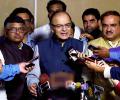
In a first, Opposition-ruled states on Saturday got the Centre to delete from the records three minutes of the last GST Council meeting that provided for tweaking of agreed criteria for division of taxpayers under the Goods and Service Tax regime.

The GST Council, headed by Finance Minister Nirmala Sitharaman and comprising representatives of all states and Union territories, will have its 37th meeting in Goa against the backdrop of economic growth hitting a six-year low of 5 per cent in the first quarter of the current fiscal.
Inter-state supply may come under GST composition
Results of some blue-chip companies exceeded expectations, providing additional thrust, traders said.
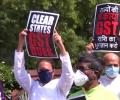
Dissenting states including Chhattisgarh and Kerala, have made it clear they are in no mood to relent. They want the Centre to borrow the entire Rs 2.35 trillion this fiscal citing bleak fiscal position.

The revenue collection in the same month a year ago stood at Rs 94,442 crore.
GST collections in March slipped below the psychological Rs 1 lakh crore-mark for the first time in four months to Rs 97,597 crore as the Covid-19 lockdown that shut most businesses compounded tax collection woes in an already sluggish economy. Goods and Services Tax (GST) mop-up in March recorded a 8.4 per cent decline over March 2019 collection of Rs 1.06 lakh crore. The collections were lower on account of dip in revenues from domestic transactions as well as imports.

The upcoming corporate results season and the approaching Union Budget kept investors on their toes
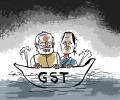
Retaining the GST rate assumes importance since states are under pressure to increase their revenues, hit hard by lockdown. Also, the Centre has not fully compensated states for their revenue losses on account of GST for 2019-20.
Continued lack of consensus at next meeting could cast shadow on GST rollout by April 1.
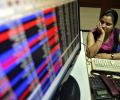
The BSE 30-share index after a positive opening stretched to 31,772.41, but could not stay there for long buffeted by the selling pressure. It hit a low of 31,562.25 before settling lower by 79.68 points, or 0.25 per cent, at 31,592.03.

A government report revealed that fake companies floated with fake addresses, issued fake GST invoices and generated fake e-way bills, with fake vehicle registration details without supplying any goods causing huge loss to the exchequer.

The Centre on Thursday placed before the GST Council two options for borrowing by states to meet the shortfall in GST revenues, pegged at Rs 2.35 lakh crore in the current fiscal.
'Prime Minister Modi stated several times that we shall not let this challenge go away without converting it into an opportunity to undertake systemic reforms.' 'And hasn't that been reiterated in action?'
GSTN said those who do not want to give their Aadhaar numbers would have to undergo physical verification.

As per SIAM data, vehicle sales across categories, including passenger vehicles and two-wheelers and commercial vehicles stood at 18,21,490 units last month as against 23,82,436 units in August 2018, a fall of 23.55 per cent.
Experts said the rate hike would improve working capital position of the manufactures as it would correct the inverted duty structure but may lead to increase in price of the finished goods.

The 50-share NSE Nifty ended flat, up 5.80 points, or 0.06 per cent, at 10,308.95.

ICICI Bank extended yesterday gains, rising 10% in two trading sessions
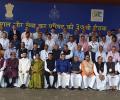
This is a moment when the leaders at the Centre and states must show true leadership for the sake of the country. And it is the top political leaders, not attorney generals or bureaucrats, who should be sitting together and settling this thorny issue of compensation, says Arvind Subramanian, former Chief Economic Adviser to the Government of India.
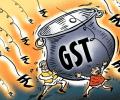
Rationalisation of rates will be taken up for smaller items that do not have major revenue implications but are commonly consumed at the GST Council meet on Saturday

Jaitley, while reviewing the security situation of Jammu and Kashmir at a high level meeting, also asked the forces to deal firmly with the inimical elements but ensure safety of the innocent people, officials said.

GST Council has also reached consensus on the definition of revenue to compensate states for revenue loss
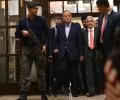
For his first Budget in July 2014, Jaitley inherited a fiscal deficit target of 4.1 per cent of GDP. From 4.1 per cent, the fiscal deficit came down to 3.4 per cent by 2018-19, with two slippages from the budgeted targets, in 2017-18 and 2018-19, the former due to introduction of the GST, says Arup Roychoudhury.

The surge in export, domestic demand and public spending in infrastructure projects might revive private investment during 2017-18.
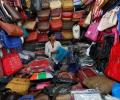
Finance ministers from Congress-ruled states say they have alerted the Centre about the problems in GST for several months, but it is only now with the Gujarat assembly election around the corner that the Modi regime has started heeding these suggestions.

The question on who should borrow from the market and whether the borrowing will be under two buckets should be decided by the GST Council, and not by the Centre. If there is no consensus, there has to be a vote, says A K Bhattacharya.
 © 2026 Rediff.com - Investor Information - Advertise with us - Disclaimer - Privacy Policy - Sitemap - Feedback - About us - Terms of use - Grievances