
India posted a current account surplus of $13.5 billion or 1.3 per cent of GDP in March quarter 2024-25 as compared with $4.6 billion in the year-ago period mainly on account of surge in services exports and higher remittances, according to RBI data released on Friday.

Reliance Industries' refining earnings will remain steady, supported by its position as India's largest importer of Russian crude and favourable global supplies, according to analysts at JM Financial and Goldman Sachs. Reliance imported more Russian barrels than any other Indian refiner in the past eight months, according to data from Bloomberg/Kpler.

Life Insurance Corporation of India (LIC) reported encouraging results for the April-June quarter (Q1) of FY26. The net premium income of India's largest life insurer was Rs 1.2 trillion, up 5 per cent year-on-year (Y-o-Y), in Q1. Renewal premium grew 6 per cent Y-o-Y to Rs 59,900 crore, while first-year and single premium grew 1 per cent and 4 per cent Y-o-Y respectively to Rs 7,500 crore and Rs 51,900 crore.

HAL's order book amounts to Rs 2.45 trillion by end of Q2FY26, implying a book-to-bill ratio of 32 times based on FY25 revenue.

'Our priority remains brownfield expansion, and in the next few years, we plan to increase our capacity to around 6,000 beds.'
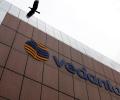
Mining major Vedanta's consolidated net profit plunged 58.69 per cent year-on-year (Y-o-Y) to Rs 1,798 crore in the second quarter of 2025-26 (Q2FY26), dragged down by exceptional losses booked during the period under review. The company had reported a net exceptional gain of Rs 1,160 crore in Q2FY25.

India's major ports registered a 4.3 per cent rise in cargo handling to 855 million tonnes in 2024-25, an official statement said on Tuesday. The increase in traffic was driven by higher container throughput (10 per cent), fertiliser cargo handling (13 per cent), POL cargo handling (3 per cent), and handling of miscellaneous commodities (31 per cent) compared to the previous fiscal year, according to the statement.

While UIDAI has given a nod for face authentication, banks need to join the process.

Commercial banks in India reported 26 per cent year-on-year (Y-o-Y) growth in slippages at Rs 63,000 crore during the first quarter ended June 2025 (Q1FY26). This was predominantly due to stress in microfinance and unsecured retail portfolios of select lenders.

Utilities in the power sector present an interesting investment case at this moment. Most power stocks have lost substantial ground in the past 12 months.

The pickup was driven partly by fresh corporate investment but more by higher working-capital demand.

The Reserve Bank on Friday announced a record Rs 2.69 lakh crore dividend to be paid to the government for the fiscal ended March this year, 27.4 per cent more than the payout in 2023-24. The Reserve Bank had transferred Rs 2.1 lakh crore dividend to the government for the fiscal 2023-24.

Dalal Street is buzzing with excitement, as some of the most-awaited IPOs are gearing up to hit the market. While some of these big companies are planning to join the stock exchanges towards the end of 2025, others are likely to be available for trading by the first half of 2026.

Overseas Indians deposited around $4 billion in non-resident Indian (NRI) deposit schemes in April - June FY25, up 79 per cent over the amount deposited in these schemes in the same period last year, data released by the Reserve Bank of India (RBI) on Monday showed. In April - June FY25, inflows into the NRI schemes stood at $3.95 billion, compared to $2.21 billion during the same period a year ago. With this, the total outstanding NRI deposits as of June stood at $155.71 billion.

Grant Thornton Bharat's latest survey indicates that hybrids are set to consolidate market share this festive season, bridging the gap between conventional petrol engines and the emerging electric vehicle segment.

India's economy is likely to grow by 6.5 per cent in the current and the next financial year, an EY report said, attributing lower than anticipated expansion in the September quarter to fall in private consumption expenditure and gross fixed capital formation. Real GDP growth eased to a seven-quarter low of 5.4 per cent in July-September -- the second quarter of the current 2024-25 fiscal year.

Voters are weighing a stark trade-off -- between preserving a socially driven policy and reversing course to revive revenue, restore fiscal balance, and rein in the underground liquor economy.

Once a quiet riverside ritual, Dev Deepawali has evolved into UP's largest soft-power spectacle -- merging faith, art, enterprise into a global cultural brand that reflects state's growing confidence.

LG Electronics India made a dazzling market debut on Tuesday, ending 48 per cent higher than its issue price and surpassing its South Korean parent in market value.

Marico's January-March quarter (Q4) results were slightly better than consensus. Revenue was up by 1.7 per cent year-on-year (Y-o-Y) to Rs 2,280 crore. Ebitda grew by 12.5 per cent Y-o-Y to Rs 440 crore. Adjusted PAT was up 10.3 per cent Y-o-Y to Rs 320 crore.

Among Sensex firms, Tata Steel, HCL Tech, UltraTech Cement, Bharat Electronics, Sun Pharma and Tata Consultancy Services were the major gainers. However, Axis Bank, Titan, Maruti and Tata Motors were among the laggards.

Colgate-Palmolive India's September quarter (Q2FY26) performance has reinforced concerns among brokerages about the company's continued market challenges.

Tata Capital Ltd, set to launch its IPO next week, has identified green financing and digital innovation as its core growth pillars, backed by the merger of its IFC-backed subsidiary Tata Cleantech Capital in 2024. By FY25, the cleantech and infrastructure finance book reached Rs 18,000 crore, growing at a 31.8 per cent CAGR over the last two years, the NBFC said on Friday.

India's top information- technology (IT) services companies, all cash-rich, have been tightfisted about ploughing back their earnings in new projects or acquisitions and the bulk of the profits have been distributed to shareholders through dividend and share buybacks. In the past 10 years (that is, excluding the current one), the firms have reinvested in growth and expansion only around 13.5 per cent of the cash flow generated from their operations.

India's three-wheeler exports, which have been on a downhill trajectory over the past few years, are showing no signs of recovery in FY25, with key markets like Sri Lanka, Bangladesh, Nigeria, and Egypt witnessing subdued demand. In May, the country's exports plummeted 11.3 per cent year-on-year (Y-o-Y).

The size of the Reserve Bank's balance sheet as on March 31, 2025 increased by 8.20 per cent year-on-year, leading to a bumper dividend of Rs 2.69 lakh crore for the central government. Increase on assets side was due to rise in gold, domestic investments and foreign investments by 52.09 per cent, 14.32 per cent and 1.70 per cent, respectively, said the RBI's Annual Report for the Year 2024-25 released on Thursday.

India's mergers and acquisitions (M&A) activity cooled in the second quarter of 2025-26 (Q2FY26), with deal value falling to $26.26 billion from $29.04 billion a year ago, according to Bloomberg data.

ICICI Bank delivered satisfactory results in the second quarter of 2025-26 (Q2FY26), sustaining return on assets (RoA) of around 2.3-2.4 per cent and improving asset quality. Provisions declined 26 per cent year-on-year (Y-o-Y) and 50 per cent quarter-on-quarter (Q-o-Q).

With the price of gold entering a strong bull run, gold-loan non-banking financial companies (NBFCs) are under the spotlight, even though their performance is not directly linked to gold price. Muthoot Finance outperformed in the April-June quarter (Q1) of 2025-26 (FY26), with its assets under management (AUM) growing 10 per cent quarter-on-quarter (Q-o-Q) and 42 per cent year-on-year (Y-o-Y), an improvement of 88 basis points (bps) Q-o-Q in net interest margin (NIM), and a fall in credit cost. Gold AUM rose 40 per cent Y-o-Y and 10 per cent Q-o-Q. The company recorded recoveries of 350 crore, including 100 crore from an asset reconstruction company (ARC), resulting in a 100-bp Q-o-Q yield increase.

Mid-cap and small-cap mutual fund schemes have continued to attract strong investor interest, garnering nearly Rs 30,350 crore in inflows during the April-September period of the current financial year, driven by impressive returns delivered by these segments. In comparison, the cumulative inflow into mid-cap and small-cap funds stood at Rs 32,924 crore during the same period last year, according to data from the Association of Mutual Funds in India (Amfi).

'Our focus would be to onboard top 100 merchants in top 10 different segments.'

Credit quality of Indian corporate is expected to be stable in the second half of the current financial year (H2FY26), supported by easing monetary cycle, and declining inflation, coupled with income-tax relief and rationalisation of the goods and service tax (GST) rates, among others.

'Defence, capital goods, engineering, capital market-related stocks, autos, and cement sectors are my bullish bets for Samvat 2082.'

State governments have requested the Centre for export incentives, lifting of import duty in the case of cotton for the textile sector and GST exemptions.

Asia's richest man Mukesh Ambani drew nil salary from his oil-to-telecom-and-retail conglomerate Reliance Industries for the fifth year in a row and dividends remain his main source of earnings. Ambani, 68, had capped his annual remuneration at Rs 15 crore from financial year 2008-09 (April 2008 to March 2009) to 2019-20 (FY20); and since FY21, he opted to forego his salary, due to COVID-19 pandemic, until the company and all its businesses were fully back to their earnings potential.

Reliance Industries (RIL) annual general meeting (AGM) had several stunning announcements. RIL looks to list Jio Platforms (JPL) by June 2026. It targets doubling of FY22 earnings before interest, taxes, depreciation and amortisation (Ebitda) (Rs 1.25 trillion; $14.6 billion) by FY27 implying 14.7 per cent compound annual growth rate (CAGR) over the FY22 levels.

India's 18 largest states, accounting for over 90 per cent of the country's gross state domestic product (GSDP), are likely to record a marginal uptick in revenue growth to 7-9 per cent this year, from 6.6 per cent clocked in 2024-25 (FY25), rating agency Crisil said in a report on Tuesday. This growth, slower than the decadal average of about 10 per cent, would lift these states' cumulative revenue to around Rs 40 trillion in FY26 from Rs 37.26 trillion in FY25.

India's industrial production growth remains almost flat at 3 per cent in March sequentially, though, on a year-on-year basis, it slipped from 5.5 per cent, mainly due to poor performance of the manufacturing, mining and power sectors.

'GST reduction will help larger and high-end cars too.'

The paint sector is seeing heightened competition with the entry of deep-pocketed groups like Aditya Birla and JSW. However, some brokerages see an opportunity in select stocks.
 © 2026 Rediff.com - Advertise with us - Disclaimer - Privacy Policy - Sitemap - Feedback - About us - Terms of use - Grievances