

Once a quiet riverside ritual, Dev Deepawali has evolved into UP's largest soft-power spectacle -- merging faith, art, enterprise into a global cultural brand that reflects state's growing confidence.
From two cans of oil in 1984 to a million lamps today, Dev Deepawali's journey mirrors Uttar Pradesh's own, from ritual to enterprise, and from devotion to soft power.
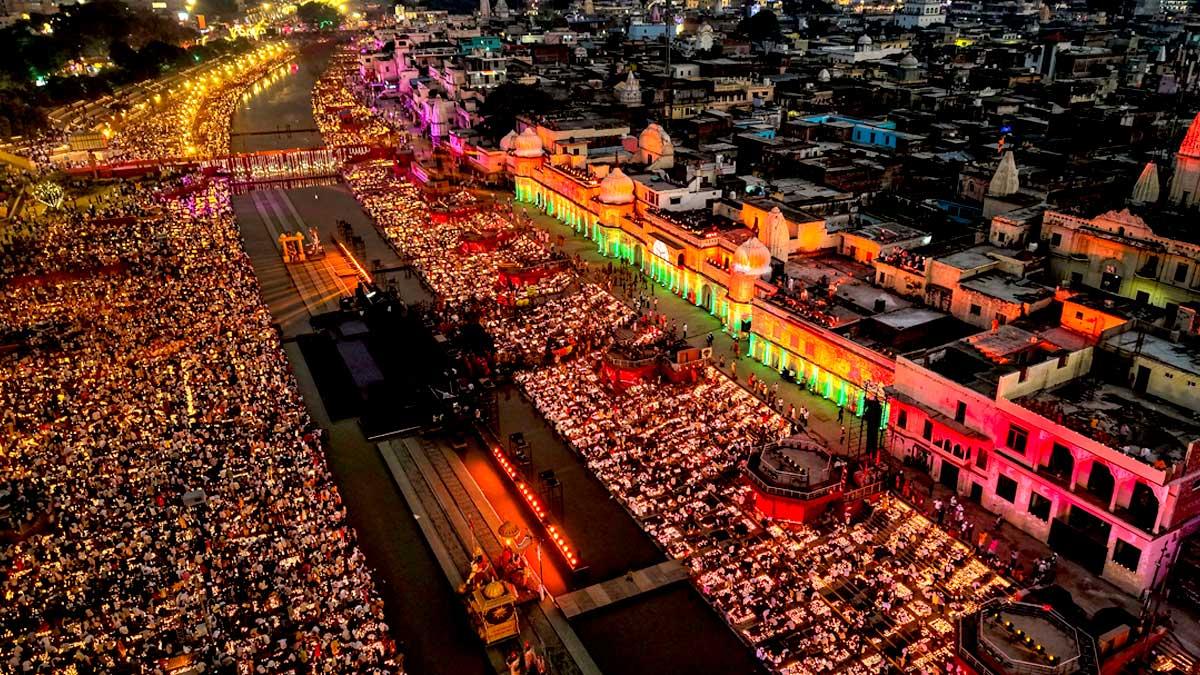
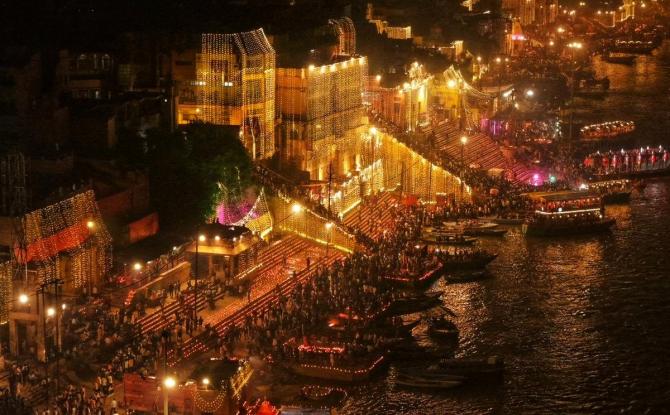
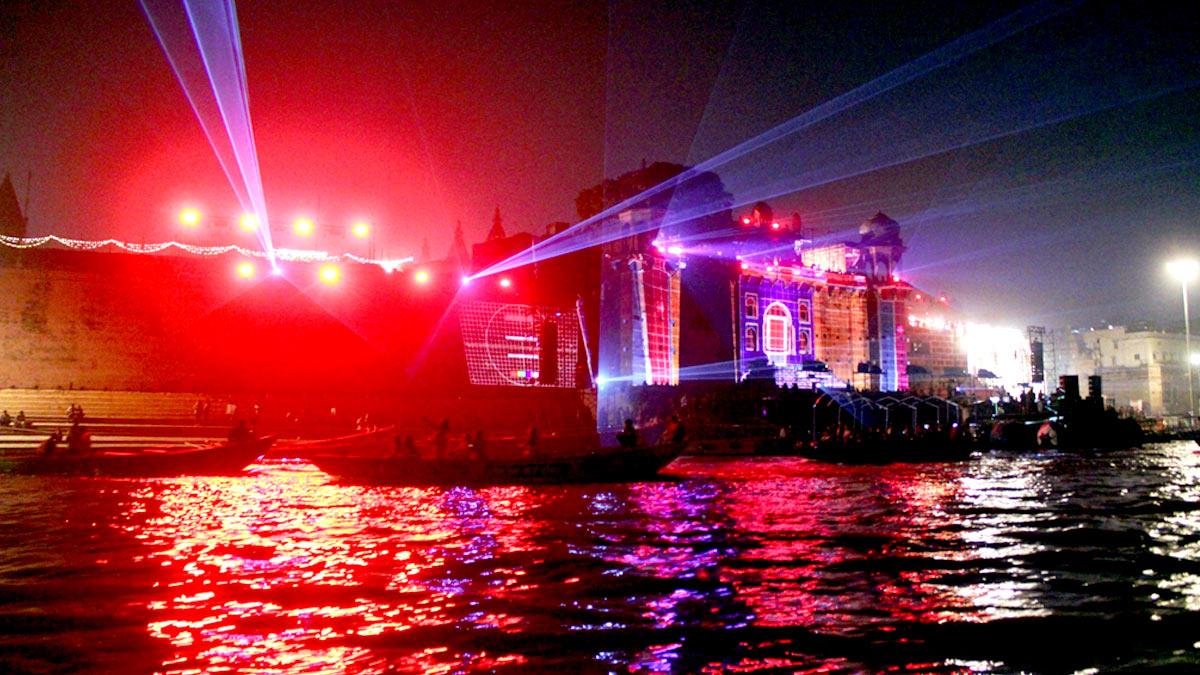
On the night of Kartik Purnima, Kashi becomes an ocean of light. From Assi to Rajghat, the ghats shimmer with millions of diyas, their flames mirrored on the slow, dark waters of the Ganges.
Classical ragas echo off temple walls, drones trace divine patterns in the sky, and the scent of ghee and marigold thickens the air.
It's said the sacred full moon on the night of Dev Deepawali marks the end of the Hindu month of Kartik, when the gods are believed to descend to bathe in the Ganges, and now the world comes to watch them do it.
Each year, the spectacle grows larger. What began as a small ritual, held 15 days after Diwali, has now become Uttar Pradesh's grandest soft-power showcase -- a convergence of faith, art, and enterprise into a global cultural brand that reflects the state's growing confidence.
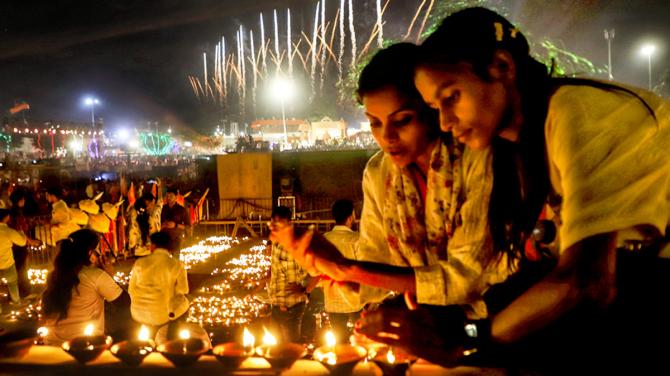
The modern chapter of Dev Deepawali began in 1984, when five teenagers, led by Vagish Dutt Mishra, revived the festival at Panchganga Ghat with two cans of donated oil.
Over the years, their effort spread from one ghat to another until the entire crescent of Kashi's riverfront glowed with lamps.
By the late 1990s, it had turned into a citywide movement. The scale changed when the government stepped in.
In 2024, the Yogi Adityanath administration declared it a Prantiya Mela (a provincial fair) formally recognising it as a state-backed cultural event.
Mishra, now head of the Dev Deepawali organising committee, continues to guide the festival he helped revive four decades ago.
That brought structure and spectacle. On November 5, over 1 million diyas lit up 108 ghats, including 100,000 made from cow dung by women's self-help groups (SHGs) in Chiraigaon and Rameshwar.
From Odissi and Kathak performances to drone and laser shows, the tourism department now curates the programming, while the district development office manages the logistics.
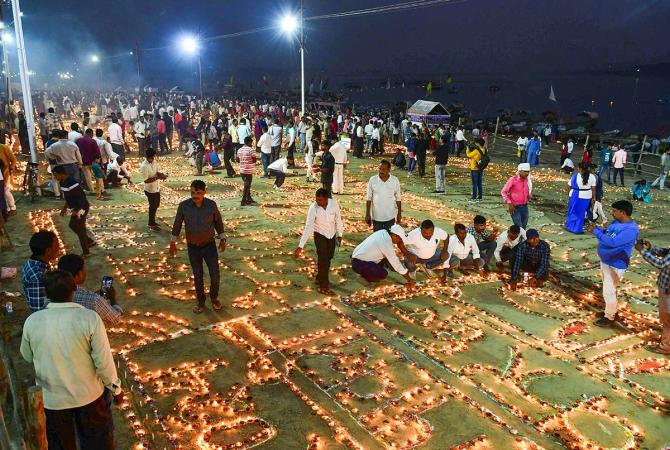
For the state, it's more than a celebration.
According to the district administration, the festival shows how tradition can be institutionalised to create livelihoods and project the state's cultural strength. Each diya, they say, represents a link in the chain of potters, boatmen, florists, and volunteers.
According to official estimates, Dev Deepawali generates nearly ₹2,000 crore (₹20 million) in local economic activity each year.
Hotels, boats, guest houses, and vendors operate at full capacity, while artisans and micro-industries plan their year around it.
In the pottery clusters of Chunar, Bhadohi and Ramnagar, families begin work weeks in advance.
Each diya sells for ₹2 to ₹3, and the festival alone brings them ₹5 crore to ₹7 crore (Rs 50 million to Rs 70 million) in direct sales.
Under the Khadi and Village Industries Commission's Kumhar Sashaktikaran Yojana, 4,753 potters in the region have received electric pottery wheels, raising output six-seven times and income fourfold.
The cow-dung diyas, made by SHGs, have turned waste into work. Brass lamp makers from Moradabad, flower growers from Azamgarh, and cotton-wick producers from Mirzapur also depend on the season.
"Every diya on the ghats represents someone’s earnings in Purvanchal," says a district official.
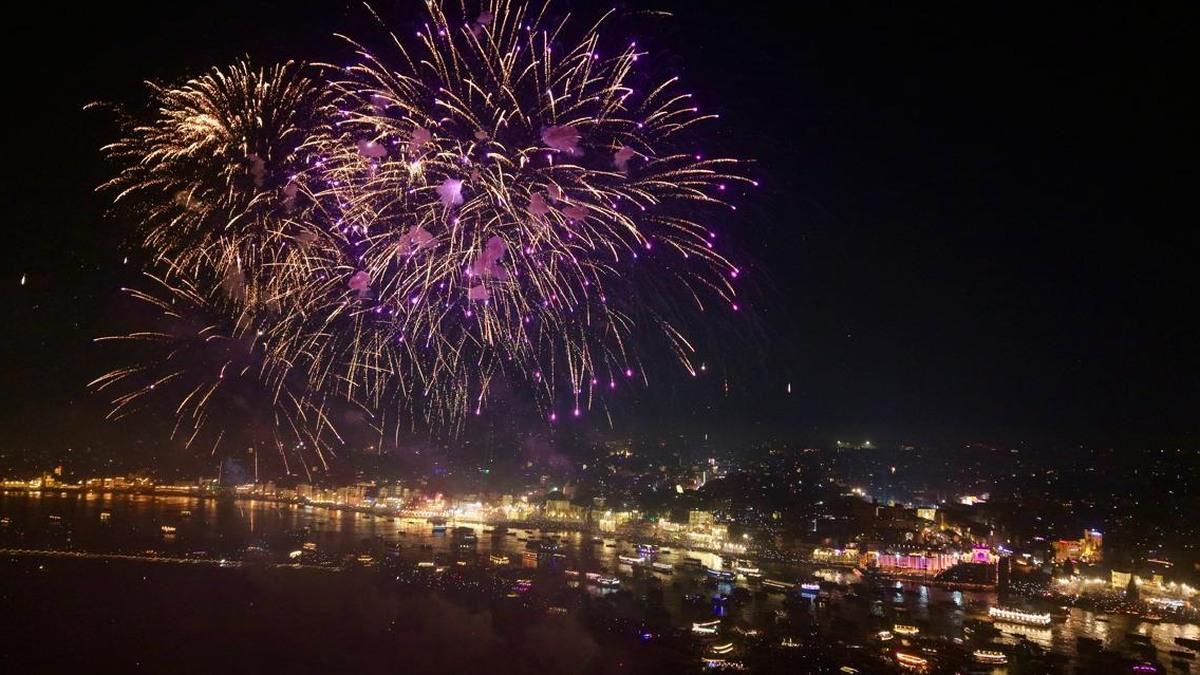
The four-day Kashi Ganga Mahotsav, held ahead of Dev Deepawali, has become its cultural prelude.
Uttar Pradesh handled 14.2 million air passengers in FY25, more than double the figure in 2016-2017.
Varanasi airport alone saw over 4 million flyers, up 34 per cent year-on-year. With Ayodhya, Prayagraj and Kushinagar linked by new airports and expressways, officials describe a growing 'spiritual corridor' across eastern UP.
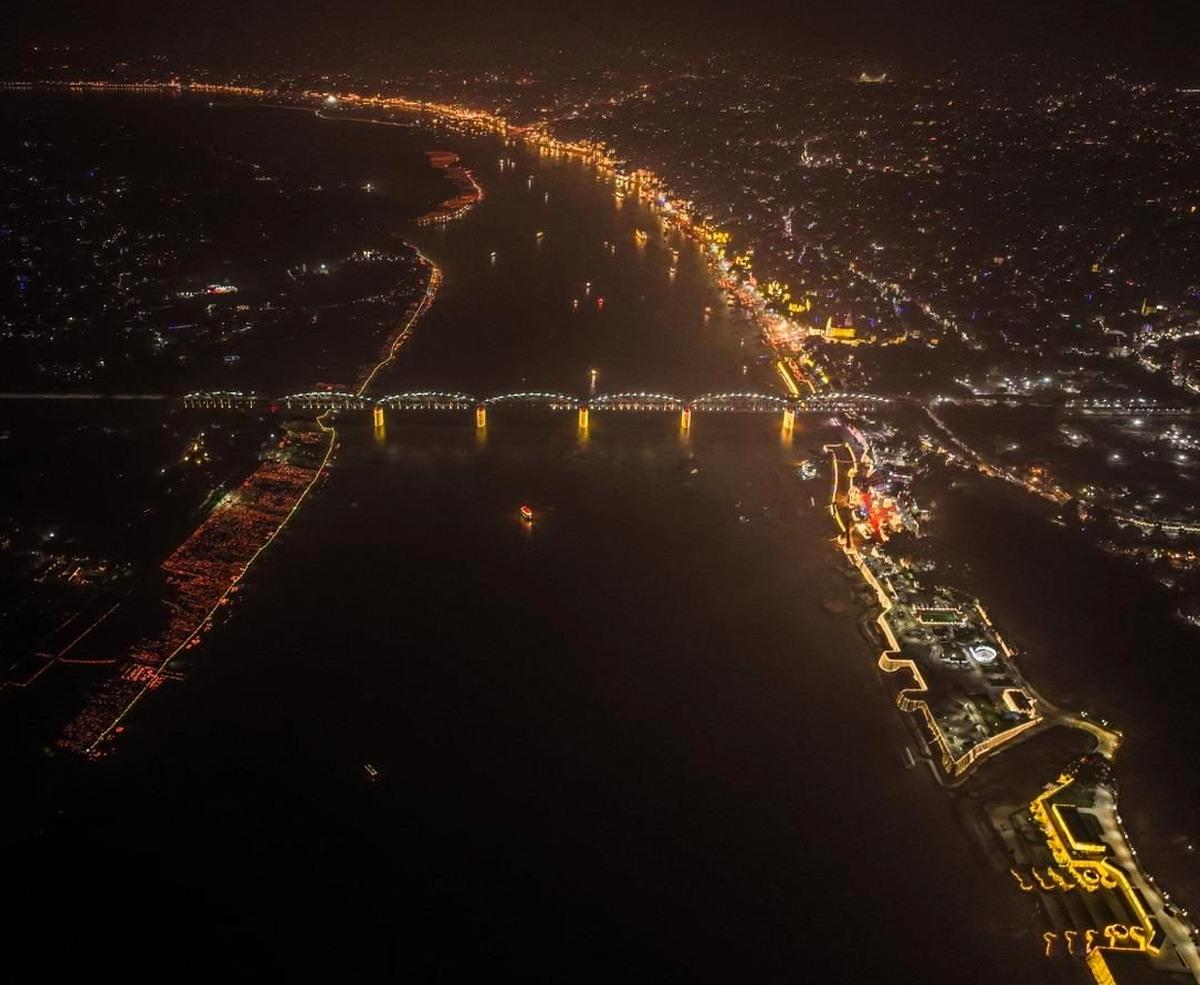
Global recognition has followed. In 2023, over 1.2 million visitors attended Dev Deepawali week, including delegations from Japan, France, and the UAE.
Drone footage of the glowing ghats, viewed over 50 million times online, was shared by the ministry of tourism and international influencers.
The visuals of synchronised lamps and green fireworks have become Uttar Pradesh's postcard to the world -- a place once seen as chaotic now choreographing harmony through devotion.
Behind the spectacle lies careful management. More than 10,000 volunteers, mostly college students and women, handle diya placement and crowd control.
The Varanasi Municipal Corporation clears 25 tonnes of floral and wax waste with nearly 400 sanitation workers and about 35 boats.
Biodegradable lamps and green fireworks are now part of a sustainability push to keep the Ganga clean long after the lights fade.
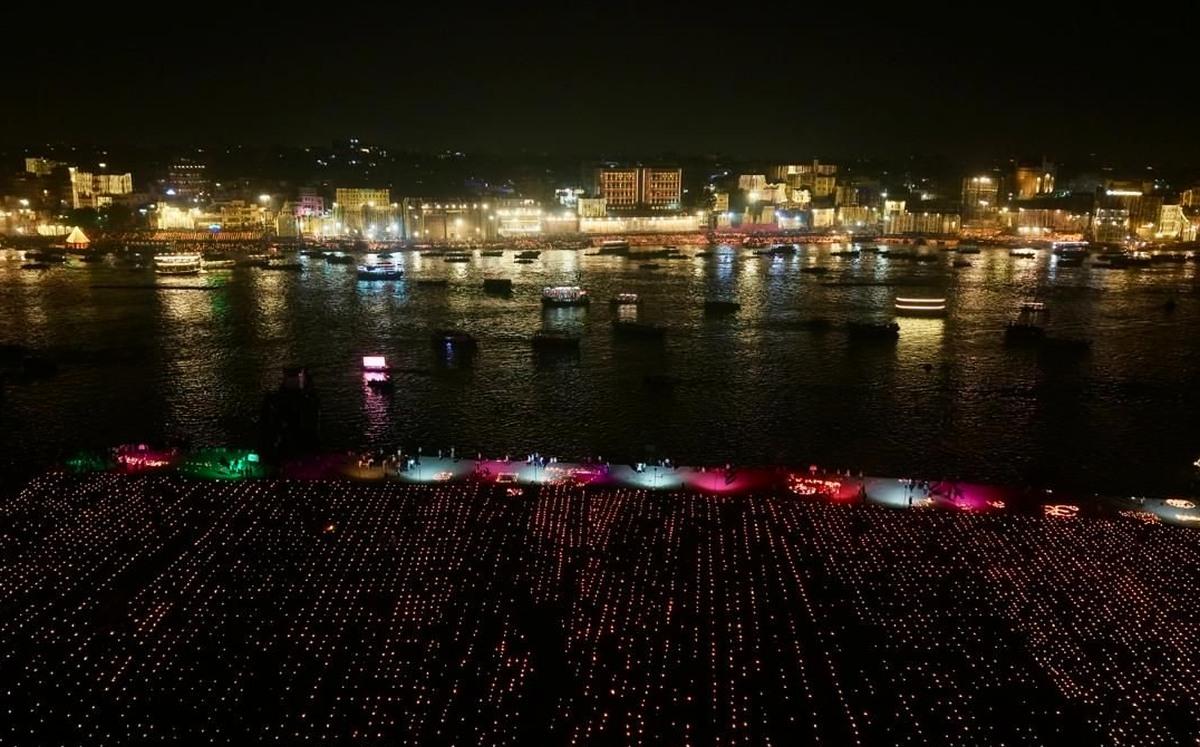
Yet amid the grandeur, Kashi's intimacy remains. At Panchganga Ghat, where it all began, priests still chant the Ganga aarti as their ancestors did.
Families crouch at the water's edge, lighting a single leaf lamp for the departed. When the crowds leave and the music fades, the diyas drift downstream, carrying the stories of those who built this glow, one flame at a time.
From two cans of oil in 1984 to a million lamps today, Dev Deepawali's journey mirrors Uttar Pradesh's own -- from ritual to enterprise, and from devotion to soft power.
In Kashi, even the gods come down to see the light; now, and the world follows.
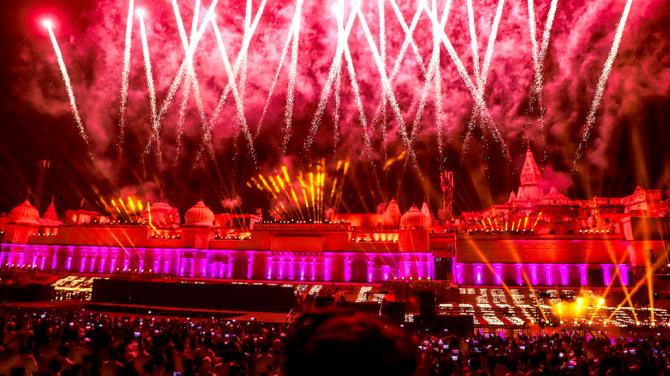
Photographs curated by Manisha Kotian/Rediff
Feature Presentation: Rajesh Alva/Rediff





 © 2026