
The growth, below the long-term trend of about 3-3.3 per cent, prompted many experts to question the policy of over-emphasis on cereals.

Attributing the decline to various global and domestic factors, especially poor performance of the manufacturing sector, the chamber called for 'immediate policy intervention' to deal with the situation.

Banks are gaining market share at the expense of non-bank lenders such as housing finance companies, retail lenders, and those giving gold loans. There has been a steady decline in the market share of non-banking financial companies (NBFCs) in the credit market as banks have stepped up lending. NBFCs' share declined to a five-year low of 19.8 per cent in the first half of FY23, down from 20.3 per cent in H1FY22, and an all-time high of 23.1 per cent in H1FY19.

The job market has emerged unscathed from a slowdown in the economic growth rate and the country has maintained an upward trend in hiring activities continuously for about three years, the Economic Survey 2011-12 said on Thursday.
The country's textiles and clothing exports are expected to touch $32.35 billion in the 2011-12 fiscal, Parliament was informed on Monday.
The multilateral lending agency said India's growth would ease to 8.2 per cent this financial year (2011-12) against 8.5 per cent a year ago, as high inflation had cut into disposable income and hence demand.
The government's fiscal deficit during 2011-12 worked out to be 5.7 per cent of the GDP, lower than 5.9 per cent projected in the revised estimates in the Budget.

Irda to raise provisioning norms to 163-213 per cent.

'Companies are being forced to pay higher salaries to retain and hire employees due to a big rise in attrition in the industry.'
Personal Computer (PC) shipments in Asia Pacific region declined by 2.6 per cent to 30.3 million units in the second quarter of 2012 compared to the same period in the previous calendar year, Gartner said on Friday.

In terms of the number of rights issues, the fiscal saw only 16 companies adopt the route to raise funds, 33 per cent lower than the previous fiscal, which saw 24 issues.
The Indian economy will grow by 6.9 per cent in 2011-12 against 8.4 per cent in the last financial year according to government estimates.

Jet Airways, the nation's largest private airline, saw its unpaid jet fuel bills rise by over 65 per cent to Rs 849 crore (Rs 8.49 billion) in the first six months of the 2011-12 financial year, while the dues of Kingfisher Airlines grew by less than 4 per cent during the same period.

Buying a car, particularly a diesel-powered one, is set to pinch the customers' pockets even more from the next financial year, as the second phase of Bharat Stage VI (BSVI) emission norms kicks in. The rules require cars to be compliant with real driving emission (RDE) norms, which measure pollutants emitted by cars while they are being driven on the road, unlike in a laboratory test. The norms may increase the cost of producing diesel vehicles by nearly Rs 75,000 to Rs 80,000, and petrol-powered ones by Rs 25,000 to Rs 30,000, analysts said.
In line with the overall downtrend in the markets, a majority of large business conglomerates saw their valuations taking a dip.

Will 2022 be a year of contrasting narratives -- one filled with caution and the other with continued optimism?

Both are finding it difficult to sell one each of their plants -- Chennai Maraimalai Nagar (Ford) and Talegaon near Pune (GM) -- and are finding the road blocked by employee severance snarl-ups, report Sohini Das and Shine Jacob.

While commercial vehicles are expected to benefit from strong replacement demand, the two-wheeler and tractor segments are expected to gain from a recovery in the rural economy.

Earlier this year, the Union Cabinet gave the management of state-run companies the freedom to decide on divesting their subsidiaries. However, the very next day a meeting was held at the top level of the Government of India, for the presentation of proposals for more autonomy for state-run companies. Interestingly, no chiefs of any of these companies were invited. It is a problem that will stare the government in the face with the state-owned banks too, as talks have again begun for inviting strategic investments in these companies.

Listed companies' net profit as a percentage of gross domestic product (GDP) has hit a decadal high and is expected to edge even higher over the next two financial years. According to an analysis by ICICI Securities, India's Inc net profit stood at Rs 8.4 trillion, or 4 per cent of GDP of Rs 210 trillion for the trailing 12-month period ending September. This is the highest since financial year 2011-12 (FY12), when it was at 4.6 per cent.

Savings in deposits by the households rose, however, to Rs 1 trillion (17 per cent) in the year to Rs 6.91 trillion in FY14 as against Rs 5.91 trillion in 2012-13.
Analysts expect Wipro's revenue to grow 17 per cent this financial year, largely in line with its FY12 performance. Profits are expected to grow 14 per cent, compared to FY12.

People from different sectors react to Budget 2013
The FM puts a positive spin on the Budget but the math looks dodgy.

I guess there is this nagging suspicion that the arithmetic adds up just too nicely. To begin with, tax revenue is expected to grow by 18 per cent on the back of a 14 per cent rise in nominal GDP.
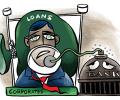
Public sector banks (PSBs) have written off a massive Rs 8 trillion of loans in the seven years of the Narendra Modi government in office. This is more than twice the capital infused by the Bharatiya Janata Party-led government during the period. Between 2014-15 and 2020-21 (FY21), the Centre had infused Rs 3.37 trillion into PSBs. At Rs 1.06 trillion, FY19 saw the highest capital infusion.

Its production declined for the third consecutive year in financial year 2020-21 (FY21) to an 11-year low, while sales volume contracted for the second year to the lowest since FY15. The company manufactured around 1.08 million vehicles last fiscal, a decline from 1.17 million the previous year, and a steeper fall from its all-time high tally of 1.62 million reported in FY18.

It is nearly after 13 years that a foreign brokerage has resumed holistic coverage on stocks of public sector banks (PSBs). To that extent, Morgan Stanley's report dated March 3, where the analysts have listed their order of preference for PSB stocks, is an indication that the state-owned banks may once again be attracting some interest, thanks to three back-to-back quarters of good results in FY21 so far. "State-owned banks' balance sheets have improved, and bad loans formation should moderate going forward," the analysts note and this is the key reason for them to relook at their stance on PSBs. While State Bank of India (SBI) remains their preferred pick, stocks of Bank of Baroda (BOB) and Punjab National Bank (PNB) have been upgraded from 'underweight' to 'equal-weight'. The brokerage maintains its underweight recommendation on Bank of India and Canara Bank.

There has been, a nominal increase in the aircraft maintenance cost.

Brokerage house Nomura today said the downward revision of FY'13 growth figure by the Central Statistics Office will have a positive base effect for GDP expansion in the current fiscal.
If belated returns are not filed till March 2014 and there is no outstanding tax, you can be charged a penalty of Rs 5,000.
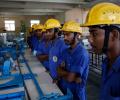
'From the time India liberalised in the 1990s, the government has policies are for facilitating the growth of the manufacturing sector.' 'The policies were put in the hope that growth of the manufacturing sector will lead to increased employment,' points out Chidambaran G Iyer, Senior Fellow, Pahle India Foundation.
As consumers around the world create more data, innovative techies must find ways to secure it. And if you have the passion for innovation, Symantec could be a great place for you to start.

The revision in base year of India's national accounts will increase the size of the economy to Rs 111.7 trillion in FY14, India Ratings (Ind-Ra) said on Wednesday.
Total network minutes rise 5% q-o-q but revenue per minute down 1.9%
The Indian mobile handset market has grown by 14.17 per cent year-on-year to Rs 35,946 crore in 2012-2013.
In the Fortune 500 list of Indian companies, 83 are owned by the government, 370 are private sector firms and 47 are foreign owned.
The government's indication of a $1-trilion Twelfth Plan signifies a potential $455 million construction and infrastructure opportunity over FY12-17.

Company refuses to comment, says 'matters internal to organisation'
This lesser known Bajaj is quietly transforming his family business by focusing less on sugar, where he is the country's largest producer, and getting into power.
