India will unveil its much-awaited new Foreign Trade Policy 2023-28 on Friday, with a view to boost exports amid slowing global trade. Commerce and Industry Minister Piyush Goyal will announce the foreign trade policy, according to the ministry. The current foreign trade policy (2015-20) is in force till March 31, 2022.

The government has decided to postpone the release of the new Foreign Trade Policy (FTP) and extend the existing one by six months on account of global uncertainties and currency fluctuations. The government was scheduled to announce the new FTP by the end of September. The current policy was to end on September 30.

The government on Wednesday extended the existing foreign trade policy (FTP) for six more months up to September 30 this year due to the Covid-19 pandemic, according to a notification. FTP provides guidelines for enhancing exports to push economic growth and create jobs. On March 31, 2020, the government had extended the Foreign Trade Policy 2015-20 for one year till March 31, 2021, amid the coronavirus outbreak and the lockdown.

The government on Friday came out with Foreign Trade Policy (FTP) 2023 which seeks to boost the country's exports to $2 trillion by 2030 by shifting from incentives to remission and entitlement based regime. Unlike the practice of announcing 5-year FTP, the latest policy has no end date and will be updated as and when needed, said Director General of Foreign Trade (DGFT) Santosh Sarangi while briefing media about FTP 2023. Earlier, Commerce and Industry Minister Piyush Goyal unveiled FTP 2023 which will come into effect from April 1, 2023.

The government in December had announced incentives for exporters that include extension of two per cent interest subsidy for an additional one year ending March, 2014.
The government may roll out a new foreign trade policy (FTP) of a shorter term of two-three years in a bid to keep pace with the fast-evolving scenarios in international trade which have been triggered by recent disruptions, such as the pandemic and the Russia-Ukraine war. An FTP is an elaborate policy guideline and strategy to promote the export of goods and services, with a duration of five years usually. The existing policy came into force on April 1, 2015, and was valid for five years, before multiple extensions.

Amid rupee's free fall and slowdown in western markets, the government is likely to announce incentives in the foreign trade policy (FTP), scheduled for June 5, to boost exports.

The supplement is scheduled to be released in the first half of April this year. Exporters were disappointed with Budget 2008-09 as it does not propose any specific measures to help them tide over the situation. In the April-January period of 2007-08, exports stood at $124.19 billion, an increase of 21.62 per cent from $102.12 billion during the year-ago period.
Commerce and Industry Minister Piyush Goyal on Monday said the existing foreign trade policy (FTP) will be extended for six months till March 31 next year. The government had earlier extended the FTP 2015-20 until September 30 this year due to the Covid-19 crisis. The FTP provides guidelines for enhancing exports to push economic growth and create jobs.
Following are the highlights of the Annual Supplement 2006 to the Foreign Trade Policy unveiled by Commerce and Industry Minister Kamal Nath on Friday
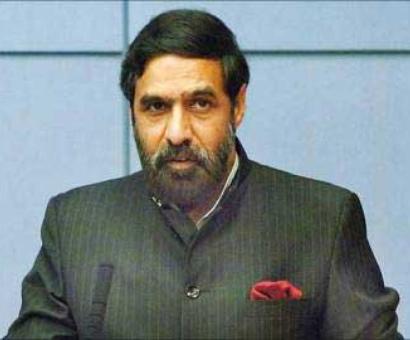
India's trade minister Anand Sharma said on Sunday that the government would come up with a comprehensive foreign trade policy in August.
The government will announce the annual Foreign Trade Policy on April 8, which will aim at giving a boost to exports of pharmaceutical, auto components and services.
The new Foreign Trade Policy, to be unveiled on April 7, would focus mainly on attracting foreign direct investment and generating employment for the youth.
With India's exports touching $80 billion in 2004-05, government on Friday announced a slew of measures in the new Foreign Trade Policy, aimed at taking the exports to $92 billion in the current fiscal.
Commerce Minister Kamal Nath on Monday ruled out any differences with the finance ministry on certain provisions of the Foreign Trade Policy and said the Policy will be announced before April 10.
The government will announce a new foreign trade policy next month aimed at boosting exports especially from agriculture sector.
): Tea exporters in Siliguri in West Bengal are upbeat thanks to the new provision bringing the tea industry under the Vishesh Krishi Upaj Yojana in the new foreign trade policy.
The policy aims at developing export potential, improving export performance, boosting foreign trade and earning valuable foreign exchange.

Main imports from the neighbouring country during April-January 2024-25 included fruits and nuts (USD 0.08 million), certain oil seeds and medicinal plants (USD 0.26 million), and organic chemicals.

March 31 marked 10 years since the Modi government introduced its first Foreign Trade Policy (FTP 2015-20) that lasted for 8 years before the current FTP 2023 came in. Here is a brief assessment. In 2015, the government said that it aims to increase India's exports of merchandise and services from $465.9 billion in 2013-14 to approximately $900 billion by 2019-20 and to raise India's share in world exports from 2 per cent to 3.5 per cent.
India will on Friday unveil its Foreign Trade Policy, which is likely to give a new thrust to toys, leather, textiles, stationery, sports goods and processed food exports.
With India's exports all set to touch $80 billion in 2004-05, the new Foreign Trade Policy to be unveiled on Friday will have a slew of measures to boost farm exports apart from traditional sectors like textiles, gems and jewellery.

New foreign trade policy to stress manufacturing exports.
The much-delayed Foreign Trade Policy (FTP), which will roll out steps to boost exports, is expected to be unveiled soon.

The five-year Foreign Trade Policy, to be unveiled on August 27, is expected to give incentives to Indian exporters to widen their global markets beyond the United States, the European Union and Japan in the face of the economic crisis in these key destinations.

The government on Friday scrapped a minimum price threshold that it had set previously for exports of onion as it looked to pass on the benefit of international glut to Indian farmers. The government had previously fixed a $550 per tonne as the minimum export price (MEP), which essentially meant farmers could not sell their produce overseas at lower than this rate.

The Union government will soon make amendments to the foreign trade policy (FTP) to enable exporters to claim export benefits for settling trade in rupees. These benefits are, so far, available for export payments received in foreign currencies. After the Reserve Bank of India (RBI) unveiled a mechanism to settle international trade transactions in the local currency on Monday, exporters have been demanding that the Ministry of Commerce and Industry come up with a clarification on the matter.

The central government is devising a mechanism to step up screening imports to protect domestic manufacturers. The details of the online monitoring system may find mention in the foreign trade policy 2021-26, which will kick in next month. The online system will make the data available to the government as well as industry about the countries from where the goods are being imported, and their quantity and quality. The data can help domestic producers analyse the market potential for such goods, said a senior government official. In the past 16 months, the government had implemented a steel- and coal-import monitoring system.

The government is targeting export of goods and services worth $2 trillion by 2030.

After imposing 20 per cent export duty on non-basmati rice, the government has banned the export of broken rice with an aim to increase domestic availability, according to a government notification.

India's exports may have touched an all-time high of $422 billion in 2021-22 but recession in key western markets and geo-political crisis due to the Russia-Ukraine war are expected to impact the growth of the country's outbound shipments in 2023. All the global trade promoting factors like political stability, movement of goods, adequate availability of containers and shipping lines, demand, stable currency and smooth banking systems are in disarray. Adding to the woes, COVID cases have again started rising in countries like China, Japan, South Korea and the US.
Introduced in 2015 under the Foreign Trade Policy, the mega MEIS was created out of a merger of five existing reward schemes.

Out of 30 key export sectors, as many as 22 showed negative growth in September.
Growing for the third consecutive month, the country's exports rose marginally by 0.67 per cent year-on-year to $27.93 billion in February even as trade deficit widened to $12.62 billion, according to official data released on Monday.

The new Foreign Trade Policy announced a slew of tax concessions to boost exports, which have been on the downslide since October 2008.
India Inc said the Foreign Trade Policy would give a significant push to manufactured goods and agriculture- and labour-intensive exports.
The annual supplement to the Foreign Trade Policy, which will be released on Friday by Commerce Minister Kamal Nath, is likely to announce a host of measures for exporters to help them tackle the appreciation in rupee against the dollar as well as to achieve an export target of $200 billion for 2008-09. Significantly, this is the last year of the Foreign Trade Policy, which was introduced after the UPA government came into power in May 2004.
Relief for exporters, additional incentives for export of farm products other than those in short supply and more steps to check inflation through hassle-free and cheap imports are likely to be announced on Friday in the last review of Foreign Trade Policy by the UPA government.
Imports too declined by 16.31 per cent to $37.39 billion.
 © 2026 Rediff.com - Investor Information - Advertise with us - Disclaimer - Privacy Policy - Sitemap - Feedback - About us - Terms of use - Grievances