
India's foreign exchange reserves saw a significant increase of $10.512 billion, reaching $692.866 billion for the week ending July 31, driven by a rise in foreign currency assets and gold reserves.

Analysts predict that crude oil prices, geopolitical tensions in West Asia, and upcoming inflation data will be the primary drivers of the Indian stock market this week, alongside foreign investor activity and domestic quarterly earnings.

India's foreign exchange reserves increased by USD 6.118 billion, reaching USD 682.354 billion for the week ending July 24, according to the Reserve Bank of India.

India's foreign exchange reserves increased by USD 1.08 billion to USD 676.237 billion for the week ended July 17, primarily due to a significant rise in foreign currency assets, despite a drop in gold reserves.
India's foreign exchange reserves increased by USD 964 million to USD 675.157 billion in the week ending July 10, according to the Reserve Bank of India.
India's foreign exchange reserves increased by USD 7.26 billion to USD 674.193 billion for the week ending July 3, as reported by the Reserve Bank of India. This surge follows a previous week's drop and comes after Prime Minister Narendra Modi's appeals to conserve forex.
India's foreign exchange reserves saw an increase of USD 963 million, reaching USD 672.587 billion for the week ending June 19, as reported by the RBI. This rise follows a previous week's drop. While foreign currency assets decreased, the value of gold reserves significantly increased, contributing to the overall growth.

India's foreign exchange reserves saw a significant drop of USD 5.654 billion, settling at USD 666.933 billion for the week ending June 26, following interventions by the RBI and public appeals by Prime Minister Narendra Modi to conserve forex.
India's foreign exchange reserves saw a substantial decline of USD 9.985 billion, reaching USD 671.625 billion for the week ended June 12, primarily driven by a sharp decrease in gold reserves, according to the Reserve Bank of India (RBI).

The Reserve Bank of India (RBI) has maintained its benchmark policy rate at 5.25 per cent for the fourth consecutive meeting, prioritising clarity on inflation trends, particularly concerning energy costs and geopolitical developments.

India's gold demand saw a 6 per cent year-on-year decline in the April-June quarter of 2026, reaching 131.4 tonnes, primarily due to subdued seasonal sales, increased Customs duty, and Prime Minister Narendra Modi's call to reduce gold purchases, according to a World Gold Council report.
Reserve Bank Governor Sanjay Malhotra announced that India's foreign exchange reserves stand at a healthy $682.3 billion as of May 29, 2026, providing approximately 11 months of import cover and strong protection against external shocks.
India's foreign exchange reserves decreased by $711 million to $681.61 billion for the week ending June 5, primarily driven by a significant reduction in foreign currency assets, according to the Reserve Bank of India (RBI).

Analysts predict that the US-Iran geopolitical conflict, upcoming quarterly earnings announcements, and fluctuations in crude oil prices will be the primary drivers of investor sentiment in the Indian equity markets.

The rupee has been among the The RBI uses the Iran-US peace deal to bolster its forex reserves.

That means making it easier to invest, protecting investors through predictable rules, and avoiding policy reversals after investments have been made, notes Rajeswari Sengupta.

India achieved a current account surplus of USD 7.1 billion, or 0.7 per cent of GDP, in the January-March quarter of 2025-26, primarily boosted by robust services exports and increased remittances from overseas Indians, according to recent Reserve Bank of India data.
India's foreign exchange reserves increased by USD 938 million to USD 682.321 billion during the week ended May 28, according to the Reserve Bank of India, following a previous week's drop.
India's foreign exchange reserves saw a significant drop of USD 7.511 billion, settling at USD 681.384 billion for the week ending May 22, as the Reserve Bank of India intervened in the forex market due to rupee pressure and the lingering effects of the Middle East conflict.
Analysts predict that developments in West Asia, their impact on crude oil prices, and the trading activity of foreign institutional investors (FIIs) will be crucial factors influencing the Indian stock market this week.

The Indian equity market is set for an event-heavy week, with analysts pointing to the Reserve Bank of India's (RBI) interest rate decision, developments in the US-Iran situation, and crude oil prices as the primary determinants of market trends.
India's foreign exchange reserves saw a significant drop of USD 8.094 billion, settling at USD 688.894 billion for the week ending May 15, as the Reserve Bank of India intervened in the forex market and global events like the Middle East conflict impacted the rupee.

Monthly gold imports have declined to 25-30 tonnes from 70-80 tonnes while recycling of old jewellery has increased following the recent hike in import duties.
India's foreign exchange reserves saw a significant increase of USD 6.295 billion, reaching USD 696.988 billion for the week ending May 8, as reported by the Reserve Bank of India.

Following through announcements with enforcement of measures is key, as a run through recent Indian economic history shows, points out A K Bhattacharya.

The Reserve Bank of India (RBI) has debunked reports of gold sales, stating that its physical stock of gold remains unchanged at 880.52 tonnes, countering claims of selling approximately USD 12 billion to protect foreign-currency reserves.

Indian startup funding plummeted by 43 per cent year-on-year to $7.81 billion between March 1 and June 15, 2026, largely due to the West Asia conflict, which has amplified global risk perceptions, tightened liquidity, and led to rupee depreciation, making global investors cautious.
India's foreign exchange reserves saw a significant drop of USD 7.794 billion, settling at USD 690.693 billion for the week ending May 1, as reported by the RBI, reflecting the impact of global events and central bank interventions.

Pakistan has received the second and final tranche of USD 1 billion from Saudi Arabia, completing a USD 3 billion aid package aimed at boosting its foreign reserves, the state bank said.
India's foreign exchange reserves increased by USD 2.362 billion to reach USD 703.308 billion for the week ending April 17, as reported by the Reserve Bank of India (RBI).
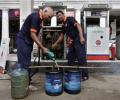
A Monaco-based fuel technology company, FOWE Eco Solutions, claims its patented Cavitech fuel emulsion technology can help industries slash fuel consumption, reduce emissions, and improve equipment performance by using water in fuel.

'If the war continue for a longer period of time, it is just a matter of time before the government will pass on some of the price increases.'
A Monaco-based fuel technology company, FOWE Eco Solutions, claims its patented Cavitech fuel emulsion technology can help industries slash fuel consumption, reduce emissions, and improve equipment performance by using water.
A Monaco-based fuel technology company, FOWE Eco Solutions, claims its patented Cavitech fuel emulsion technology can help India reduce fuel consumption, emissions, and improve equipment performance by using water in a fuel-oil-water emulsion.
India's foreign exchange reserves have surged by $3.825 billion to reach $700.946 billion as of April 10, marking a significant milestone for the country's financial stability.

Why would a country that requires close to $90 billion in net foreign capital annually to create jobs, build productive capacity, and sustain rapid growth permit $30 billion of capital to flow abroad, thereby contributing to pressure on the rupee? asks Debashis Basu.

India's foreign exchange reserves saw a substantial increase of USD 9.063 billion, reaching USD 697.121 billion for the week ended April 3, 2026, according to the Reserve Bank of India (RBI). This surge follows a previous week's decline and brings the reserves closer to their all-time high.


'The situation globally is quite challenging, but we have the confidence and courage of conviction that we will come out winners even in this challenging time.'

'What exactly is on the prime minister's mind, we do not know. But it feels like the government wants the country to be prepared for unseen challenges ahead.'
