
The Reserve Bank of India (RBI) cut its key repo rate by a bigger-than-expected 50 basis points.

NITI Aayog vice chairperson Rajiv Kumar tells Indivjal Dhasmana that additional funds could be generated through divestment, and that the fiscal deficit should be widened while focusing on the revenue deficit.

In February last year, it was (-)2.17 per cent.

With Deputy Governor Viral Acharya and another member Chetan Ghate voting for a status quo, RBI governor Shaktikanta Das and three others outvoted them for reduction in repo rate to 6.25 per cent from the existing 6.50 per cent.

Growth, said HSBC, would be helped by higher public investment, bankruptcy code and direct transfer of subsidies

'If the Singh government was characterised by policy paralysis, this one is afflicted by hyperactivism, sans a roadmap,' says Yogendra Yadav.

Rediff.com takes its readers through the various moods of Raghuram Rajan.

The provision of consultation with the states has further created confusion on MSP

The association demanded that the interest rates for developers as well as home buyers should be brought down to boost realty sector, which is facing a slowdown in demand.

CPI inflation is on the decline since July.

The central bank tweaked the retail inflation range to 4.8-4.9 per cent in the first half of 2018-19, and 4.7 per cent in the second half.
A rate cut will bring positive sentiment around the Budget.

The rate of price rise in vegetables stood at 15.15 per cent in August as against 16.88 per cent in the previous month.

The central bank is widely expected to increase the repo rate by 25 basis points on Tuesday to 7.75 per cent to fight inflation even as it continues to unwind its rupee defense steps, a Reuters poll showed.

Inflation in rural and urban areas in July was 8.45 per cent and 7.42 per cent, respectively.

Unseasonal rains and hailstorm are likely to disrupt supplies.

With the industrial production dragging the overall growth down, it said the government must also focus on the manufacturing sector by reducing the "infrastructure deficit".

India's economic confidence improved last month in view of falling food prices and growth in exports.

Most economists feel the RBI has room for a 25-basis point cut, having met inflation targets comfortably

In the mid-quarter monetary policy review last month, RBI Governor Raghuram Rajan had left the key policy rate unchanged, after raising it 50 bps in two instalments since he took over on September 4, saying he was waiting for more data clarity.

All the Gujarat cadre officers have one thing in common. They do not need Modi's 'informal interactions' and advice because they are from the so-called 'Modi school of governance.' They know Modi well enough to perform their assigned roles.
The RBI's bi-monthly policy review on June 3 will be the first after Prime Minister Narendra Modi assumed office on May 26.

To meet the target, agriculture must grow at 15% compared to average of below 2% over the past four years
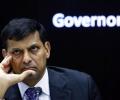
With the 'busy credit season' which witnesses a spurt in loan demand going up, it would be good to lower the rates ahead of it

India's gross domestic product growth, which had fallen under 5 per cent, is expected to be between 5.4 per cent and 5.9 per cent this fiscal.
.jpg)
Candidates in the current state elections must be made to offer specific promises against which their performance can be measured, says Indira Rajaraman

Only one 25 basis points rate cut is likely this calendar year, between April and June, the poll says

India's economy is likely to grow in the range of 4.5 to 5 per cent during the second half of the current fiscal, a CII survey said.

India's economic growth rate is expected to be at least 6 per cent in the 2013-14 fiscal, Prime Minister's Economic Advisory Council (PMEAC) Chairman C Rangarajan said.

'Both IIP and CPI inflation numbers are showing a huge disconnect from the leading indicators.'

What stocks will gain from a normal monsoon?

The RBI expects non-food credit growth to pick up marginally to 15 per cent in 2013-14 from 14 per cent achieved in the previous fiscal and deposit mobilisation to be flat at 14 per cent.

A rate cut could stimulate demand and help revive industrial activity, without much risk of sparking off inflation again.

Food articles inflation at 8.43% compared to 8.14% m-o-m.
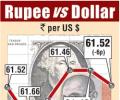
The RBI's macroeconomic report released after the close of markets said upside risks to food inflation remain and that it expects the retail and wholesale price inflation to remain above comfort levels.

Weather forecasts have notoriously large error margins.

According to Japanese financial services major Nomura, despite slowing external demand, the domestic growth cycle is improving.
According to the global financial services major, since the last RBI policy meet, data suggest accelerating growth and surprisingly mild inflation, both at the core and headline level.

Economy to grow 6.5% in 2016 on better macro conditions, says Mckinsey.

Moody's on Thursday said the new 'inflation targeting' mechanism is a "credit positive" move.
 © 2026 Rediff.com - Investor Information - Advertise with us - Disclaimer - Privacy Policy - Sitemap - Feedback - About us - Terms of use - Grievances