
Onion prices have gone up 43 per cent in a year and potato is costing over 20 per cent more, but the government has said it will take "some time" before prices of the kitchen staples decline.

To curb soaring inflation, the People's Bank of China, the country's central bank, has raised the benchmark interest rate three times this year.

Food inflation for the week ending January 1 slipped to 16.91 per cent from the year's high of 18.32 per cent a year ago during the previous week.
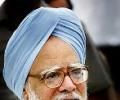
Prime Minister Manmohan Singh on Tuesday asked his economy A-team to make a concerted effort to tackle rising food prices.
.jpg)
The government on Tuesday announced a host of measures to tame inflation, which had soared to a five-month high of 6.01 per cent in May.

The central bank is slated to review its credit policy on January 25.
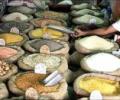
Reforms in the supply-chain system can help India tackle the demand-supply mismatch in essential food items.

Industry chamber Assocham on Monday said that 2011 may witness continuation of high inflationary pressures, a view contrary to the government that expects inflation to slow down to around 6 per cent by March next year.
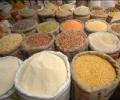
The industry also emphasised on supply-side interventions by the government to tackle persistently high food inflation.

Slight recovery in growth is expected only in July-September.

Inflation stood at at a high of 8.23 per cent in January. After touching a high of 18.23 per cent in December, food inflation came down to 11.49 per cent in mid-February.
Endorsing the Economic Survey's emphasis on the farm and the infrastructure sectors for achieving higher economic growth, Finance Minister Pranab Mukherjee said inflation and widening current account deficit remain major areas of concern.

'Stick to the known quality names, avoid short term thinking and don't be in a hurry to book profits on your winners.'

The Prime Minister's economic panel said high food inflation reflects lacklustre performance of the farm sector, which together with infrastructure, remains the main bottlenecks to higher growth.

Indicating another hike in key policy rates in its quarterly review on Tuesday, the Reserve Bank of India on Monday said that containing inflation would be the top priority as high rate of price rise could hurt the economic growth.


Headline inflation for November shot up to 4.8 per cent, mainly driven by food prices, as compared to 1.3 per cent in the previous month. Food inflation was 19.8 per cent in November.
As food inflation surged to 18.32 per cent, a top adviser in the finance ministry on Thursday agreed with Home Minister P Chidambaram that the government does not have all the tools to control food prices since it is an enabling body.

The hike in prices of these items has come about over and above milk, onion, garlic, and other vegetables which have become expensive in the past few weeks.
Titled as 'Global Food Price Inflation and Developing Asia', the report claimed that a 10 per cent rise in domestic food prices could push 64 million Asians to subsist below the poverty line level of $1.25 a day.


The finance minister said after quite some time food inflation has become 'very moderate'.

The Reserve Bank of India has already raised its key short-term rates by 25 basis points to cool inflation and many experts believe that it will make money dearer to tame inflation in its April 20 annual monetary policy announcement.

Will the government now push to move away from what Mr Rajan has been doing in the last few years?

Replying to a debate on inflation in the Rajya Sabha, Pranab Mukherjee said he is not passing the buck to the states for controlling surging prices, but most areas like PDS and enforcing the Essential Commodities Act lay with them.

Overall inflation rose marginally to 8.31 per cent in February, 2011, from 8.23 per cent in the previous month.

Finance Minister Pranab Mukherjee on Saturday exuded confidence the economy would soon break the double-digit growth barrier and said the stimulus measures will not be fully withdrawn until a robust recovery is achieved.
Claiming that the opposition- sponsored Bharat Bandh against price rise had been an "unprecedented" success, Bharatiya Janata Party leader Arun Jaitley on Monday asked the government to bring down the "level of arrogance" and realise the "misery of the common man".

On a year-on-year basis, Wholesale Prices-based inflation in December 2009 was 7.3 per cent, while food inflation was 19.77 per cent
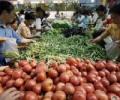
The Economic Survey tabled today in the Lok Sabha by the Finance Minister Shri Pranab Mukherjee, says that the whole sale price index (WPI) of food inflation rose to 13.6 per cent in December 2010 on account of unfavourable agricultural supply conditions coupled with the waning of base effects.
The robust performance of the Indian economy during the ongoing fiscal is likely to prompt the government to peg GDP growth in the 2011-12 fiscal at 9 per cent, as well as withdraw stimulus measures in the forthcoming Budget.

Finance Minister Pranab Mukherjee has said food inflation, which stands at over 16 per cent, will begin to come down after the middle of next month on the back of good monsoon.

The food ministry is likely to fix the selling price of wheat and rice lower than the current market price.

The March Wholesale Price Index-based inflation was at (-) 0.85 per cent.
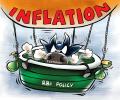
RBI Governor Shaktikanta Das on Friday said that inflation is on a declining trajectory, as it has fallen by 170 basis points from its January 2020 peak. Retail inflation fell to four-month low of 5.91 per cent in March over the previous month, mainly due to easing food prices.
With food inflation ruling at uncomfortable level, Petroleum Minister S Jaipal Reddy on Thursday ruled out freeing of diesel prices from government control, saying the move was not politically and practically feasible.

The central government on Wednesday expressed concern over high food inflation, which is nearing 20 per cent, and asked states to lift more wheat and rice stocks from its pool -- a move that will help increase foodgrain availability and eventually ease prices.

Food inflation has touched a 10-year-high of 19.95 per cent and the inflation rate based on the Wholesale Price Index, which was estimated at 4.78 per cent, is expected to cross 6 per cent by the end of the month.
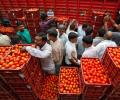
CPI inflation has declined by almost a percentage point from July, from close to eight per cent to just above seven per cent.

However, the economy expanded by 7.9 per cent in the second quarter from 6.1 per cent in the previous quarter, giving hopes of durable economic rebound.
 © 2026 Rediff.com - Investor Information - Advertise with us - Disclaimer - Privacy Policy - Sitemap - Feedback - About us - Terms of use - Grievances