
Soft crude prices will cut fuel subsidy bill and help contain fiscal slippage this year.
This is the lowest since 2012

Build up inflation rate in the financial year so far was 2 per cent compared to a build up rate of 4.56 per cent in the corresponding period of the previous year. Inflation in food articles as a group rose to 11.08 per cent during the month as against 9.80 per cent in the previous month, mainly driven by exorbitantly high onion prices, the rates of which spiked by over 172 per cent from a year-ago. The annual rate of inflation, based on monthly wholesale price index was at 0.16 per cent in October.
Retail inflation remained above the RBI's comfort level for the second consecutive month despite slipping slightly to 6.26 per cent in June while the factory output recorded a growth of 29.3 per cent in May, mainly on account of the base effect, the government data showed. The marginal slippage in the Consumer Price Index (CPI)-based inflation was noticed despite little firmness witnessed in the food inflation which inched up to 5.15 per cent in June from 5.01 per cent a month ago. Retail inflation based on Consumer Price Index (CPI) was 6.3 per cent in May 2021 and 6.23 per cent in June 2020.

Monetary Policy- Easing expected to happen later this financial year.
While a pick-up in summer monsoon rains in recent weeks is expected to cool food inflation, most analysts don't anticipate another rate cut before a new governor is on the job
The Reserve Bank on Friday projected retail inflation to be in 5-5.2 per cent range during the first half of the next fiscal year, expecting further softening of vegetables prices in near term. Also, it has lowered the retail inflation forecast for the current January-March quarter of 2020-21 fiscal at 5.2 per cent. The Reserve Bank (RBI) has kept the key policy rate unchanged at 4 per cent, with an accommodative stance, so as to ensure that inflation remains well within the target, Governor Shaktikanta Das said while announcing the last monetary policy of 2020-21.

The repo rate, at which RBI lends to the banking system, will be at 7.5%

The President in his address to the joint sitting of Parliament unveiled the policies and priorities of the Bharatiya Janata Party-led National Democratic Alliance government which assumed power last month after elections to the 16th Lok Sabha.

Food inflation was 7.79 per cent last month, higher than a revised 7.47 per cent in May

Central Statistics Office has come out with GVA to measure growth.

Congress vice-president Rahul Gandhi has called a meeting of chief ministers of party-ruled states to chalk out the party's strategy in the run-up to the general election. The leaders would focus on setting up of Lokayuktas in a time-bound manner in states and curbing food inflation.

Retail inflation in April softened further and fell to a four-month low of 4.87 per cent.
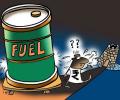
The wholesale price-based inflation accelerated to a record high of 12.94 per cent in May, on rising prices of crude oil and manufactured goods. Low base effect also contributed to the spike in WPI inflation in May 2021. In May 2020, WPI inflation was at (-) 3.37 per cent. This is the fifth straight month of uptick seen in the wholesale price index (WPI)-based inflation. In April, 2021, WPI inflation hit double digit at 10.49 per cent. "The annual rate of inflation, based on monthly WPI, was 12.94 per cent for the month of May, 2021 (over May, 2020) as compared to (-) 3.37 per cent in May 2020.

The government on Monday ruled out the possibility of free food-grains distribution to migrants saying there is no panic situation and no complete national lockdown unlike last year.

Indian bond yields fell on Friday after Rajan's remarks, showing the level of concern about high inflation and investors' anticipation that the RBI will continue efforts to stabilise the economy.
Realising that rising prices had brought the Congress down in the Assembly elections, Gandhi flagged tackling inflation, including the food part, as top priority.
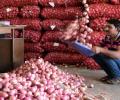
Vegetable inflation softened to 24.76 per cent in June, down from 33.15 per cent in the previous month. Inflation in potato was (-) 24.27 per cent, against (-) 23.36 per cent in May.
Fix agriculture to target food inflation, create labour-intensive manufacturing to target the current account deficit, and fiscal restructuring can target the infrastructure deficit.

India's industrial production contracted by 3.6 per cent in February, official data showed on Monday. According to the Index of Industrial Production (IIP) data released by the National Statistical Office (NSO), manufacturing sector output declined by 3.7 per cent in February 2021. Retail inflation rose to 5.52 per cent in March, mainly on account of higher food prices, government data showed on Monday. The consumer price index (CPI) based retail inflation stood at 5.03 per cent in February.

Flexibly targeting inflation is consistent with a demand stimulus, says Ashima Goyal.
Consumer inflation has been averaging nearly 10 per cent for the past two years.
.jpg)
We invite our readers to share their thoughts on water conservation with us on our social networking platform, ZaraBol -- Click #How-to-Conserve-Water to post
Prime Minister Manmohan Singh said India is looking at a much better economic phase.
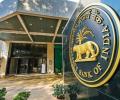
RBI in wait and watch mode as several risks to inflation continue to exist including a sudden reversal of food prices and oil price volatility.
There are few concerns in India's growth story.
RBI might retain rates at current levels, upside risks to inflation rise.
Core inflation, a measure of demand-side pressure on prices also rose sharply in March.
A double-digit food inflation has become a standard feature of our economic history now for the sixth year.

Inflation dipped to a five-month low of 5.19 per cent in July mainly on account of decline in prices of some food articles, vegetables and protein rich items.
According to data released on Thursday, Wholesale Price Index-based inflation rose to seven per cent in October from 6.46 per cent in September.
Consumer durables shrank year on year, which could suggest to observers that spending confidence is yet to return to the economy.

Food and fuel are two perennial areas of concern.

India's factory output climbed 22.4 per cent in March, benefiting from the base effect of the lockdown-marred month a year back as well as a turnaround in the manufacturing sector, while retail inflation slipped to a three-month low of 4.29 per cent in April. The high positive annual growth in the index of industrial production (IIP) in March 2021 came on back of a contraction of (-)0.9 per cent and (-)3.4 per cent in January and February 2021 respectively, according to the data released by the National Statistical Office (NSO) on Wednesday. This turnaround was led by recovery in the mining, manufacturing and electricity sectors.
Nearly all the 43 economists surveyed over the past week expect the RBI to leave its key repo rate on hold at 8 per cent.
Looking at specific industries, the imbalance that has been visible over the past several months persists.
Food prices rose 8.12% year-on-year last month, slower than an annual rise of 8.80% in January.

India's economy grew an historically modest 7 per cent last quarter but industrial output has generally been strong.
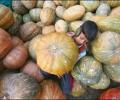
The cost of food has constantly been on the rise.

In its mid-quarter review of monetary policy, RBI on Wednesday kept all key interest rates unchanged notwithstanding persistent high inflationary pressure.
 © 2026 Rediff.com - Investor Information - Advertise with us - Disclaimer - Privacy Policy - Sitemap - Feedback - About us - Terms of use - Grievances