
The broader market breadth ended weak with 1,509 stocks advancing and 1189 shares declining.

Food inflation is an area of concern for the common man and government with rate of price rise touching as high as 18.32 per cent in the last week of December mainly fueled by mass consumption items like vegetables, milk and protein-based items.
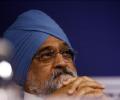
"Yes it is true that milk and vegetable prices are high. You know some of this is a reflection of economic prosperity and purchasing power," Commission Deputy Chairman Montek Singh Ahluwalia said.
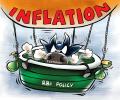
Inflation in food articles basket was 6.99 per cent In May, 2019, down from 7.37 per cent in April. However, onion prices spiked in May with inflation at 15.89 per cent, as against (-) 3.43 per cent in April.
Some say the MPC will raise the rate, while others are of the view that there is already de facto interest rate tightening through rising bond yields, which might prompt the central bank to go for a pause.

The world over, food inflation is rampant. In Tunisia, it actually led to the toppling of the government following riots over high food prices

Despite moderation, food inflation is still high at 9.52 per cent on account of rising prices of essential items.

If El Nino condition affects the monsoons, as is being forecast by foreign agencies, it can slow down the economy to 5.2 per cent next fiscal from a projected 6 per cent.

Attacking the United Progressive Alliance government, Bharatiya Janata Party leader and former Finance Minister Yashwant Sinha on Wednesday said 4.9 per cent economic growth is not because of government's policies but due to good monsoon.
HDFC Chairman Deepak Parekh on Thursday said RBI is expected to raise key short-term rates by 25-50 basis points later this month.

Food inflation was the worst form of taxation on the poor, he said. The finance minister could have spared the rise in diesel prices and increased petrol prices more, the senior Bharatiya Janata Party leader said.

Terming the RBI action on Wednesday as a "pleasant surprise", analysts today cautioned that possibility of a rate hike in the future cannot be ruled out. Urijit Patel committee's report on monetary policy would clear the air on RBI's future stand, they added.
Week on week, food inflation climbed 0.36 percentage points from 15.10 per cent on September 4.
Currently, the retail inflation is well below the RBI's comfort level. The government has asked the central bank to keep inflation in the range of 4 per cent.

Pulses inflation remained stubborn at 35.56 per cent.
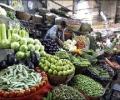
Retail food inflation eased to 4.80% last May.

Sanjiv Mehta, chairman of the country's largest consumer goods company, HUL, believes that the second wave of the Covid-19 pandemic between April and June this year has been a mere pause in India's consumption story, and that it will not change the country's overall growth trajectory. India is poised for growth, especially in the fast-moving consumer goods (FMCG) sector, Mehta told shareholders at the company's annual general meeting on Tuesday. The signs of recovery are becoming evident with many states lifting lockdown restrictions in recent weeks.

Foreign investment in multi-brand retail could help ease the problem of high food prices, an issue on which the government is fighting a major political battle, research firm Crisil said.

After consumer price index jumped the 6.3-per cent mark in May and wholesale inflation set a record of 12.94 per cent, house economists at Swiss brokerage UBS Securities have warned that the country is facing more upside risks on the inflation front that is set to averaging at 5 per cent for the year. Rising prices of edible oils and protein rich items pushed retail inflation to a six-month high of 6.3 per cent in May, breaching the comfort level of the Reserve Bank and thus rendering reduction in interest rates a difficult proposition in the near term. Led by petrol price, that has crossed the Rs 100-mark in many states, wholesale inflation too accelerated to a record 12.94 per cent in May. While crude oil has crossed $70 a barrel on account of rising prices of crude oil and manufactured goods due to spike in commodities, and the low base of last year due to the lockdown.
The Nifty ended down eight points at 5,080. The BSE market breadth was marginally positive. Out of 2,937 stocks traded 1,692 advanced while 1,156 declined.

'Pump prices of petrol and diesel have reached historical highs. An unwinding of taxes on petroleum products by both the Centre and the states could ease the cost-push pressures,' the Monetary Policy Committee (MPC) has said.

Food inflation may be a bane for the economy, but India appears to be capitalising on the shortage of onion and has exported the commodity at a record Rs 23 a kg in the beginning of 2010.
Annual food inflation has picked up for the second consecutive week, with the food price index rising 17.56 per cent in the 12 months till January 23, higher than an annual rise of 17.40 percent in the previous week, data released on Thursday showed. What may, however, lift spirits a little is the fact that the prices of pulses, a major contributor to spiralling food inflation, have declined over 40 per cent from their peak, on the back of rising arrivals and imports.

Food inflation is expected to cool off in the next two months from the current high of about 18 per cent on expectation of better Rabi (winter) crop, Prime Minister's economic panel member said.

After shedding 60 per cent in the previous year, the Sensex scripted its most amazing turnarounds ever to add a whopping 80 per cent in the year 2009. The market breadth was strong. Out of 2965 stocks traded on the BSE, there were 1669 advancing stocks as against 1210 declines.

Rajan addressed a group of investors in Boston on Thursday.

The Reserve Bank's rate-setting panel, Monetary Policy Committee (MPC), began its three-day deliberations on Wednesday amid expectations of a status quo on benchmark rate mainly on account of uncertainty over the impact of the second wave of COVID-19 pandemic. Moreover, the fears of firming inflation may also refrain the MPC from tinkering with the interest rate in its bi-monthly monetary policy outcome to be announced on Friday. The RBI had kept key interest rates unchanged at the last MPC meeting held in April.

NITI Aayog has been working on an action plan to relieve rural distress and energise the agricultural sector
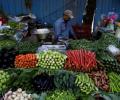
Wall Street brokerage Bank of America Securities has pencilled in lower than the consensus retail inflation for the current fiscal year at 5 per cent, but higher than the previous forecast of 4.7 per cent. Stating that the June print will be critical for the future trajectory -- after the extremely high 6.3 per cent print in May, the brokerage in a report on Friday revised upwards its forecast by 30 bps to an yearly average of 5 per cent for the year to March 2022. "Though the June print will be critical for future trajectory, beyond near-term, we find some comfort from our analysis of four key factors that are likely to influence CPI inflation the most.

Retail food inflation in December came in at 6.40 per cent.
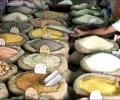
Inflation moderates, but a rate cut is unlikely.
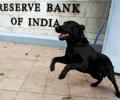
According to the global financial services major, inflation may remain sticky, with a possible El Nino effect on the monsoon likely to push up food prices and geopolitical uncertainties seen pumping up global commodity rates.

The consumer price index has been in double digits for much of the past year, and was 9.8 per cent in September.

The overall consumer food inflation in August fell to 5.91 per cent as against 8.35 per cent in July

Agriculture activity, according to recent channel checks by Prabhudas Lilladher, is expected to continue at a strong pace in FY22.

Replying to the debate in Lok Sabha on Motion of Thanks to President Ram Nath Kovind's address to the Parliament, Modi said the Congress' 'arrogance' has not gone away despite multiple electoral defeats and its 'misdeeds' seem to indicate that it has made up its mind not to come to power for the next 100 years.

Soft crude prices will cut fuel subsidy bill and help contain fiscal slippage this year.

Inflation print for food articles, as a basket, remained nearly flat at 7.47 per cent during the month.
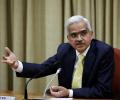
The Reserve Bank remains laser-focused to bring back retail inflation to 4 per cent over a period of time in a non-disruptive manner, Governor Shaktikanta Das stressed while voting for status quo in interest rates, as per minutes of the October policy meeting released on Friday. The central bank has been mandated by the government to ensure the Consumer Price Index (CPI) based inflation is at 4 per cent, with a band of 2 per cent on either side. The retail inflation, which was above 6 per cent during May and June, has started moving down and stood at 4.35 per cent in September.

The decline in inflation was broad-based across major commodity groups except housing and fuel and light.
 © 2026 Rediff.com - Advertise with us - Disclaimer - Privacy Policy - Sitemap - Feedback - About us - Terms of use - Grievances