
Prime Minister Narendra Modi convened a meeting with senior ministers to assess the impact of the evolving situation in West Asia on India's crude oil, gas, petroleum, power, and fertiliser sectors, focusing on ensuring uninterrupted supply and stable logistics.

Prime Minister Narendra Modi convened the Cabinet Committee on Security to address the impact of the West Asia conflict on Indian citizens, focusing on safeguarding them from the conflict's effects and ensuring the smooth flow of essential supplies.
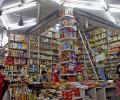
The government has asked manufacturers to revise the maximum retail price (MRP) on unsold stocks in line with the change in GST rates. The government has reduced GST on various products and services, which will come into effect from September 22.

The Indian government has assured citizens that the country has ample food stocks to meet domestic demand, despite escalating tensions with Pakistan. The government has also warned traders against hoarding essential food items and creating artificial shortages, emphasizing that there is no need for panic buying. The food ministry detailed the country's current stock levels, showcasing a surplus over required buffer norms for rice, wheat, and pulses. Additionally, India holds substantial edible oil and sugar stocks, ensuring a strong food security position.
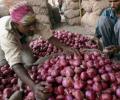
The Centre on Thursday began the first phase of retail sales of onion at a subsidised rate of Rs 35 per kg to provide relief to Delhi-NCR and Mumbai consumers from rising prices of the kitchen staple. NCCF and NAFED, which are maintaining a buffer stock of 4.7 lakh tonne onion on behalf of the government, will undertake the retail sale through their own stores and mobile vans. Onion will be sold at 38 retail points in Delhi-NCR and Parel and Malad in Mumbai.

Farmers will march towards Delhi on Tuesday after a meeting with two Union ministers over their demands, including legal guarantee to minimum support price (MSP) for crops, remained inconclusive.

Farmers from Punjab clashed with Haryana police at two border points between the states on Tuesday, facing tear gas and water cannons as they tried to break past barricades blocking their protest march to the national capital. The police lobbed tear gas shells -- some of them dropped from a drone -- and tried to disperse groups of stone-pelting protesters in the face-off that last several hours at Shambhu border near Ambala in Haryana.

Opposition parties have not been given the chairmanship of any of the four key parliamentary panels including the committee on home affairs and information technology, which were with the Congress, in the latest rejig announced on Tuesday.

Barely days after imposing a 40 per cent export tax on onions to cool down soaring prices, which, in turn, triggered widespread protests across the main growing belts, the Centre on Tuesday sought to mitigate both political and economic tensions gripping parts of Maharashtra. It decided to procure an additional 200,000 tonnes of onions at Rs 2,410 per quintal for its buffer stock from farmers, a rate that is strikingly close to the price at which they were being exported before the 40 per cent duty was levied on August 19. The export price before the imposition of the duty stood at around $320 per tonne free on board (approximately Rs 2,650 per quintal).
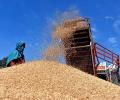
The government has no plans to import wheat as it has sufficient stocks to meet the country's requirements, official sources said. The Food Corporation of India (FCI) has enough stock for public distribution, they added. "There are no plans to import wheat into India. "The country has sufficient stocks to meet our domestic requirements," a source said.
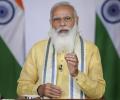
Prime Minister Narendra Modi has been holding in-person meetings with Union ministers in different groups apparently to take stock of the work done by them in the past two years, sources said.

One fallout of Rahul Gandhi's disqualification will be reflected in the Opposition's role in Parliament and related institutions.

Nearly eight months after the government repealed the three controversial farm Acts, it has constituted a high-powered panel under the chairmanship of former agriculture secretary Sanjay Agarwal to make the minimum support price (MSP) mechanism more effective and transparent as promised by Prime Minister Narendra Modi in his televised address announcing the repeal. The names of three members from the Samyukta Kisan Morcha (SKM), the main grouping that spearheaded the year-long agitation at Delhi's borders, have been withheld, pending receipt by the government, stated a gazette notification. NITI Aayog member Ramesh Chand, Indian Institute of Management-Ahmedabad Professor Sukhpal Singh, Indian Farmers Fertiliser Cooperative chairman Dilip Sanghani, secretaries of the Departments of Agriculture, Indian Council of Agricultural Research, Food and Consumer Affairs, Cooperation and Textiles, along with representatives from the state governments of Karnataka, Andhra Pradesh, Sikkim, and Odisha will also form part of the panel.
For the past one week, Modi has been holding in-person meetings with Union ministers apparently to take stock of the work done by the government in the last two years and to discuss various issues.
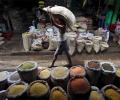
Retail prices of three pulses -- tur, moong dal and urad -- are on a declining trend after the government took coordinated actions with state governments to check hoarding, the Food and Consumer Affairs Ministry said on Friday. "The upward pressure on retail prices of tur, moong dal and urad has stabilized in 2021 and is on a stable or declining trend," it said in a statement. According to the ministry, the average increase in prices of these three pulses during April to June 16, 2021 was 0.95 per cent as compared with previous three months (January-March, 2021).
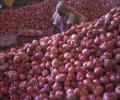
There was a delay in sowing of kharif onion because of late arrival of monsoon and later floods in many states damaged the crop.

Industry clueless about implementing labelling ru#8804 FSSAI dithers over regulations.
India might not have started growing genetically modified food crops, but it does import food products that contain GM ingredients. Consumers who buy them have no way of knowing what they contain. The government has come up with guidelines to let you know if the item purchased is genetically modified.
Prime Minister Narendra Modi on Friday held deliberations with Home Minister Amit Shah and BJP president J P Nadda amid speculation about a reshuffle in the Union cabinet, an exercise Modi has not undertaken since forming the government for a second time in May 2019.

Govt uneasy at prices, availability for domestic consumption.

Hallmarking will guarantee the purity or fineness of the precious metal.

The Union ministry of food and consumer affairs proposes to insert a new clause in the fresh discussion note for the Cabinet on allowing foreign direct investment (FDI) in multi-brand retail.
Perturbed over huge wastage of food on social events in the country, the government has said that it will study the "one-dish" law of Pakistan and similar legislations of other countries to deal with the problem.
Main difference has been on including people above the poverty line in the Food Security Bill.
The 14-member panel headed by Consumer Affairs Secretary Rajiv Aggarwal today deliberated and suggested ways to check food wastage at weddings, big hotels and other social events.

On June 2, the ministry had constituted a 15-member committee, headed by Consumer Affairs Secretary Rajiv Aggarwal, to deliberate and suggest possible ways and means to check food wastage.
Paswan said his Ministry has acquired 55,000 tonnes of pulses.
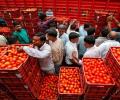
All India average retail tomato price, which has shot up by 63 per cent to Rs 67 per kg over the last year due to unseasonal rains, are likely to soften from December with the arrival of fresh crop from northern states, the government said on Friday. In the case of onions, retail prices have substantially subsided below to the level that prevailed in 2020 and also 2019, it said. "Tomato arrivals from north Indian states will start from the beginning of December itself, which will add to availability and lead to fall in prices.
For the first time, the government is considering the merits of a tariff policy to contain prices that could include allowing external agencies to import commodities and cultivating some essential crops overseas. An inter-departmental team from the ministries of finance, food and consumer affairs and commerce has been asked to work out a strategy to this effect.The finance ministry's department of economic affairs has submitted its views and a final paper is under preparation
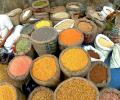
The government on Monday exempted importers of pulses from stock limits, and also relaxed the norms for millers and wholesalers, in view of softening of prices of the key pulses in the country. Now, the stock limits will be applicable only on tur, urad, gram and masoor for a period up to October 31, it said. However, these entities will continue to declare their stocks on the web portal of the Department of Consumer Affairs, it added. A revised order in this regard has been notified.
To prevent hoarding and check price rise, the Centre on Friday imposed stock limits on all pulses, except moong, held by wholesalers, retailers, importers and millers till October. The stock limits are imposed with immediate effect. An order in this regard has been issued by the Union food and consumer affairs ministry. Retail prices of pulses rose by more than 20 per cent during the January-June period of this year, according to the ministry's data.
India's Parliamentary Standing Committee on Food and Consumer Affairs has called for a complete ban on futures trading in essential commodities like wheat, rice and sugar.

"There are complaints and reports in social media and media about overcharging by some five-star hotels for items like bananas and eggs. This is a serious and unfortunate matter," Paswan told reporters in New Delhi.
The state, reeling under drought, is to hold assembly elections September this year.
The government has taken action against 28 manufacturers of packaged drinking water and natural mineral water for deviating from prescribed specifications, Lok Sabha was informed on Friday.
The government should frame appropriate guidelines to fix standards for drinking water to rid it of pesticides and other harmful chemicals.

The health and family welfare ministry spent 70 per cent of its allocation till October. The ministry may need additional funds for the vaccination drive which is expected to be kicked off from January.

The matter is now expected to be raised with the PMO.
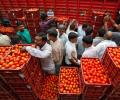
The rates of peas, which were ruling at Rs 139 per kg last week, have come down to Rs 79 per kg.
