
The Indian financial services space seems to be in a sweet spot as foreign investors have made a net investment of Rs 14,205 crore ($2.1 billion) in the sector in November amid strong credit growth and manageable non-performing loan portfolio. The investment comes following a net withdrawal of Rs 4,686 crore from financial services stocks in October on account of profit booking. Overall, foreign portfolio investors (FPIs) have made a net investment of Rs 36,238 crore in the country's equity markets in November.

Stocks of alcoholic beverage makers have corrected over the last few trading sessions on worries that taxes, competition and costs will hurt sales and profitability. The recent trigger for the decline is Karnataka, which accounts for 15 per cent of overall liquor consumption, increasing duties. The state increased by 20 per cent the additional excise duty on Indian-made foreign liquor (IMFL) on all slabs.

Among the Sensex firms, ITC, Tata Consultancy Services, Wipro, Asian Paints, HCL Technologies, HDFC, Kotak Mahindra Bank, Bajaj Finance, Infosys, Sun Pharma, Hindustan Unilever, Power Grid, Reliance Industries and HDFC Bank were the winners. HCL Technologies climbed 1 per cent after the company on Thursday posted a 10.85 per cent increase in consolidated net profit to Rs 3,983 crore for the fourth quarter of 2022-23. Tech Mahindra, Maruti, Tata Steel, UltraTech Cement, Tata Motors and ICICI Bank were among the laggards.

Campa is set to take on its competition, which pushed it out of the aerated drinks business in the late 1990s, but this time with a new owner - Reliance Industries. Campa's entry comes at a time when aerated drinks as a category is already saturated. But experts say this could give rise to competition in the segment, eventually causing the space to grow.

Veteran industrialist Ramesh Chauhan on Thursday said he is scouting for a buyer for his packaged water business Bisleri International and is in talks with several players, including Tata Consumer Products Ltd. However, the 82-year-old pioneer of the Indian packaged water business denied a report that a Rs 7,000 crore deal has been finalised with Tata Consumer Products Ltd (TCPL). When asked if he is selling his Bisleri Business, Ramesh Chauhan answered in the affirmative.

Moving ahead from the conventional advertising focus on brands, FMCG companies are now trying to establish a connection among the company and its various brands.
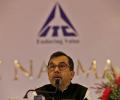
The resolution seeking his reappointment as chairman and managing director of the diversified conglomerate will be put to vote at the company's annual general meeting to be held on August 11, 2023, according to a notice sent to the shareholders on Tuesday. The company under Puri drove the 'ITC Next' strategy in the last four years encompassing digital acceleration, cost optimisation, investing in new growth vectors and ensuring supply chain agility, its officials said.

From the Sensex pack, Mahindra & Mahindra, Power Grid, Bharti Airtel, Bajaj Finserv, HDFC, Hindustan Unilever, Maruti, ITC, Titan, Nestle, Bajaj Finance and Reliance Industries were the major winners.

From anti-profiteering to affixing stickers on existing stocks, FMCG companies are bracing for new set of GST challenges

Food delivery aggregator Swiggy's losses widened 2.24 times to Rs 3,628.9 crore during last financial year, as its expenses surged 227 per cent in a year. This is even as the decacorn's revenue jumped more than twofold to Rs 5,704.9 crore in FY22, according to details from company research platform Tofler. While the company's losses surged from a base of Rs 1,616.9 crore in FY21, its total expense in FY22 touched Rs 9,748.7 crore, from Rs 4,292.8 crore a year ago.

Hindustan Unilever (HUL), one of the country's largest fast-moving consumer goods (FMCG) players, is learnt to have cut prices of its leading soaps and detergents this month by 2-19 per cent, according to the company's distributors. The cuts come after consistent price increases by the company as well as its peers, following the sharp rise in raw material prices in the past several months. It is only recently that prices of raw materials have started to correct from peak levels in the June quarter.

From the Sensex pack, Hindustan Unilever, Asian Paints, Bajaj Finance, Nestle, Bajaj Finserv, Reliance Industries, Larsen & Toubro, Maruti, Infosys and Bharti Airtel were the major laggards.
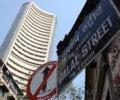
Sensex, Nifty end the day in red ahaead of F&O expiry.
Target prices around Rs 400 suggest a significant upside.

FMCG major HUL on Friday announced the appointment of Rohit Jawa as the managing director & chief executive officer to succeed Sanjiv Mehta who will retire from the company after leading it for a decade. Jawa, presently the Chief of Transformation for Unilever, would take over the leadership role for a term of five consecutive years with effect from June 27, 2023, the company said in a statement. "The appointment of Rohit Jawa as a whole-time director and MD & CEO will be subject to approval of Shareholders and other statutory approvals as may be applicable," it added.

They are evaluating realignment of warehouses and supply chains, besides exploring locations to set up hubs and shutting down some distribution centres

Besides, the ongoing war between Russia and Ukraine has also added another blow to FMCG makers as they expect a rise in the prices of wheat, edible oil and crude. Companies such as Dabur and Parle are watching the situation and will undertake calibrated price increases to mitigate the inflationary pressures.

ITC was the biggest gainer in the Sensex pack, rising nearly 3 per cent, followed by Kotak Mahindra Bank, ICICI Bank, Maruti, Bharti Airtel, State Bank of India, Sun Pharmaceutical Industries, Axis Bank, Reliance Industries, Hindustan Unilever and JSW Steel. On the other hand, Infosys, UltraTech Cement, HCL Technologies, Bajaj Finserv, Larsen & Toubro, Titan, Tata Consultancy Services and Wipro were the laggards.

'Especially if their investment horizon is over two years.'

The Rs 2,000-crore Patanjali, looking to grow its turnover two-and-a-half times in FY16.

While the government's demonetisation move is aimed at curbing under-invoicing, the worry was that retailers would de-stock in the short term, impacting sales.

After a sharp outperformance in the mid-and small-cap segments in the first half of calendar year 2023 (H1-CY23), analysts are now turning cautious on these two market segments and suggest investors stay selective and look for valuation comfort and earnings visibility before investing. The S&P BSE Midcap index has surged 13.7 per cent in H1-CY23, and the S&P BSE Small-cap index gained 12.7 per cent during this period, data shows. The S&P BSE Sensex, in comparison, has moved up 6.4 per cent.

'Only if the Budget springs some surprises we may see a halt in the selling.'

Two Reliance group firms - Reliance Consumer Products Ltd (RCPL) and Reliance Retail Ventures Ltd (RRVL) - have announced an open offer to acquire a 26 per cent additional stake in Lotus Chocolate. The firms will together acquire 33.38 lakh shares of Lotus Chocolate from the open market at a fixed price of Rs 115.50 per share, said a notice by DAM Capital, which is managing the offer. The offer will aggregate to a total consideration of Rs 38.56 crore over the full acceptance, said an open offer-detailed public statement shared by the company with stock exchanges on Thursday.
Benchmark indices Sensex and Nifty settled with gains for the third straight session on Monday, helped by buying in auto, banking and capital goods shares despite a spike in crude oil prices. The 30-share BSE Sensex rose 114.92 points or 0.19 per cent to close at 59,106.44 points with 22 of its components ending in the green and eight closing lower. It moved in a range of 58,793.08 points to 59,204.82 points during intra-day trade.

At an aggregate level, the late ace investor's portfolio that was valued at Rs 32,445 crore as on March 31, 2023 is now worth Rs 35,979 crore.

'...over the long-term can be done only by investing in equities.' 'And during weak macros, one needs t1o allocate more than drawing it down, because they offer the best entry point.'

Stock market investors became poorer by Rs 8.30 lakh crore as equities continued their slide for the sixth consecutive day on Friday. The BSE Sensex has tumbled 1,855.58 points or 3 per cent since February 16. During this period, the combined market capitalisation of BSE-listed firms has tanked Rs 8,30,322.61 crore to reach Rs 2,60,00,662.99 crore. "The domestic market is broadly demonstrating a lack of confidence, registering its sixth consecutive day of losses despite global markets turning green.

Indices across Indian equity markets have edged towards new record highs before undergoing a small correction in the past few sessions. The National Stock Exchange Nifty has gained 20 per cent in the past year; mid-caps (up 33 per cent), small-caps (up 31 per cent), and micro-caps (up 44 per cent) have done better. Several factors have precipitated this rally.

Less-than-expected rainfall and a poor spatial distribution, experts say, can rekindle fears of a rise in food and fuel inflation that can have an impact on the RBI's monetary policy. The fear of less than optimal rainfall due to El Nino this year, analysts believe, is the biggest short-term risk for the markets, which they said has not been fully priced in yet by them. Monsoon set over Kerala on June 08, a week later than its scheduled date.

The Indian markets have seen a good run in the last three months with the S&P BSE Sensex rising around 7 per cent and the Nifty50 moving up 7.5 per cent. The next leg of the market rally from here on, analysts suggest, will be driven by a growth in corporate earnings over the next few quarters. That said, they do not expect material / sharp downgrades to India Inc's earnings estimates despite headwinds for the economy.

Equity investors became poorer by Rs 7.48 lakh crore in five consecutive days of market fall, where the BSE Sensex has declined by nearly 3 per cent. In the past five days, the BSE Sensex has tumbled 1,713.71 points or 2.79 per cent. This has led to an erosion of Rs 7,48,887.04 crore from the market capitalisation of BSE-listed firms in five trading sessions.
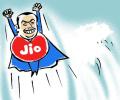
Billionaire Mukesh Ambani's Reliance Jio is India's strongest telecom brand in India, ahead of Bharti Airtel and Vodafone Idea Ltd, according to brand intelligence and data insights company TRA. TRA, formerly Trust Research Advisory, in its 'India's Most Desired Brands 2022' ranked companies according to their brand strength. Reliance Jio topped the telecom category, followed by Bharti Airtel, Vodafone Idea Ltd and BSNL.

Baba Ramdev-led Patanjali Ayurved Ltd will sell its food retail business to group firm Ruchi Soya Industries Ltd for Rs 690 crore as part of its strategy to focus on non-food, traditional medicine and wellness business.

Info Edge (India) reported a good fourth quarter for the 2022-23 financial year (Q4FY23) given depressed conditions in the Key IT segment. The billing growth of 13.7 per cent year-on-year (YoY) in recruitment was well ahead of market expectations. There was solid growth in realisations (up 5.5 per cent) as well as unique customers (up 7.7 per cent).

The Sensex and Nifty ended at fresh lifetime peaks on Tuesday amid a largely firm trend in other Asian markets and continuous foreign fund inflows. The 30-share BSE Sensex gained 177.04 points or 0.28 per cent to settle at 62,681.84, its fresh record closing high. During the day, it jumped 382.6 points or 0.61 per cent to its lifetime intra-day peak of 62,887.40.

Sanjiv Mehta, chairman of the country's largest consumer goods company, HUL, believes that the second wave of the Covid-19 pandemic between April and June this year has been a mere pause in India's consumption story, and that it will not change the country's overall growth trajectory. India is poised for growth, especially in the fast-moving consumer goods (FMCG) sector, Mehta told shareholders at the company's annual general meeting on Tuesday. The signs of recovery are becoming evident with many states lifting lockdown restrictions in recent weeks.

Key stock indices Sensex and Nifty declined over 1 per cent at close on Monday due to heavy selling in banking, auto and FMCG shares amid weak global market trends and continued foreign fund outflows. Reversing its previous session's gains, benchmark BSE Sensex tumbled 638.11 points or 1.11 per cent to settle at 56,788.81. During the day, it tanked 743.52 points or 1.29 per cent to 56,683.40. The broader NSE Nifty fell by 207 points or 1.21 per cent to end at 16,887.35 as 42 of its constituents declined.

Sensex in green in afternoon trade.
 © 2026 Rediff.com - Investor Information - Advertise with us - Disclaimer - Privacy Policy - Sitemap - Feedback - About us - Terms of use - Grievances