

International Monetary Fund (IMF) chief economist Gita Gopinath has made a strong case for regulating cryptocurrencies, saying it will always be a challenge to ban them as they operate from offshore exchanges. Gopinath also suggested a global policy and co-ordinated action for regulating cryptocurrencies. "I think cryptocurrencies are a particular challenge for emerging markets. "It seems to be more attractive to adopt cryptocurrencies and assets in emerging economies than in advanced economies," she said while addressing an event organised by the National Council of Applied Economic Research (NCAER) on Wednesday.
The economy is likely to register a 9.5 per cent growth this fiscal over 7.3 per cent contraction last year, as the ongoing recovery is faster and more credible than earlier foreseen, according to a foreign brokerage report. It will gather more momentum in the second half of the current fiscal, but will slow down to 7.7 per cent next financial year, it added. The government has budgeted for a 10.5 per cent growth this fiscal, but the Reserve Bank has scaled it down to 9.5 per cent.

'It is far too early to celebrate the numbers.' 'They are still fairly weak compared to the pre-pandemic level.'
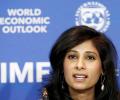
The IMF on Tuesday cut India's economic growth forecast by 0.5 percentage points to 9 per cent for the current fiscal year, with its chief economist Gita Gopinath saying that the slight downgrade is mainly due to the impact of the spread of the Omicron variant. "If you look at the 2021-22 fiscal year, we have a slight downgrade of -0.5 percentage points and for the next fiscal year 2022-23 we have a slight upgrade of 0.5 percentage points. So, growth for the previous fiscal year is now nine per cent and for this year now is at nine per cent. We moved it up slightly," Gopinath told reporters during a news conference in Washington. In its latest update of World Economic Outlook on Tuesday, the International Monetary Fund has cut India's economic growth forecast to 9 per cent for the current fiscal year ending March 31, joining a host of agencies which have downgraded their projections on concerns over the impact of the spread of Omicron on business activity and mobility.

After a stellar run in 2021 that saw the S&P BSE Sensex and the Nifty50 clock gains of 20 per cent and 22 per cent respectively, global equity markets, including India, are gearing up to welcome 2022 on a cautious note. For one, new variants of the Covid -19 infection that make current vaccines less effective is one of the key risks worth flagging, analysts said. Inflation was also a risk for this asset class in 2021, although most market participants expect that the current elevated inflation levels will be transitory.

The handsome 25 per cent rise in corporate profits in the September quarter amid a sharp contraction in GDP was on the back of wage squeezes, leading to rise in inequalities in India, economist Nouriel Roubini said on Thursday. This rising inequality is "dangerous" politically and socially because only a few people in the economy are benefitting, the economics professor at New York's Stern School of Business said. Roubini said earnings of listed entities have risen 25 per cent in the September quarter, which means that wages and income are getting "squeezed, if not collapsed".

'An era of fiscal pessimism is setting in, which, if not countered intellectually, is going to have the same effect as export pessimism has had,' notes T C A Srinivasa Raghavan.
With inflation remaining at elevated levels, central banks around the world, including the Reserve Bank of India (RBI), will kill excess demand in economy over the next six to eight months, sources in the know said. They also indicated that there could be a rate hike in June, when the inflation forecast for the current financial year would be raised. The RBI, the sources said, might announce more steps such as raising the limit on held-to-maturity (HTM) bonds to support government borrowings but might not come out with any further quantitative easing GSAP (Government Securities Acquisition Programme) measures.
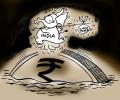
India's public debt ratio, which remarkably remained stable at around 70 per cent of the GDP since 1991, is projected to jump by 17 percentage points to nearly 90 per cent because of increase in public spending due to COVID-19, the IMF said.

The government further said the gross tax revenue as a per cent of GDP is expected to increase to 12.1 per cent of GDP in 2019-20 and stabilise at that level in 2020-21 before climbing up to a level of 12.2 per cent of GDP.

Till such time that a new governance framework comes into being, the progress of reforms in health, education, land, labour, electricity and agriculture could remain fraught with problems, agitations and delays, observes A K Bhattacharya.

The bulk of the incremental profits will come from oil & gas and automobile sectors.

They have also called for giving cash to the poor, so that demand is generated in the economy.

After several years of downgrades to the country's medium-term growth outlook, the estimates are likely to be upgraded now, Credit Suisse said in a report. The country's economy is showing signs of bottoming out, it said. According to the report, the consensus forecasts of GDP growth for FY2022 over FY2020 stopped falling after October 2020 (currently at (-) 1 per cent). Analysts at Credit Suisse expect these estimates to be revised upwards.

'But can it afford to present a scenario within the existing legal framework of fiscal consolidation?', asks A K Bhattacharya.

The government should have mentioned clearly the specific structural reforms that were responsible for the deviation from the fiscal deficit target by half a percentage point, says A K Bhattacharya.
'We get an overzealous army of tax inspectors pushing the economy too hard,' says Ajay Shah.

'It is important to improve the quality of spending.'

The RBI is understood to be dithering since it would want more clarity on the cost of the fiscal policies the new government would undertake before it decides to cut rates, even though it has pencilled in a lower gross domestic product growth rate for this fiscal year.
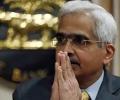
Reserve Bank of India (RBI) Governor Shaktikanta Das on Sunday said he has tested positive for coronavirus and will work from isolation while the central bank will continue to function normally. Das said he is asymptomatic and has alerted those who came in contact with him in recent days.

Accelerating inequality, the market dominance of tech platforms and remote working are likely to be the longest-lasting legacies of the COVID-19 crisis, the WEF said in a report on Monday. Releasing its Chief Economists Outlook report during the online Davos Agenda Summit, the WEF said that beyond managing the pandemic and vaccine rollout, these trends could shape a new era of fiscal, monetary, and competition policy. Deglobalisation is seen as the least likely of the current trends to continue in the longer term; particularly as international coordination is key to resolving global challenges such as vaccine manufacturing and distribution.

By any economic theory or doctrine, this is no Budget that supports economic recovery, whether through supporting aggregate demand, or through expansionary stimulus, declares Rathin Roy.

India's economy is likely to grow by 12 per cent in 2021 following a 7.1 per cent contraction last year, as near-term prospects have turned more favourable, Moody's Analytics said. A stronger than expected December quarter GDP growth of 0.4 per cent following a 7.5 per cent contraction in the previous three months has turned India's near-term prospects more favourable, it said. Domestic and external demand has been on the mend since the easing of restrictions, which has led to improved manufacturing output in recent months.
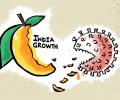
'The finance ministry's decision to accept the deficit target of 4.5 per cent in 2025-2026 appears to have emanated from its endorsement of the Finance Commission's view that the Indian economy will continue to remain impacted by the pandemic, adversely undermining its growth potential,' notes A K Bhattacharya.

Highlights of Economic Survey 2020-21, tabled in Parliament by Finance Minister Nirmala Sitharaman on Friday.

Over the next three - six months, UBS believes earnings will be the main driver for EM equities outperformance.
Fitch Ratings has revised India's GDP growth estimate to 12.8 per cent for the fiscal year beginning April 1 from its previous estimate of 11 per cent, saying its recovery from the depths of the lockdown-induced recession has been swifter than expected. In its latest Global Economic Outlook (GEO), Fitch said revision is on the back of "a stronger carryover effect, a looser fiscal stance and better virus containment." "India's second half of 2020 rebound also took GDP back above its pre-pandemic level and we have revised up our 2021-2022 forecast to 12.8 per cent from 11.0 per cent," it said. "Nevertheless, we expect the level of Indian GDP to remain well below our pre-pandemic forecast trajectory."
The government has utilised 'escape clause' under the FRBM Act which provides it leeway for relaxation of fiscal deficit roadmap during time of stress.

India's economy is estimated to contract by 9.6 per cent in the fiscal year 2020-21, reflecting a sharp drop in household spending and private investment, and the growth is expected to recover to 5.4 per cent in 2021, the World Bank said on Tuesday. In its Global Economic Prospects report, the World Bank said that the informal sector, which accounts for four-fifths of employment, has been subject to severe income losses during the COVID-19 pandemic.
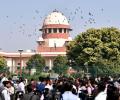
The Supreme Court on Wednesday said the Centre should implement "as soon as possible" the interest waiver on loans of up to Rs 2 crore under the RBI's moratorium scheme in view of the Covid-19 pandemic, saying the common man's Diwali is in the government's hands.
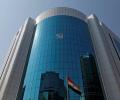
The regulator typically meets overseas investors in the US and UK in the first half of a financial year, and had opted for a virtual meet last year too.

India's wholesale price-based inflation is at a 30-year high, leading to a "very alarming" situation for the country, former World Bank chief economist Kaushik Basu said on Thursday. He, however, doesn't see any risk of hyperinflation, but cautioned that if retail inflation follows wholesale prices, it might lead to "inflationary crisis". Participating in a virtual event organised by the Asia Society, India, Basu said the inflationary situation in India is at a "very risky bend".

Global financial services firm Nomura has sharply lowered India's growth forecast for this fiscal to 5.8 per cent, way below the government's projection, saying the country's monetary and fiscal policies are at loggerheads.
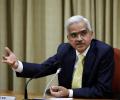
Reserve Bank Governor Shaktikanta Das on Wednesday said the country is at the doorstep of economic revival on the back of accommodative monetary and fiscal policies being pursued by the central bank and the government.

Moody's Investors Service on Friday said India's economy is expected to contract for the first time in more than four decades saying economic damage owing to the coronavirus-induced lockdown will be significant with lower consumption and sluggish business activity. Even before the coronavirus outbreak, Indian economy already was growing at its slowest pace in six years and with the stimulus measures announced by the government falling short of expectations, the disruptions are likely to be greater. "We now expect India's growth to register a real GDP contraction for the fiscal year ending in March 2021 (fiscal 2020-21), from our earlier projection of zero growth," it said in a research note.

The minutes of the December MPC meet reveal members felt the current spike in the headline inflation rate was due to a temporary supply shock on the food front, expected to moderate by the second quarter of 2020-21.

Markets are assuming that by the second half of 2021, the world will be approaching some type of normalcy, points out Akash Prakash.

The World Bank on Tuesday projected India's economy to grow at 8.3 per cent in 2021 and 7.5 per cent in 2022, even as its recovery is being hampered by an unprecedented second wave of the COVID-19, the largest outbreak in the world since the beginning of the deadly pandemic. The Washington-based global lender, in its latest issue of Global Economic Prospects released here, noted that in India, an enormous second COVID-19 wave is undermining the sharper-than-expected rebound in activity seen during the second half of Fiscal Year 2020/21, especially in services.

The Centre's retreat from the farm laws is likely to have a significant bearing on the fate of laws that the Centre has made, for instance, in labour and electricity, predicts A K Bhattacharya.
 © 2026 Rediff.com - Investor Information - Advertise with us - Disclaimer - Privacy Policy - Sitemap - Feedback - About us - Terms of use - Grievances