
Budget for 2022-2023 has returned to its agenda for protectionism in the name of creating a self-reliant India, points out A K Bhattacharya.

Backloading the government's borrowing programme suggests the finance ministry's confidence in better revenue numbers, says A K Bhattacharya.

Retirement fund body EPFO on Thursday lowered the interest rate on Provident Fund deposits to 8.5 per cent for the current financial year, Labour Minister Santosh Gangwar said on Thursday.

India Inc on Thursday pitched for continuation of reforms while ensuring tax and policy stability in the forthcoming Budget to prop up the economy hit hard by the COVID-19 pandemic. In the virtual pre-Budget consultation held with Finance Minister Nirmala Sitharaman, industry chambers said that government measures will help firmly entrench the nascent signs of recovery being currently seen in private investment. Capital expenditure by the government through enhanced infrastructure spending should in the meantime continue to support growth, CII president TV Narendran said.

The Centre is looking to improve disclosures made by public sector undertakings (PSUs), and has asked such companies to share monthly progress made on capital expenditure targets and corporate social responsibility (CSR) initiatives undertaken by them. New details such as gender-wise reporting of contractual workers, unused land, and profit share in joint venture companies have also been added in the list of disclosures. The Department of Public Enterprises (DPE), which publishes the Public Enterprises Survey and collects information for Memorandums of Understanding (MoUs) signed with PSUs, is looking to integrate data collected from government-owned companies.
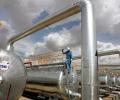
UK's Cairn Energy Plc has offered to forego $500 million and invest that amount in any oil and gas or renewable energy project identified by the Indian government if New Delhi agrees to honour an international arbitration award and returns the value of loss it incurred because of being taxed retrospectively, sources said. The Scottish firm invested in the oil and gas sector in India in 1994 and a decade later it made a huge oil discovery in Rajasthan. In 2006-07, it listed its Indian assets on the BSE. Five years after that the government passed a retroactive tax law and billed Cairn Rs 10,247 crore plus interest and penalty for the reorganisation tied to the flotation.

The finance ministry said the sharp inflows last fiscal were due to the government's policy initiatives and economic recovery.
The Centre's capital expenditure (capex) outlay for the April-June quarter (first quarter, or Q1) of 2022-23 (FY23) could be close to Rs 1.5 trillion, Business Standard has learnt. As a percentage of full-year capex Budget Estimates (BE) of Rs 7.5 trillion, this could be at similar levels to the trends in the past few fiscal years. It is in the July-September quarter (Q2) of FY23 that capex is expected to pick up, when a bulk of the long-term capex loans to states are expected to be expended.

Infosys, in 2019, was given the contract to develop the new portal. It was launched in June last year and stakeholders had reported glitches and difficulties in the functioning of the portal. "On the I-T project, we are extremely proud that as of December 31, as was reported, 5.8 crore returns were filed through that timeframe.

The finance ministry is working on a second relief package for the Indian economy hit hard by the coronavirus outbreak and the 21-day nationwide lockdown imposed to curb the contagion, sources said. Last month, the government announced a Rs 1.70 lakh crore relief package in the form of foodgrains and cash transfers for the poor and vulnerable section of the society to help them deal with the hardships caused by the lockdown. Now, the government is working on a stimulus to be given to hard-hit sectors of the economy after the lockdown is lifted, sources said, adding that an announcement is expected in the next few days depending on the severity of the pandemic.

Merely bringing down the government stake below 51% may not find any taker for the PSBs. The government must bring down its holding to at least 26%, recommends Tamal Bandyopadhyay.

Recently, the finance ministry waived off basic customs duty and health cess on imported oxygen and related equipment for three years.

The finance ministry said on Tuesday that high energy and commodity prices due to the Russian invasion of Ukraine may provide an upside risk to inflation and continued vigil is required. "Going forward, elevated energy and commodity prices may act as an upside risk to the inflation outlook in the near-medium term. "Given the inherently unsustainable nature of high prices, international commodity prices are expected to level off early with an increase in supplies outside the crisis zone," the department of economic affairs said in its latest monthly economic report for February.

A depreciating rupee, which briefly hit 80 to the dollar on Tuesday, may boost India's exports but price-inelastic imports of crude oil and gold would mean limited relief on the trade deficit, which clocked a record $26.2 billion in June. Due to global risk aversion on the back of geo-political tensions and aggressive policy tightening by the Fed, the dollar has appreciated against most currencies, including the rupee. And, with other currencies depreciating, India's comparative advantage in this respect may be limited.

NCP president Sharad Pawar on Thursday said the fate of the Maha Vikas Aghadi government in Maharashtra will be decided on the floor of the Legislative Assembly, and the Shiv Sena-NCP-Congress coalition will prove its majority in a trust vote.

While presenting her 2021-22 Union Budget, Finance Minister Nirmala Sitharaman had set a fiscal deficit target of 6.8 per cent of nominal gross domestic product (GDP) against the 2020-21 Revised Estimate of 9.5 per cent. The fiscal correction in the upcoming 2022-23 Union Budget is unlikely to be that steep. Even as discussions among top Budget-makers are ongoing, the fiscal deficit target for 2022-23 may likely be in the range of 6.5-6.8 per cent.

Rationalisation of income tax slabs, infrastructure status for digital services and incentives to hydrogen storage as well as fuel cell development were some of the suggestions made by various stakeholders at the pre-Budget consultation meeting convened by Finance Minister Nirmala Sitharaman. The customary pre-Budget consultation meetings were held with the finance minister virtually between December 15 and December 22, as per the finance ministry statement. More than 120 invitees representing seven stakeholder groups participated in eight meetings, scheduled during this period, it said.

Responding to a discussion in Lok Sabha on the situation in Ukraine, Jaishankar said the Ukrainian government too has offered relaxation for students for taking two key examinations in their medical education courses.

Although the Disaster Management Act for Covid containment measures, considered a hindrance in conducting the census, was withdrawn in March this year the Centre has not taken any further action on conducting the much-delayed population enumeration.

This will boost availability of these items as well as make them cheaper, it said, adding that Modi also directed the revenue department to ensure seamless and quick custom clearance of such equipment.
Finance Minister Nirmala Sitharaman on Wednesday said India is "very close" to arriving at the specifics of the two-pillar taxation proposition at the G20 and is in the last stage of finalising the details. A total of 130 countries had in July agreed to a overhaul of global tax norms to ensure that multinationals pay taxes wherever they operate and at a minimum 15 per cent rate. The finance ministry had then said that some significant issues including share of profit allocation and scope of subject to tax rules are yet to be addressed and a 'consensus agreement' is expected by October after working out the technical details of the proposal.

India's economic image is not affected due to Adani Group's recent decision to pull out Rs 20,000 crore FPO (follow-on public offers) amid allegations of financial wrongdoings, Finance Minister Nirmala Sitharaman said on Saturday.

'They have started becoming an important player, but not at the same level as they were in the earlier part of the decade.'

Banks have raised concerns over the new international trade settlement in rupee, fearing that facilitation of such a mechanism could result in them facing the ire of economic sanctions by the West, people aware of the matter said. Large banks with overseas operations have sought clarity and assurance from the Reserve Bank of India (RBI) that they will not be targeted with sanctions for facilitating rupee trade with a sanction-hit country such as Russia. The present payment mechanism is a shift from earlier such arrangements, like the one with sanction-hit Iran, which involved banks facilitating settlement of international trade that did not have business in the sanctioned nation.

Fiscal deficit for 2020-21 was at 9.3 per cent of the gross domestic product (GDP), lower than 9.5 per cent estimated by the finance ministry in the revised Budget estimates, according to the CGA data. Unveiling the revenue-expenditure data of the Union government for 2020-21, the Controller General of Accounts (CGA) on Monday said that the revenue deficit at the end of the fiscal was 7.42 per cent.

The government is likely to take a call on the timing of LIC initial public offering within this week, a senior official said. The sale of 5 per cent stake or 31.6 crore shares in the country's largest insurer was originally planned for in March, but was postponed in view of the geopolitical tension. The government has time till May 12 to launch the IPO without filing fresh papers with markets regulator Sebi. The official said it would be a tough call to decide whether to go ahead with the retail and domestic investor demand or to wait for geopolitical tension to ease and FIIs to return to market.

The government has sanctioned non-productivity-linked or ad hoc bonus for central government employees for fiscal year 2020-21.

This may leave those not opting for any of the two options offered by the Centre before the GST Council meet scheduled for October 5 in the lurch. It is clear from the present situation that these states will have to wait till June 2022 to get their compensation, subject to the council extending the cess collection period beyond June 30, 2022.

The Centre has borrowed and transferred Rs 6,000 crore as the first tranche of GST compensation shortfall to 16 states and two union territories, including Maharashtra, Gujarat, Bihar, Assam, Delhi and J&K, the finance ministry said on Friday. Last week, the Centre gave in to the demands of opposition-ruled states to borrow and fund the GST compensation shortfall.
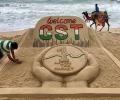
Goods and Services Tax (GST) collections jumped to over Rs 1.31 lakh crore in November, the second highest since its implementation in July 2017, in line with the trend in economic recovery, the finance ministry said on Wednesday. "The gross GST revenue collected in the month of November 2021 is Rs 1,31,526 crore of which CGST is Rs 23,978 crore, SGST is Rs 31,127 crore, IGST is Rs 66,815 crore (including Rs 32,165 crore collected on import of goods) and Cess is Rs 9,606 crore (including Rs 653 crore collected on import of goods)," the ministry said in a statement. CGST refers to Central Goods and Services Tax, SGST (State Goods and Service Tax) and IGST (Integrated Goods and Services Tax).

In this round, the market has won. But it is still for Gautam Adani to decide whether he has lost or not, argues Shekhar Gupta.

As part of the ritual, ''halwa'' is prepared in a big ''kadhai'' (large frying pot) and served to the entire staff involved in the Budget making exercise of the ministry. Halwa was served while maintaining COVID protocol with all present in mask and those distributing sweets were wearing gloves.

Old ideas contained in the heads of old economists still dominate. That's not good, asserts T C A Srinivasa Raghavan.

Prachanda took the oath of office and secrecy from President Bhandari at an official ceremony at Shital Niwas.

The government will borrow Rs 5.03 lakh crore in the second half of the current fiscal to fund the revenue gap for reviving the pandemic-hit economy, the finance ministry said on Monday. During the first half, the government has raised Rs 7.02 lakh crore by issuing bonds, the ministry said in a statement. "Out of gross market borrowing of Rs 12.05 lakh crore projected for FY 2021-22 in the Union Budget, Rs 7.24 lakh crore (60 per cent) was planned to be borrowed in first half (H1).
Finance Minister Nirmala Sitharaman will present the much-awaited 2022-23 Union Budget on February 1. While there has been strong recovery in some sectors, touch services like hospitality, tourism and leisure continue to suffer after two Covid-19 waves. Household savings have been hit due to increased spending on health care. Consumption has still not reached pre-pandemic levels.
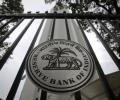
The differences revolved around the two topics of how much reserves the RBI should carry and whether the finance ministry had precipitated matters by invoking Section 7 of the RBI Act, that allows it to give directions to the RBI in public interest.

'NSE has thousands of employees. It is their institution. So it's a dear family.' 'One should not hurt the morale of these people.'

The government's total liabilities rose to Rs 128.41 lakh crore in December quarter from Rs 125.71 lakh crore in the three months ended September 2021, according to the latest public debt management report. The increase reflects a quarter-on-quarter increase of 2.15 per cent in October-December 2021-22. In absolute terms, the total liabilities, including liabilities under the 'Public Account' of the government, jumped to Rs 1,28,41,996 crore at the end of December 2021.

While experts' views are divided, the move is aimed at improving the coordination between the government and the regulator.
