
India's fertiliser subsidy bill is projected to increase by approximately 70,000 crore, reaching around 2.41 trillion in FY27, primarily due to rising import costs exacerbated by the ongoing West Asia crisis.

India's Central government is likely to see its fertiliser subsidy bill double to a record 3.4 trillion in FY27, up from the Budget estimate of 1.7 trillion, due to surging global fertiliser prices exacerbated by the West Asia war. This significant increase, coupled with revenue losses from excise duty cuts for oil-marketing companies, is straining the government's fiscal space, though capital expenditure plans remain unchanged.

India's fertiliser subsidy bill for the current financial year (FY27) is projected to increase by approximately 20% due to surging global prices, primarily driven by the West Asia crisis, a senior official confirmed. Despite this, retail prices for urea and di-ammonium phosphate (DAP) will remain unchanged, ensuring adequate supply for the kharif season.

On Agri Stack, Expenditure Secy V Vualnam says it's progressing well; using IT, farmers will be able to choose exact fertiliser quantities needed, reducing crowding at fertiliser outlets.
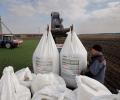
For the first time, the government is likely to dip into the Oil Industry Development Fund (OIDF) to finance part of its fertiliser subsidy programme for 2025-26, according to official sources. The finance ministry has accounted for Rs 23,000 crore in the FY26 Budget as net additional resources to be drawn from dedicated reserve funds, including the OIDF, the Agriculture Infrastructure and Development Fund, and the Universal Service Obligation Fund.

One of the politically sensitive issues on which the United Progressive Alliance government will have to decide soon is the subsidy increase on phosphatic fertilisers by up to Rs 1,000 crore (Rs 10 billion) to keep a check on domestic prices.
Despite significant price differences, Indian farmers are increasingly adopting non-subsidised speciality fertilisers, which are seen as a potential solution to the rising fertiliser subsidy burden exacerbated by global supply shocks.

Indian oil marketing companies are incurring significant losses, selling petrol at a Rs 14 per litre loss and diesel at Rs 18 per litre, as elevated global crude oil prices, exacerbated by the West Asia crisis, outpace capped retail fuel rates, according to rating agency Icra.

Union Minister Shivraj Singh Chouhan informed the Lok Sabha that government initiatives in the agriculture sector have doubled farmers' income through measures like MSP and fertiliser subsidies.

India's state-run oil marketing companies (OMCs) are projected to incur under-recoveries of approximately Rs 80,000 crore on liquefied petroleum gas (LPG) sales in FY27 if current loss levels persist, according to rating agency Icra.
India's fertiliser subsidy bill is likely to shoot up by 55 per cent to record Rs 2.5 lakh crore this fiscal as the government will provide additional funds to make up for the spike in cost from higher import price, top sources said on Thursday. The government will ensure that there is no shortage of fertilisers in the country during the kharif (summer-sown) and rabi (winter-sown) season and it is already in talks with major global producers to import key soil nutrients, they added. According to the sources, Union Chemicals and Fertilisers Minister Mansukh Mandaviya is likely to visit many countries, including Saudi Arabia, Oman and Morocco, soon to secure imports on both short and long term basis.

The Indian government is set to accelerate reforms, including measures to enhance foreign direct investment, speed up divestment, and boost asset monetisation, to maintain economic growth despite rising fuel and fertiliser import costs driven by the West Asia crisis.

The government's main rate setting panel suggested that this be done in two tranches of Rs 2,500 each in the kharif and rabi seasons.

Moody's Ratings has downgraded India's growth forecast for financial year 2026-27 (FY27) to 6 per cent from 6.8 per cent, attributing the revision to weaker consumption and industrial activity, elevated energy prices, and rising input costs stemming from the West Asia conflict.

Bank of Baroda economists project India's GDP to grow 6.5-6.8 per cent in FY27 but warn that the fiscal deficit could overshoot the budgeted 4.3 per cent target, potentially reaching 4.7-4.8 per cent of GDP due to subsidy overruns, excise duty cuts, and oil marketing company losses.

The conflict may disrupt Budget 2026-2027 projections, squeezing revenues and raising subsidies, prompting fiscal adjustments and potential reforms, echoing lessons from the Covid-era shock, points out A K Bhattacharya.
Fertiliser ministry officials on Monday briefed the new minister Ram Vilas Paswan about the pending decision on increasing subsidy on phosphatic fertilisers by upto Rs 1,000 crore (Rs 10 billion) to keep a check on domestic prices.
Revenue collection next financial year may be affected, and, along with this, subsidies on food and fertilisers can go up if the war in West Asia drags for long, according to experts.
India's fiscal deficit is projected to reach 4.5 per cent of GDP for the current fiscal year, exceeding the budgeted target, as the government's policy responses to the West Asia conflict are expected to strain public finances, according to research firm BMI.

The World Bank has increased India's economic growth projection for FY27 to 6.6 per cent, citing resilient domestic demand, while simultaneously cutting its global economic growth outlook due to the conflict in West Asia.

The Indian central government has reduced its total expenditure by approximately 60,000 crore in FY26, below its revised estimate, to successfully achieve the fiscal deficit target of 4.4 per cent of gross domestic product (GDP), according to the latest data from the Controller General of Accounts (CGA).

India is already a heavyweight in global farm trade in pockets such as rice exports, but experts are urging a pivot from a subsidy- and procurement-driven mindset to a productivity and nutrition strategy that still shields farmers from volatility.

India emerged reasonably well from 2025. But now, the oil shock and war-related supply disruptions have again driven funds out of India and significantly weakened the rupee, points out Ajay Chhibber.

Insights from behavioural economics suggest that an ambitious nudge can be effective if three conditions are met, points out Ram Singh Insights from behavioural economics suggest that an ambitious nudge can be effective if three conditions are met, points out Ram Singh, director, Delhi School of Economics.

The government is looking at steps to cut subsidy on fertiliser and oil sale with an aim to cutting non-plan expenditure and contain fiscal deficit.

Even if there is an early agreement on a cessation of hostilities in West Asia, the price shock will not go away easily, points out A K Bhattacharya.

The remarkable rise of smallcaps reflects the emergence of a broad set of specialised businesses operating in industries where the sectoral tailwinds remain considerably stronger than macroeconomic headwinds, points out Debashis Basu.

Elevated global crude oil and natural gas prices, driven by geopolitical developments in West Asia, could significantly influence the Government of India's fiscal position for 2026-27, according to a report by ratings agency Icra.

The Reserve Bank of India (RBI) has announced a record surplus transfer of Rs 2.87 trillion to the central government for FY26, driven by increased income and an expanded balance sheet, despite a reduction in the contingent risk buffer (CRB) to 6.5 per cent.

'PM Modi is trying to reduce the volume of fuel consumed instead of raising prices sharply.'

Instead of working to reduce the subsidy bill, various political elements seem to be pushing for even higher subsidies.

According to officials in the know, the government might cut the fertiliser subsidy in the next financial year. The international spot and contract prices of di-ammonium phosphate and muriate of potash (MOP) have come down in recent months.

India's new manufacturing project announcements more than halved in the fourth quarter of FY26, falling 60 per cent sequentially and 78 per cent year-on-year to approximately 1.7 trillion, driven by global uncertainties, geopolitical conflicts in West Asia, and existing unutilised manufacturing capacity.
India Ratings and Research predicts the Reserve Bank of India (RBI) will maintain the repo rate at 5.25 per cent throughout FY27, despite potential inflationary pressures from higher fuel prices, with inflation expected to remain within the central bank's tolerance band.
S&P Global Ratings projects India's economy to grow at 6.3 per cent even if crude oil prices average USD 130 per barrel in the current fiscal year, highlighting the nation's resilience amidst the West Asia crisis and strong commitment to fiscal consolidation.
The Centre subsidises the cost of fertilisers as there is a huge gap between selling price and production cost. After receiving Rs 31.83 crore (Rs 318.3 million) as dividend from National Fertilizers Ltd, Chemicals and Fertiliser Minister Ram Vilas Paswan said the fertiliser subsidies would be only in cash, and assured manufacturers that there would not be any problems for them.

S&P Global Ratings warns that a sustained rise in crude oil prices to $130 per barrel could significantly slow India's economic growth, weaken fiscal metrics, and strain corporate and banking sector performance, potentially reducing growth by up to 80 basis points.

Finance Minister Nirmala Sitharaman has brought down the budgetary allocation for the fertiliser subsidy for FY21 to Rs 71,309 crore, from the RE of Rs 79,998 crore for FY20, while increasing food subsidy to FCI through "ways and means advance" to Rs 50,000 crore for FY21, from Rs 36,000 crore in RE for FY20, and under the National Food Security Act (NFSA) to Rs 77,982 crore, from Rs 75,000 crore.

Finance Minister Nirmala Sitharaman tabled the first batch of Supplementary Demands for Grants for 2025-26 in the Lok Sabha, which seeks approval for a gross additional expenditure of Rs 1.32 lakh crore.
