
These countries demonstrate how clean energy adoption, strong environmental policies and favourable geographical conditions can keep air pollution impressively low. According to the IQAir World Air Quality Report (2024), they consistently maintain annual average PM2.5 levels at or below the World Health Organization's stringent guideline of 5 g/m.

The Supreme Court of India has directed the NHAI and MCD to consider relocating or temporarily closing toll plazas at Delhi's borders to alleviate traffic congestion and reduce air pollution. The court also addressed school closures and financial aid for construction workers affected by pollution control measures.

After a record-breaking year, India's automobile industry is entering 2026 on a relatively strong footing, with sales growth expected in the 6-8 per cent range. The outlook is underpinned by policy support, including GST rationalisation, easing monetary conditions, and income tax relief, which together are likely to improve affordability and sustain consumer demand across vehicle segments.

Tourism stakeholders are raising concerns about the safety and environmental impact of ageing diesel-powered safari vehicles operating in Ranthambore Tiger Reserve after a recent breakdown left tourists stranded.

After a slew of programmes to facilitate electric-vehicle (EV) adoption in India, the NITI Aayog has said the government has done enough on incentives and now it's time to take the programme a step further with "strong signals" through regulations and mandates.

'CORSIA has set impossible targets. It tries to limit countries to the emission levels of the number of aircraft that they had in 2020. That has to be opposed.'

While sedan sales have declined in the mass-market segment in recent years, demand remains strong for BMW sedans, which account for 45 per cent of its sales in India.

Stalling the introduction of better emission standards is based on specious logic, especially in a country that has 13 of the world's most polluted cities.

Dealers said the discounts this March are higher than the same month in the previous year.

Major Indian carmakers are preparing for sluggish domestic PV sales growth of just 1-2 per cent in FY26.
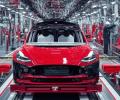
The meltdown in Dalal Street that wiped out investor wealth to the tune of 44 trillion in 2025 also seems to be having a ripple effect on the country's vibrant automobile retail sales.

Clean air needs action all year round; and that it will work only if we act jointly and at scale, asserts Sunita Narain.

Tata Motors, India's largest commercial vehicle manufacturer, is looking to launch a first-of-its-kind sub-600 kg small commercial vehicle, aiming to cater to the growing demand for efficient last-mile delivery solutions, an area currently witnessing a surge in interest from e-commerce giants. This new entrant is set to be positioned just below the marquee Tata Ace, which is popular across the country as "Chota Haathi".

Capital expenditure (capex) by 54 large central public sector enterprises (CPSEs) and five departmental arms with an annual capex target of Rs 100 crore and above has reached around 42.5 per cent of their annual target of about Rs 7.33 trillion in this financial year so far, a senior official from the Ministry of Finance told Business Standard. "The Centre is pushing the big public undertakings in the infrastructure and refinery sector to achieve 90 per cent of their target by the end of the third quarter," he said. The capex by this group of CPSEs stands at around Rs 3.1 trillion in the April-August period so far.

Union Minister of Road Transport and Highways Nitin Gadkari on Tuesday unveiled the prototype of the world's first Bharat Stage (BS)-VI-compliant electrified flex-fuel car, developed by Toyota Kirloskar Motor. The car, which runs on 100 per cent ethanol (E100), is based on the Toyota Innova HyCross. It can cover 40 per cent of its distance on ethanol and the remaining 60 per cent on electric, with the petrol engine shut off.

Capital expenditure by 54 large central public sector enterprises and five departmental arms, having a capex minimum target of Rs 100 crore, rose 93 per cent year-on-year (YoY) in the April-May period to Rs 1.39 trillion. The National Highways Authority of India (NHAI) and the Railways have started this financial year's capex cycle on a stronger note. In the first two months of FY24, the 54 CPSEs, along with the departmental arms, achieved 19 per cent of their combined budget target of Rs 7.33 trillion, Business Standard has learnt.

The Supreme Court on Wednesday refused to interfere with the Delhi government's order putting a comprehensive ban on manufacturing, storage, sale and bursting of firecrackers in the city, saying people's health is important.

Tata Motors is looking to increase passenger vehicle prices from next month in order to make its model range compliant with stricter emission norms which kick in from April 1 next year, according to a top company official. In an interaction with PTI, Tata Motors Managing Director - Passenger Vehicle and Electric Vehicles Shailesh Chandra said the price revision would also offset the impact of commodity prices, which have remained high for the most part of the year. "The regulatory change will have its impact on the cost. Even the real impact of softening of commodity prices is only going to come from next quarter and we still have the residual impact of the commodity escalation that we have seen during the year," Chandra said.

Maruti Suzuki India will increase the prices of its vehicles 'substantially' from next month as it looks to offset the impact of rising input costs and make provisions to update the model range to conform to stricter emission norms which kick in from April 2023. In a regulatory filing on Friday, the country's largest carmaker said it continues to witness increased cost pressure driven by overall inflation and recent regulatory requirements. While the automaker makes maximum effort to reduce cost and partially offset the increase, it has become imperative to pass on some of the impact through a price increase, it added.
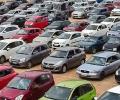
Passenger and commercial vehicle prices are expected to rise as automobile companies invest in upgrading vehicles to meet stricter emission norms that kick in from April next year. The Indian automobile industry is currently working to make their products meet the second phase of Bharat Stage VI, equivalent to Euro-VI emission norms, in real time driving conditions. Four-wheeler passenger and commercial vehicles will need more sophisticated equipment to be added to meet the next level of emission standards.

The civil aviation ministry has mandated airlines and ground-handling companies to phase out airport equipment older than 12 years and switch to electric or fuel-efficient variants by May 2022. While companies have welcomed the ministry's green initiative, they said that the deadline for implementation is tight. This is especially in the wake of financial challenges faced by the aviation sector during the pandemic.
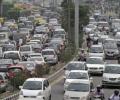
Vehicle sales have been hampered by weak consumer sentiment and still-weak availability of financing following tighter liquidity at non-banking lenders since the middle of 2018.

The residents of Delhi stand to lose 10 years of life expectancy if the current air pollution level persists.

In India, air pollution is most severe in the Indo-Gangetic Plain (northern India), where topography and meteorology concentrate pollution from energy, mobility, industry, agriculture, and other activities, the researchers said.

The figures are encouraging for the auto industry amid apprehension that due to higher cost and lack of fuel availability, cars with stricter emission standards may not be popular in initial stages. Automakers had even cited this confusion as one of the reasons for dwindling car sales in India, reports Arindam Majumder.

The black and yellow cabs, hired by millions of people in Mumbai for nearly half a century will fade away into history.

'Air they suck in is far dirtier than the air which comes out of it.'

The FM said, change in the mindset of the millennials not to commit any EMIs towards buying an automobile and instead taking Ola, Uber or the Metro (train) services also led to automobile sector slowdown.
What was being hailed as innovation in Indian industry not so long ago was nothing but cutting corners and skipping processes.

Moody's said fiscal measures undertaken by the government -- such as corporate tax rate cuts, bank recapitalisation, infrastructure spending plans, support for the auto sector and others -- do not directly address widespread weakness in consumption demand, which has been the chief driver of the economy. In addition, interest rate cuts by the Reserve Bank of India are not being adequately transmitted to lending rates because of the credit squeeze caused by disruption in the non-bank financial sector, it said.

Transport accounts for between 5 and 8 per cent of our greenhouse gas emissions, says Jairam Ramesh.

A three-judge bench headed by Justice Madan B Lokur made it clear that only BS VI compliant vehicle shall be sold in the country from April 1, 2020.
The Centre for Sciences and Environment (CSE) claimed in a study that the government's plans to introduce these cars without ensuring sufficiently stringent emission and safety standards would create environmental problems.The study also suggested that the government must guard against permitting these cars to run on diesel.
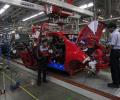
GM India has asked customers facing problems with their remote keyless entry accessory to go to their Chevrolet dealer.
According to the National Auto Fuel Policy, Bharat Stage-IV, the Indian version of Euro-IV, is to be applicable in the country by April 2010. However, the plant upgradation plans of the oil refiners, who have to sell petrol and diesel with the stringent emission standard from April 1, are facing a delay as suppliers of the equipment are heavily booked.
The company, which has earmarked Rs 200 crore (Rs 2 billion) for the development of the M-Hawk diesel engine, is working on various upgrades to meet different emission standards such as Bharat Stage IV and Euro IV, besides the US standard -- T2B5, the most stringent globally at present.

Passenger vehicle wholesales in India increased by 17 per cent in the second quarter of the current fiscal year as buying sentiment improved and companies stocked up to cater to enhanced demand in the festive season, auto industry body SIAM said on Friday. According to the latest data by the Society of Indian Automobile Manufacturers (SIAM), passenger vehicles sales in the July-September quarter increased to 726,232 units from 620,620 units in the same period last year. Similarly, two-wheeler sales during the September quarter this fiscal rose marginally to 46,90,565 units as compared with 46,82,571 units in the same period last fiscal. However, commercial vehicles sales saw a dip of 20.13 per cent at 133,524 units in the quarter under review as compared with 167,173 units in July-September 2019.

As India is progressing towards Bharat Stage IV (BSIV) emission norms, most cars still run under BSIII standard.
Household income in India, which had only about seven million private cars in 2004, is advancing at a two-digit pace
 © 2026 Rediff.com - Investor Information - Advertise with us - Disclaimer - Privacy Policy - Sitemap - Feedback - About us - Terms of use - Grievances