
Although the government had pegged fiscal deficit for the current financial year at 5.1 per cent of the GDP in the budget, it has revised the target to 5.3 per cent in view of subdued revenue collection and rising fuel and food subsidy bills.

Ignoring the rate cut demand of India Inc, RBI in its first quarter monetary policy review kept the short-term lending (repo) rate, at which banks borrow from RBI, unchanged at 8 per cent.

Gems & jewellery exports seen rising, too, as demand remains strong in all markets except Europe.

Gold prices had touched the all-time high of Rs 32,975 per ten gms on November 27, 2012.

Bhalla will succeed former RBI deputy governor Subir Gokarn, who died in the US on July 30 after a brief illness.

'We have to think of the repercussions if public sector banks are privatised and if they go to foreign hands.'

Although the government had pegged fiscal deficit for the current financial year at 5.1 per cent of the GDP in the budget, it has revised the target to 5.3 per cent in view of subdued revenue collection and rising fuel and food subsidy bills.
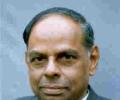
He said the government would not go in for providing stimulus across the board and that only specific sectors would be considered for the measure.

India's trade deficit has fallen to 10-month low of $14.9 billion in February on improving exports and a sharp drop in imports.

While eyeing inorganic growth, the company is considering setting up skilling centres in Africa, Bangladesh and Pakistan.
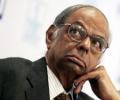
He feels that RBI could be waiting for a period or an opportune movement when there could be sustained reduction.

Are short-term compulsions increasing long-term instability?

Food Min says decision on Rangarajan panel's report in a time bound manner.

Believes India can grow at 6 - 7 per cent next fiscal.
The Reserve Bank of India has been actively doing OMOs or buyback of government bonds to manage liquidity in the system over the last few months.

The IIP growth has been revised downwards to 1.14 per cent for January, from the provisional estimates of 6.8 per cent, according to the official data released on Wednesday.

On Tuesday, the partially convertible rupee, the worst performing currency among the major global economies, dropped as much as 3.1 percent to 68.12 per dollar.

He was speaking to reporters on the sidelines of a conference organised by the Madras School of Economics.

He says though agriculture and industry would get a fillip in the second half of this financial year, a complete economic revival is expected only in 2013-14.

The country's economy will start witnessing a growth of 6.5 to 7 per cent from fiscal 2023 onwards, helped by various reforms undertaken by the government so far and also as COVID-19 vaccination drive progresses, Chief Economic Advisor Krishnamurthy Subramanian said. He said the second wave of COVID-19 is unlikely to have a very significant on the economy. The country's economy contracted by 7.3 per cent in fiscal 2020-21. "Together with the reforms and focus on vaccination, I expect growth to start hitting close 6.5 to 7 per cent from FY23 onwards and accelerate from there on," Subramanian said at a virtual event organised by Dun & Bradstreet.

In an interview with Business Standard, he says investments would pick up and inflation would fall in the next financial year, providing the Reserve Bank of India the room to cut rates.
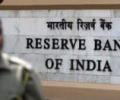
Prime Minister's Economic Advisory Council Chairman C Rangarajan on Tuesday called RBI's policy action a "wise decision". The liquidity easing measures will have an impact on interest rates, he said.

The accounting system of the central and state governments may change considerably, with a high-level committee suggesting sweeping changes in how expenditure is classified in Budget documents.
Fiscal correction is needed even after the changes that have been made now, otherwise the fiscal deficit would tend to be high.

The country's growth rate is expected to pick up in the second half of this fiscal and reach 6.7 per cent for entire 2012-13, Prime Minister's Economic Advisory Council Chairman C Rangarajan said on Monday.
Prime Minister Dr Manmohan Singh has convened a meeting of senior ministers on Tuesday to discuss the recommendations of the National Advisory Council on the Food Security Bill.

Bullion imports are expected to fall by about 29 per cent this fiscal to USD 44 billion, the Prime Minister Economic Advisory Council said in a report released on Friday.

C Rangarajan, former governor of Reserve Bank of India, was speaking on the topic `the growth path and some concernson the way' at a function at Federation of Gujarat Industries on Monday.
They want govt to raise excise duty and service tax rates, cut subsidies.

A first step in that direction has been taken by the prime minister by setting up an expert panel headed by his economic advisory council.

Prime Minister's Economic Advisory Council Chairman, C Rangarajan, on Wednesday echoed leading personalities saying the deteriorating quality of governance may come in the way of India achieving high growth on a durable basis.
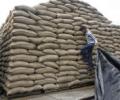
Government's cheap food distribution covers 68 per cent of the population.

He says there are certain aspects, such as export growth, that are impressive.

Industrial growth has entered the negative zone in October, two years after the global financial crisis. But Prime Minister's Economic Advisory Council chairman C Rangarajan pins hopes of a revival in the fourth quarter.

Rangarajan also called for improvement in the country's corporate-bond market saying that this will help even small companies to raise adequate funds.
PM's economic advisory council chairman C Rangarajan has asked microfinance institutions (MFIs) to overhaul their "flawed" business model for sustainability.

Prime Minister's Economic Advisory Council Chairman C Rangarajan on Thursday pitched for a "substantial" increase in prices of diesel and cooking gas, saying failure to take strong steps would derail the fiscal consolidation process.
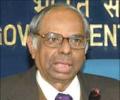
I think the overall growth rate of the economy will be between 5.5-6 per cent, says C Rangarajan.

Reserve Bank on Friday raised key interest rates by 25 basis points, its 12th such hike since March, 2010.
 © 2026 Rediff.com - Advertise with us - Disclaimer - Privacy Policy - Sitemap - Feedback - About us - Terms of use - Grievances