
The dismal factory output growth was on the back of a poor performance by manufacturing, mining and capital goods segments.

Amid the crisis in Libya, increase in fuel prices would become 'inevitable' if crude oil remains at $100 per barrel, Prime Minister's Economic Advisory Council chairman C Rangarajan said on Monday.

With high prices remaining a concern, Prime Minister's Economic Advisory Council chairman C Rangarajan on Wednesday said all policy measures, like rate hikes and intervention in grain markets, will be undertaken to bring down inflation to comfort zone of 4-5 per cent.
Bold reform measures to sustain high growth trajectory figure high.

Slow growth of the US and Europe will have some adverse affect on Indian exports.
While bankers and experts expect the lending rate to fall by about one percentage point in the near-term, the Prime Minister's Economic Advisory Council has strongly pitched for rate cut by the RBI in its monetary policy review later in the month.
Any attempt to push growth beyond 9.5 per cent in the 12th Plan period that begins next year may lead to higher inflationary pressures and current account deficit woes, says Chairman of the Economic Advisory Council to the Prime Minister, C Rangarajan.
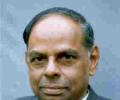
India's CAD had touched a record high of 4.2 per cent of GDP in 2011-12, on the back of a wider trade gap and lower capital inflows.

Food inflation is an area of concern for the common man and government with rate of price rise touching as high as 18.32 per cent in the last week of December mainly fueled by mass consumption items like vegetables, milk and protein-based items.

The central bank is slated to review its credit policy on January 25.
Prime Minister Manmohan Singh mourned his death in his message to Tendulkar's wife Sunetra.
Inflation, as measured by the Wholesale Price Index, stood at 8.66 per cent in April.
Rangarajan's reaction came after the release of the latest data, which showed headline inflation going up to 9.06 per cent in May from 8.66 per cent in April on the back of rising prices of manufactured products and petrol.
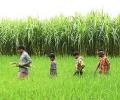
The Prime Minister's economic panel said high food inflation reflects lacklustre performance of the farm sector, which together with infrastructure, remains the main bottlenecks to higher growth.
Prime Minister's economic advisory panel chief C Rangarajan has described the dip in factory output in September as 'disappointing' and said industry may grow by just 6 per cent in the current fiscal, as against the earlier projection of 7 per cent.

Prime Minister Manmohan Singh last month had said inflation would moderate to 5-6 per cent by the end of the calender year.

The committee will suggest an action plan for abolishing the present system of classifying expenditure into plan and non-plan, an official statement said.
With the Budget barely a week away, the Prime Minister's Economic Advisory Council on Monday made a case for withdrawing some of the tax incentives to the industry to put the economy back on track for fiscal consolidation.
The Prime Minister's Economic Advisory Council said on Monday that India's GDP growth will slow down to 8.2 per cent in the current fiscal. Its earlier growth projection was at 9 per cent.
The main worry is that the inflation rate is expected to remain high at 9 per cent till October, the Prime Minister's Economic Advisory Council said.
The panel may include or seek inputs from former RBI Governor Urjit Patel, former chief economic advisor Arvind Subramanian, Sajjid Chinoy of the PM-EAC, Rathin Roy, among others.

Keeping in abeyance suggestions of the Prime Minister's Economic Advisory Council, government on Friday said it has no intention to allow private sector to set up nuclear power plants independently.
India's projected growth rate may be marginally affected if there\nis a bad monsoon, as it will affect agricultural output, said Suresh Tendulkar,\nchairman of the prime minister's Economic Advisory Council.

The Planning Commission in May 2012 had constituted the expert group under the then Prime Minister's Economic Advisory Council Chairman C Rangarajan to review the Tendulkar Committee methodology for estimating poverty, following an uproar over the number of poor in the country.
C Rangarajan, chairman of the Prime Minister's Economic Advisory Council, on Thursday said he expects the Indian economy to grow by 8.5 per cent in FY'12 on the back of services sector and industry expansion, though he hinted that agriculture might not be a big contributor.

Food inflation rose to 17.47 per cent in the third week of November against 15.58 per cent in the previous week.

The business model of the microfinance sector must change, emphasised C Rangarajan, chairman of the Economic Advisory Council to the Prime Minister, saying that the microfinance movement must have as its ultimate goal the desire to help the poor and enable them to come out of poverty.

The report added that the rapid adjustments in the monetary and fiscal policies were well calibrated and not excessive, enabling the government to contemplate a return to fiscal consolidation in 2010-11 and an early normalisation of the monetary policy stance.
The men who advice the man who runs the country are experts and their experience says it all.

The government on June 25 deregulated petrol price and said the same for diesel will be done soon. But with inflation rate continuing to remain at unmanageable levels, the government put-off the decision as any further hike in diesel price would lead to cascading effect.

Interest rates may harden a bit by the end of the current financial year, according to C Rangarajan, chairman of the Prime Minister's Economic Advisory Council.
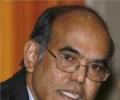
Stating that counter-cyclical measures to combat the impact of the global financial meltdown were important, Subbarao said the government borrowings had gone up 'rapidly and abruptly' hindering transmission of monetary measures to bring about lowering of interest rates.

The government will have a tough time correcting its financial course from the current high level of fiscal deficit, unless it decides to raise taxes or cut spending, said Prime Minister's Economic Advisory Council (PMEAC) member Govinda Rao.
The Prime Minister's Economic Advisory Council on Monday projected the economic growth in the country at 8.6 per cent for the current fiscal on the back of rebound in farm output and inflation to come down to 7 per cent by March-end due to declining food prices.

Chief Minister MK Stalin has shown that he is cut from a different cloth when it comes to embracing what is current, modern and absolutely necessary. Thus, even while retaining the spirit and content of the pan-Tamil, Dravidian socio-political and socio-economic ideology to the 't', his government has also acknowledged the need to accepting scientifically-proven facts in operational matters, says N Sathiya Moorthy.

Asked whether the Budget should start the process of exist, Rangarajan told reporters in New Delhi, "What is required, is a roadmap towards normalisation".
The government on Monday abolished the Commodity Transaction Tax (CTT) that was announced in the Budget last year, but was yet to be implemented and the commodity exchanges rejoiced the decision.
Although the WPI-based inflation has been in the negative for two consecutive weeks, the Consumer Price Index, which measures movement in the prices that consumers pay, reported double-digit increase in May.

The prime minister's Economic Advisory Council had said inflation would be at 7-8 per cent by the year-end, compared with 10.55 per cent in June.
 © 2026 Rediff.com - Advertise with us - Disclaimer - Privacy Policy - Sitemap - Feedback - About us - Terms of use - Grievances
