
India and the United States have in principle agreed to extend their defence agreement for another 10 years which will take forward the cooperation between the two countries in the crucial area.

India and the US renewed 10-year Defence Framework Agreement.

'Why not simply make some more ventilators and find some more beds? How much would it cost?' asks Ambassador M K Bhadrakumar.

Previously unseen photographs of then-US President George W. Bush during 9/11 have been released.

On the final day of Prime Minister Narendra Modi's visit to the US, that country on Tuesday extended its Defence Cooperation Agreement with India by another 10 years. The pact, which was to expire in June next year, will now be in force till 2025.

'Credit expansion is probably the quickest way to get the economy going again.' 'Easy credit is like a shot of nitro in a race car: In timely, small, quick, doses it can give a tremendous boost but carried to extreme it can destroy the engine,' points out S Muralidharan, former managing director, BNP Paribas.

'It is crucial today to realise where we have reached in this 15 year-period in order to fully and properly assess the profundity of what General Rawat has said,' points out Ambassador M K Bhadrakumar.

'Despite the current tension at Doklam and the risk of escalation on the Himalayan land frontier, it is the Indian Ocean we need to worry about more,' says Nitin Pai.

Since the change in administration in the US, Indian leaders have publicly and privately identified with American objectives in Afghanistan.

While the US is definitely recovering, Europe, Japan and, now, China are all going through another wave of what some fear could be a multi-year slowdown.

Donald Trump and General H R McMaster: It is almost like the Chinese monarch Helü with Sun Tzu at his side.
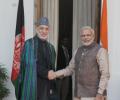
Security will be a consideration, as would protocol, but given Modi's penchant for the unconventional, it should not come as a surprise if he indeed decides to attend the ceremony in Kabul, says Ramesh Ramachandran.

'Openness is a great weapon in the armoury of more open societies. That's why the fight with Pakistan isn't just about India be six times bigger, but equally bitter and insecure Pakistan,' argues Shekhar Gupta.

Why has a nation created on strong secular principles slowly chipped away those essential values? Why are so many Indians willing to compromise their freedoms and those of their compatriots for the cause of economic progress and to see a shining India,' asks Aseem Chhabra.

'US counter-terrorism policy was encouraging and emboldening the Indians to deal with the problem of Pakistani-supported terrorism once and for all.' 'The US had been trying to browbeat Pakistan into doing what it wants, with very limited success.'
 © 2026 Rediff.com - Investor Information - Advertise with us - Disclaimer - Privacy Policy - Sitemap - Feedback - About us - Terms of use - Grievances