
Banks have asked for an exemption of statutory requirements such as the cash reserve ratio (CRR) and the statutory liquidity ratio (SLR) for lending to the infrastructure sector. While the CRR is a tool where banks have to set aside liquidity with RBI in proportion of the deposits mobilised by them, the SLR requires banks to invest 25 per cent of their liabilities in government securities to generate instant liquidity.
Bankers have said that lending rates could go up to 0.5 per cent after the Reserve Bank's annual credit policy, which is widely expected to take stringent monetary measures to contain price rise. Many expect the central bank to effect a hike in cash reserve ratio (CRR), the rate of amount all commercial banks need to keep with the Reserve Bank, in its annual credit policy on April 29. Many banks, including SBI, had revised their lending rates downwards early this year.
Contrary to the perception that the correction had to do with international events in US, China etc, it had more to do with the domestic market
The Bank Rate (6%), Repo Rate (7.75%) and Reverse Repo Rate (6%) have all been left unchanged in the half-yearly review of the monetary policy on Tuesday.

When banks deposit their money with RBI, the central bank offers government securities of equal value. But now, it could be running out of enough securities to offer banks against the overnight deposits.

Hawkish tone likely to guard rupee from further slide
There are however, enough dovish signals in the governor's statement to indicate a pro-growth policy going forward.

Highlights of the RBI monetary policy.

Breaking his silence over the demonetisation issue, RBI Governor Urjit Patel on Sunday said the central bank is monitoring the situation on a daily basis and taking all necessary actions to "ease the genuine pain of citizens" with a clear intent to normalise the things as early as possible.

The main reason was that CPI inflation would likely remain below 4 per cent till July.

Banks to be permitted to raise long-term funds for lending to infrastructure sector with minimum regulatory pre-emption such as CRR, SLR and Priority Sector Lending.
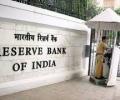
The declining inflation and a negative industrial outlook have strengthened the case for RBI.
IT majors and Maruti Suzuki down 8% were the top losers among Sensex-30.

India Inc has pitched for rate cut to boost economic activities.

The Reserve Bank is unlikely to lower the interest rates.
Snapping its six-day losing streak both benchmarks rallied over 1% after RBI kept key policy rates unchanged.


Street expects RBI to keep CRR unchanged, opt for open-market operations to ease liquidity

Short-term lending (Repo) rate is unchanged at 8 per cent.

Inflation target remains 5% for January 2017.

This is the fourth consecutive time that the RBI has kept key interest rates unchanged despite clamours from the industry to cut rates to boost economy.
The Reserve Bank of India (RBI) clarification on the final norms for new bank licences has much to mull on for the many entities interested. It has clearly ruled out any benefit to the new entrants in terms of more time to meet the cash reserve ratio/statutory liquidity ratio (CRR/SLR) requirements.

Four days ahead of RBI's monetary policy review, SBI Chairman Pratip Chaudhuri says a cut of one percentage point in CRR will allow the bank to lower lending rates 20 basis points.

Industry houses are emphatic with the RBI pruning repo rate and CRR by 0.25 per cent each after a long nine months in its third quarter monetary policy review.
The Reserve Bank has kept the key policy rates unchanged in its Mid-Quarter Monetary Policy Review.

It believes that RBI will continue with liquidity infusion through CRR cuts and open market operations. Rate cut may happen only in January

Of the 15 participants, 7 expect CRR cut, only one sees repo rate reduction.
Response to readers' queries on stocks they want to buy, sell or hold.

Bajaj Finance was the biggest loser in the Sensex pack, tanking up to 8 per cent, followed by Hero MotoCorp, IndusInd Bank, Maruti and HCL Tech. Axis Bank, ITC, NTPC and M&M were among the top gainers.

Foreign institutional investors pumped in nearly $167.35 million (Rs 899.83 crore) into the local stock markets on Tuesday, according to the BSE provisional data.
British banking major RBS on Thursday said it expects the Reserve Bank to cut key rate by 25 basis points or 0.25 per cent in its monetary policy review next week, leaving the cash reserve ratio (CRR) unchanged.
The Reserve Bank of India has kept all key interest rates unchanged in its mid-term credit policy review announced on Monday.

Chidambaram welcomes CRR cut as a good small step forward.

The real estate industry today expressed hope that a part of Rs 17,000-crore (Rs 170-billion) worth liquidity infused by RBI into the financial system would flow into the realty sector.
Some reactions to RBI's monetary policy announced on Monday.

The Reserve Bank will present the mid-quarter Monetary Policy Review on Tuesday.

According to HSBC, the RBI will keep the policy rate on hold next week, although it is likely to cut the CRR by 0.25 per cent to address the lingering liquidity tightness.

The RBI has cut key rates to boost the economy.
 © 2026 Rediff.com - Advertise with us - Disclaimer - Privacy Policy - Sitemap - Feedback - About us - Terms of use - Grievances